
Key Takeaways for Medical Wire Bonding
-
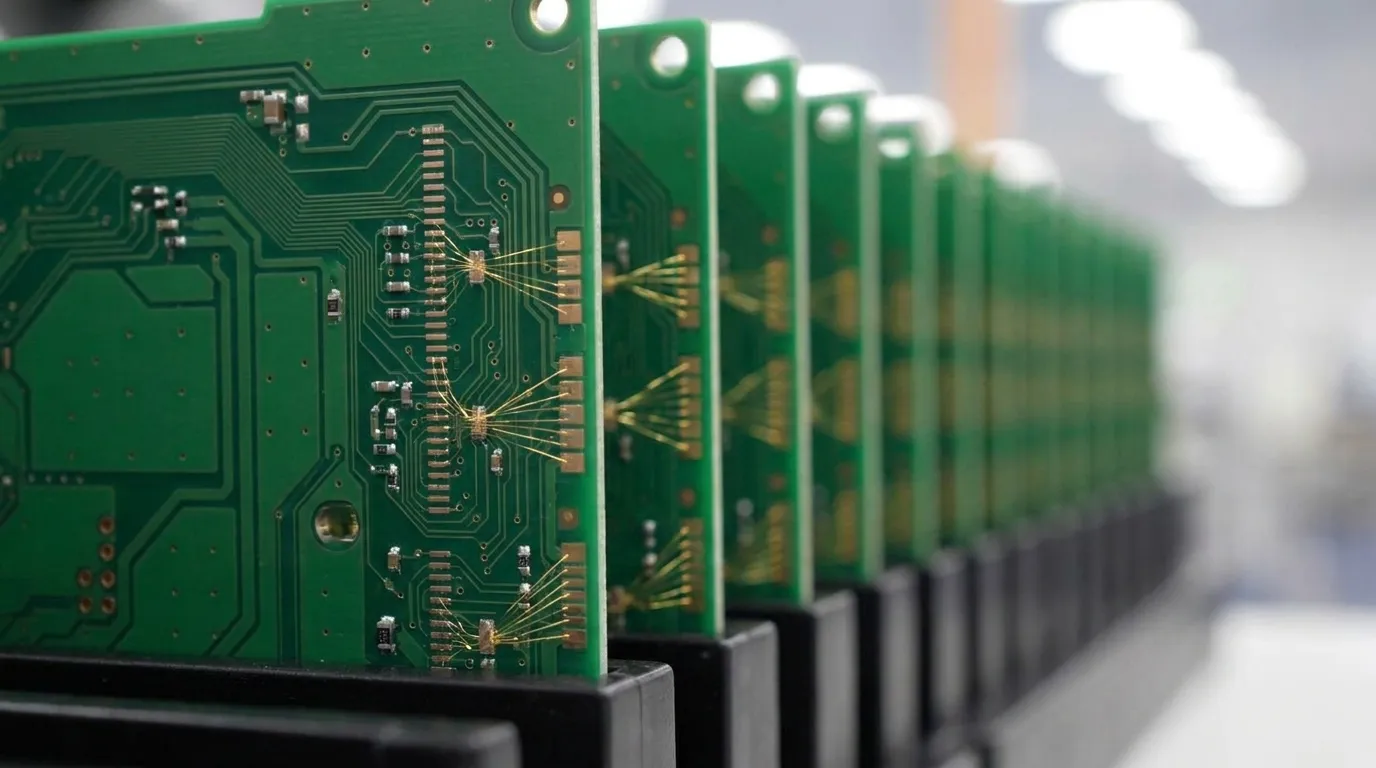
Wire bonding creates reliable electrical connections between semiconductor dies and substrates, which supports compact medical implants, monitors, sensors and wearables.
-
The process follows a validated sequence of die attach, substrate preparation, bonding, loop control, encapsulation and final testing that must remain repeatable at production scale.
-
Material selection for gold, platinum or aluminum wire must balance electrical performance, mechanical behavior and biocompatibility while matching sterilization and long-term reliability needs.
-
Medical device programs require rigorous bond pull and shear testing, sterilization compatibility studies and full lot-level traceability under FDA and ISO 13485 frameworks.
-
Pro-Active Engineering integrates wire bonding with design, prototyping and production in a single facility, supporting medical device programs from concept through validated builds.
Wire Bonding Process Overview for Medical Devices
Wire bonding in medical assemblies follows a defined sequence that must be validated at production scale, not only in the lab. The general steps are:
-
Die attach. The semiconductor die is placed and bonded to the substrate using an adhesive or eutectic material. Adhesion quality directly affects bond integrity downstream.
-
Substrate preparation. Bond pads on both the die and the substrate are inspected and cleaned. Contamination at this stage is a leading cause of bond failures.
-
Wire bonding. A bonding tool forms the first bond at the die pad, draws the wire in a controlled loop and forms the second bond at the substrate pad. Thermosonic, thermocompression or ultrasonic methods are selected based on wire material and device requirements.
-
Loop formation and inspection. Wire geometry is controlled to prevent contact with adjacent structures. Automated optical inspection confirms loop height, shape and placement.
-
Encapsulation. Medical-grade encapsulant or glob-top material protects the wire bonds from mechanical stress, moisture and chemical exposure.
-
Final inspection and testing. Bond pull and shear testing, visual inspection and electrical verification confirm assembly integrity before the device advances.
Production-scale validation documents each step, controls process parameters and confirms repeatability across every lot. Process drift at any stage introduces failure modes that are difficult to detect after encapsulation.
Pro-Active Engineering performs wire bonding within an advanced interconnect workflow that connects design, prototyping and production under one roof. Engineering collaboration begins at the design phase, so process parameters are established before the first prototype is built. Discuss wire bonding requirements with the Pro-Active Engineering team to define process parameters before prototyping.
Materials and Biocompatibility in Medical Wire Bonds
The wire bonding process described above depends on material choices that affect both process parameters and long-term device performance. Wire material selection in medical devices involves trade-offs between electrical performance, mechanical behavior and biocompatibility. The three most common materials are gold, platinum and aluminum, each suited to different application profiles.
Gold wire is widely used in implantable and long-term-contact applications because of its corrosion resistance and established biocompatibility record. It forms reliable bonds with gold-plated substrates and tolerates the thermal and chemical environments common in medical assemblies. Gold often serves as the default choice when the device has prolonged tissue contact or operates in a fluid environment.
Platinum wire offers similar biocompatibility characteristics and supports applications that require additional chemical stability. It appears in specialized implantable sensors and neural interfaces where material purity and long-term stability are critical.
Aluminum wire is common in nonimplantable and external medical devices. It is cost-effective and compatible with standard aluminum bond pads on semiconductor dies. Aluminum is not preferred for implantable applications because it corrodes in biological environments, but it performs well in diagnostic equipment, monitors and other external assemblies.
Material selection works best when integrated into the design phase. Pro-Active Engineering collaborates on DFM from day one, so wire material, substrate finish and encapsulant chemistry align before a prototype is built. Late-stage material changes in a regulated device program carry significant validation cost and schedule risk.
Reliability and Testing Protocols for Medical Bonds
Wire bond reliability in medical devices depends on process control and systematic testing. The primary failure modes and the tests used to detect them include the following.
Bond pull testing applies a tensile load to the wire loop to evaluate bond strength at both the first and second bond sites. Failures are classified by mode, such as wire break, bond lift or cratering, and each mode points to a specific process variable that requires correction.
Bond shear testing applies a lateral force directly to the bond ball or wedge to measure adhesion at the die or substrate pad. Shear testing is sensitive to contamination, insufficient bonding energy and intermetallic formation issues.
Cratering occurs when the bonding process damages the underlying die metallization or silicon. It is a destructive failure mode that is difficult to detect visually and often requires cross-sectional analysis or shear testing to identify.
Heel cracks develop at the wire-to-second-bond interface under cyclic mechanical or thermal stress. They represent a fatigue-driven failure mode relevant to devices that experience repeated movement or thermal cycling during use.
A robust reliability protocol combines destructive and nondestructive testing across sample lots, with results documented and traceable to specific production runs. For medical devices, this documentation supports regulatory expectations and audit readiness.
Sterilization, Encapsulation and Wire Bond Protection
Sterilization processes can affect wire bond integrity when materials and encapsulation do not match those processes. Common sterilization methods, including ethylene oxide, gamma irradiation and steam autoclave, interact differently with encapsulant materials, substrate laminates and wire metals.
Ethylene oxide sterilization operates at relatively low temperatures and generally aligns with most encapsulant systems, but residual gas absorption in some polymers can cause outgassing or dimensional changes over time. Gamma irradiation can degrade certain polymer encapsulants, which reduces their mechanical protection of the wire bonds. Steam autoclave exposes assemblies to elevated temperature and humidity, which stresses encapsulant-to-substrate interfaces and accelerates corrosion in assemblies not designed for that environment.
Medical-grade encapsulation provides the primary defense against sterilization-related degradation. Encapsulant selection must account for the sterilization method, the number of sterilization cycles over the device service life and the mechanical stresses the assembly experiences in use. Encapsulant qualification belongs in the design validation process, not as a late-stage correction.
Pro-Active Engineering’s conformal coating and potting capabilities operate within the same facility workflow described earlier. Encapsulation decisions occur alongside wire bonding process development, which avoids the disconnect that can occur when a separate vendor handles coating.
Quality Systems and Traceability for Regulated Programs
Medical device manufacturers operating under FDA oversight and ISO 13485 requirements must show that every assembly is produced under a controlled, documented and traceable process. Wire bonding qualifies as a special process, since inspection alone cannot fully verify its output, so process validation and ongoing monitoring carry added regulatory weight.
Traceability requirements extend to wire lot numbers, substrate materials, bonding equipment calibration records, operator qualifications and inspection results for every production lot. Design history files and device history records must capture this data in a format that supports audits and corrective action.
Pro-Active Engineering holds ISO 9001:2015 certification, AS9100 accreditation, Nadcap accreditation, JCP certification and ITAR registration. These certifications reflect a quality management system built for regulated, mission-critical manufacturing. Full documentation control and traceability form part of standard practice, not optional services. For medical device programs that need a manufacturing partner capable of supporting FDA design controls and ISO 13485-aligned expectations, this existing quality infrastructure reduces the compliance burden on the device manufacturer.
A single accountable partner with this certification stack maintains documentation continuity across wire bonding, assembly and testing. This approach avoids the traceability breaks that trigger revalidation when processes are split across vendors. Learn how Pro-Active Engineering’s quality infrastructure supports validated medical device programs.
Alternatives to Wire Bonding in Medical Assemblies
Wire bonding is not the only interconnect method available for medical device assemblies. Flip-chip and other advanced packaging approaches offer different trade-off profiles that may suit specific applications.
Flip-chip inverts the die and connects it directly to the substrate through solder bumps or conductive adhesive, which removes the wire loop. This reduces the assembly footprint and can improve electrical performance in high-frequency applications. Flip-chip requires underfill for mechanical protection, demands tighter substrate tolerances and involves a more complex rework process. For implantable devices where rework after encapsulation is impractical, the process window and inspection access require careful attention.
Tape automated bonding (TAB) uses a prepatterned tape carrier to connect the die to the substrate. It suits high-volume, thin-profile applications but offers less flexibility for low-to-mid volume medical programs with design iterations.
Embedded die packaging integrates the die directly into the PCB substrate. It achieves the smallest possible footprint but requires specialized substrate fabrication and limits post-assembly inspection access.
Wire bonding remains the preferred choice for many medical device applications because of its established biocompatibility record, broad material options, mature inspection and testing protocols and compatibility with low-to-mid volume production. It also supports design iteration during development, which matters in regulated programs where design changes trigger revalidation.
Decision Checklist for Medical Wire Bonding
Several criteria provide a structured basis for evaluating wire bonding for a medical device program:
-
Process control: The bonding process is validated at production scale, with documented parameters and ongoing monitoring.
-
Biocompatibility: The wire material, substrate finish and encapsulant system match the device contact classification and service life.
-
Reliability: Bond pull testing, shear testing and failure-mode analysis form part of the standard production protocol.
-
Sterilization compatibility: The full assembly, including encapsulant, has been qualified against the intended sterilization method and cycle count.
-
Traceability: The manufacturing partner provides full lot-level documentation that supports FDA design controls and ISO 13485 requirements.
-
Scalability: The workflow supports a smooth transition from validated prototype to production volume without disruptive process changes.
Partnering with Pro-Active Engineering for Medical Assemblies
Fragmented supply chains create compliance gaps, traceability breaks and late-stage manufacturability problems that carry high cost in regulated medical device programs. Pro-Active Engineering addresses this by consolidating design, rapid prototyping, wire bonding, advanced interconnect, conformal coating and full system integration under one roof at its Sun Prairie, Wisconsin, facility.
This early-stage collaboration ensures wire material selection, substrate compatibility, encapsulation strategy and test protocol align with production requirements rather than being retrofitted after prototyping. The Speed Shop delivers production-ready prototypes using the same processes and equipment as full-scale production, so validation data from prototypes applies directly to the production build.
The quality certifications described earlier provide the documentation infrastructure that medical device programs require. Full traceability, controlled processes and disciplined inspection apply across every build, not only select program tiers.
Design engineers and program managers evaluating wire bonding partners for medical device manufacturing gain a single accountable U.S. partner with advanced interconnect capabilities, a robust certification stack and an integrated workflow that supports programs from prototype through validated production. Start a medical wire bonding discussion with Pro-Active Engineering.
Frequently Asked Questions
What makes wire bonding suitable for implantable medical devices?
Wire bonding suits implantable devices because of established material options, particularly gold and platinum, that have long biocompatibility records in tissue-contact and fluid environments. The process supports the miniaturization required for implantable assemblies and aligns with medical-grade encapsulation systems that protect bonds from biological exposure over the device service life. Mature inspection and testing protocols, including bond pull and shear testing, provide the verification data that regulated programs require. This combination of biocompatible materials, proven process controls and established testing standards makes wire bonding a reliable choice for implantable interconnect applications.
How does ISO 13485 affect wire bonding process requirements?
ISO 13485 requires that special processes, whose results cannot be fully verified by subsequent inspection, be validated before production and monitored throughout the production lifecycle. Wire bonding qualifies as a special process under this framework. Compliance requires documented process validation, defined acceptance criteria, calibrated equipment, qualified operators and lot-level traceability records. A manufacturing partner quality management system must generate and maintain this documentation in a format that supports design history files, device history records and regulatory audits. Working with a partner whose quality infrastructure already meets these expectations reduces the validation burden on the device manufacturer.
What are the most common wire bonding failure modes in medical device assemblies?
The most common failure modes include bond lift, cratering, heel cracks and corrosion-related degradation. Bond lift occurs when adhesion at the die or substrate pad is insufficient, often because of contamination or inadequate bonding energy. Cratering damages the underlying die metallization and typically results from excessive bonding force or energy. Heel cracks develop at the wire-to-second-bond interface under cyclic mechanical or thermal stress and represent a fatigue-driven failure relevant to devices that experience repeated loading. Corrosion affects aluminum wire in humid or fluid environments and is mitigated through material selection and encapsulation. Systematic bond pull testing, shear testing and cross-sectional analysis provide the primary tools for detecting and characterizing these failure modes during process validation and production monitoring.
Can a single manufacturing partner handle both wire bonding and full PCB assembly for a medical device?
A single partner that integrates wire bonding with PCB assembly, conformal coating and system integration eliminates the traceability gaps and communication breaks that arise when these processes are split across multiple vendors. This structure also allows DFM to apply across the full assembly, not only the PCB or the wire bonding step in isolation, which reduces the risk of late-stage compatibility issues. Pro-Active Engineering provides wire bonding, flip-chip assembly, PCB assembly, conformal coating, potting and full system integration within a single workflow. This consolidation supports the documentation continuity and process control that medical device programs require under FDA and ISO 13485 expectations.
How does sterilization method selection affect wire bond design decisions?
Sterilization method selection affects encapsulant choice, substrate material compatibility and the number of qualification cycles required during design validation. Ethylene oxide, gamma irradiation and steam autoclave each interact differently with the materials in a wire-bonded assembly. Encapsulants that perform well under one method may degrade under another, which affects the mechanical protection they provide to the wire bonds. The sterilization method and expected cycle count over the device service life should be defined early in the design phase so that encapsulant qualification integrates into the overall design validation plan. Addressing sterilization compatibility at the design stage avoids costly material changes and revalidation later in the program.