

Key Factors in Selecting a Defense Contract Manufacturer
- A Tier 2 defense contract manufacturer holds a critical position in the U.S. defense supply chain and owns process quality, compliance documentation and traceability that prime contractors depend on.
- Evaluating teams must verify a layered certification stack including ITAR registration, AS9100 Rev D, ISO 9001:2015, Nadcap accreditation, JCP certification, SAE AS5553B counterfeit avoidance, IPC-A-610 Class 3, J-STD-001 and CMMC readiness before awarding contracts.
- Qualified manufacturers deliver full-lifecycle capabilities from PCB design with DFM integration through rapid prototyping, high-mix assembly, conformal coating, box build and advanced interconnect technologies such as wire bonding and silver sintering.
- A structured five-step vetting process with clear requirements, independent certification checks, DFM assessment, traceability review and cross-functional evaluation reduces program risk and surfaces disqualifying gaps before contract award.
- Pro-Active Engineering offers a single-partner, ITAR-compliant domestic solution that consolidates PCB design, prototyping, assembly, coating and box build under one roof; discuss program-specific technical requirements with the Pro-Active Engineering team.
Program Stakeholders and Core Terminology
Engineering and program teams evaluating a defense contract manufacturer typically include lead design engineers, hardware engineers, engineering managers, purchasing managers and program managers. Each role carries distinct priorities, but all share exposure to vendor fragmentation, late-stage manufacturability problems, compliance gaps and supply-chain risk.
Several terms define the evaluation landscape and support consistent communication across teams:
- DFM (Design for Manufacturability): Engineering review that identifies assembly risks before production begins, which reduces rework and redesign cycles.
- NPI (New Product Introduction): Structured process that transitions a design from development into repeatable manufacturing.
- SMT (Surface Mount Technology): High-speed automated placement of components onto PCB surfaces.
- ICT (In-Circuit Test): Electrical verification of assembled boards at the component level.
- FAI (First Article Inspection): Documented verification that the first production unit conforms to all design and process requirements per AS9102.
- AS9100: Aerospace and defense quality management system standard required at all supplier tiers serving aerospace and defense primes.
- ITAR (International Traffic in Arms Regulations): U.S. export control law governing defense articles and technical data listed on the U.S. Munitions List.
- Nadcap: Process-level accreditation for high-risk special processes including electronic assembly, soldering and conformal coating.
- CMMC (Cybersecurity Maturity Model Certification): DoD framework for protecting Federal Contract Information and Controlled Unclassified Information, with phased contractual rollout beginning November 2025.
- Traceability: Documented chain linking every component lot, process parameter and inspection result to a specific serialized assembly.
Required Certifications and Compliance Standards
These terms provide the foundation for evaluating a manufacturer’s compliance posture. A compliant Tier 2 defense contract manufacturer maintains a layered certification stack, and evaluating teams should verify each item before award.
- ITAR Registration: Annual registration with the State Department’s Directorate of Defense Trade Controls, required for any manufacturer that produces, exports or brokers defense articles on the U.S. Munitions List. Teams should confirm active registration status and documented foreign-national access controls.
- AS9100 Rev D: Nonnegotiable baseline quality management system for all tiers supplying aerospace and defense programs. Verification should include certification scope and expiration in the IAQG OASIS database.
- ISO 9001:2015: Foundational quality management system standard that underpins AS9100 and applies across regulated manufacturing environments.
- Nadcap Accreditation: Required for specific high-risk special processes including electronic assembly, soldering and conformal coating. Accreditation scope must match the processes being sourced.
- JCP Certification (DD Form 2345): Required for access to militarily critical technical data under DoD export control programs.
- SAE AS5553B: Counterfeit electronic parts avoidance standard that requires approved supplier lists, risk-based receiving inspection and full chain-of-custody documentation.
- IPC-A-610 Class 2 and Class 3: Workmanship acceptance criteria for electronic assemblies, with Class 3 applied to high-reliability defense applications that operate in harsh conditions.
- J-STD-001: Soldering materials and processes standard that works alongside IPC-A-610 for compliant assembly operations.
- NIST SP 800-171 Alignment and CMMC Readiness: CMMC Level 2 aligns with NIST SP 800-171 requirements across 14 control families covering access control, encryption, logging and incident response across engineering and shop-floor systems. Evaluating teams should confirm the manufacturer’s SPRS score and assessment posture.
Core Services and Advanced Capability Set
A qualified Tier 2 defense contract manufacturer delivers more than standard PCB assembly. The capability set must span the full program lifecycle from design through system integration.
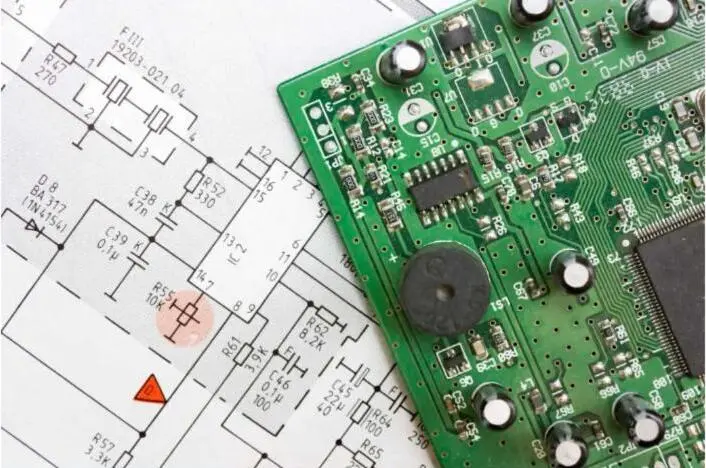
- PCB Design with DFM Integration: Engineering and manufacturing operate within one workflow, with DFM embedded at the layout stage to eliminate late-stage manufacturability failures.
- Rapid Prototyping via Production Processes: Prototypes are built on the same equipment and processes used for production runs, so validated designs scale without process-transfer risk.
- High-Mix Assembly: Surface-mount and through-hole assembly with automated optical inspection, flying probe, in-circuit and functional testing across variable volumes.
- Conformal Coating and Ruggedization: Environmental protection for assemblies that operate in moisture, vibration and temperature-extreme conditions common to defense applications.
- Box Build and Full System Integration: Complete product assembly including mechanical integration, cabling and system-level test that consolidates work that would otherwise require multiple vendors.
- Wire Bonding and Flip Chip Assembly: Advanced interconnect techniques for high-density, compact assemblies where standard SMT reaches its limits.
- Hybrid High-Density Assemblies: Multi-technology integration that supports mission-critical performance in space- and weight-constrained applications.
- Silver Sintering and Direct Thermal Path Technology: Engineered thermal management solutions that reduce thermal resistance and extend product life in high-current environments.
- Heavy Copper Integration: High-current PCB construction for power-dense designs that require robust thermal and electrical performance.
Discuss technical capability alignment with Pro-Active Engineering’s team.
Five-Step Process to Source and Vet a Defense Contract Manufacturer
With a clear understanding of required certifications and core capabilities, evaluating teams can apply a structured five-step vetting process that reduces program risk and surfaces disqualifying gaps before contract award.
- Define Program Requirements: Document the full certification stack, classification level, traceability requirements, assembly complexity, volume profile and any customer flow-down clauses from the prime. Customer flow-down requirements are legally binding once accepted on a purchase order and must align with the manufacturer’s documented scope.
- Verify Certifications Independently: Confirm AS9100 status in the IAQG OASIS database, ITAR registration with DDTC, Nadcap accreditation scope with PRI and CMMC posture via SPRS. Teams should rely on independent records rather than supplier attestation alone.
- Assess DFM and Engineering Integration: Request evidence that DFM review occurs in the design phase, not as a post-layout check. A capable manufacturer provides practical DFM review to identify manufacturability risks before production, which reduces clarification loops and enables corrections while changes remain manageable.
- Evaluate Traceability and Quality Systems: Confirm that serialized build records, component lot traceability and inspection documentation are maintained across incoming, in-process and final inspection stages. Quality systems should link material batches, process parameters and test results to each assembly for full lifecycle traceability.
- Conduct a Cross-Functional Review: Involve engineering, quality and program management in a supplier audit or structured capability review. Evaluate responsiveness, documentation control, counterfeit avoidance methodology and the manufacturer’s ability to scale from prototype to production within one facility.
Start a project discussion with Pro-Active Engineering’s program team.
Prototype-to-Production Workflow Integration
The handoff between prototype and production represents a major source of program risk. When design and manufacturing operate in separate organizations, process-transfer gaps introduce defects, schedule delays and cost overruns that often surface only after production begins.
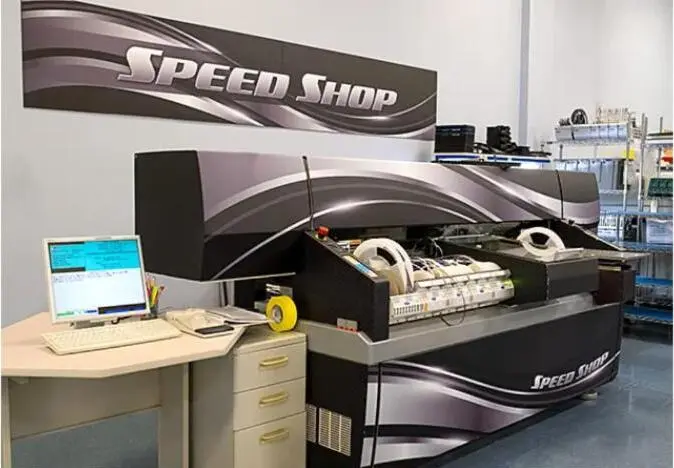
A single-partner workflow closes that gap. Design files move directly into NPI without a separate DFM review cycle, since manufacturability constraints are already resolved. Prototypes are built on production equipment using production processes, so FAI documentation reflects the actual manufacturing state. Early DFM and DFT reviews by an experienced NPI team reduce total program cost by identifying assembly and inspection issues before production begins.

When engineering and manufacturing share one workflow, AS9100-compliant documentation, traceability records and quality data accumulate continuously from the first prototype through volume builds. Program managers gain predictable delivery schedules. Engineering teams avoid redesign cycles driven by manufacturing constraints discovered late in the process.

Review how this workflow applies to a specific program with Pro-Active Engineering.
Supply-Chain Risk Reduction with a Single EMS Partner
Vendor fragmentation is a primary source of program exposure in defense electronics. Beyond the workflow benefits described earlier, fragmentation creates risk through coordination overhead, documentation complexity and logistics costs.
A single EMS partner that handles PCB assembly, cable assembly, box build and protection processes eliminates multi-vendor handoff risks and simplifies communication. Domestic ITAR-compliant manufacturing addresses a second category of risk related to regulatory compliance and geopolitical exposure.

For electronics programs subject to ITAR, defense supply chain requirements or domestic content mandates, full onshoring to the United States provides the compliant path, while nearshoring to Mexico or Canada does not satisfy these requirements. Beyond compliance, domestic production removes extended transit delays and tariff exposure that offshore sourcing carries. Section 301 tariffs on Chinese-made electronics components create significant duty burdens that inflate total landed cost.
Counterfeit component risk requires active management through layered controls. SAE AS5553B compliance establishes the framework, BOM scrubbing against lifecycle databases identifies at-risk components before procurement and sourcing limited to authorized manufacturers and franchised distributors ensures authentic parts enter the supply chain. Together, these operational controls protect program integrity across long service cycles.
The Department of Defense’s Trusted Supplier rules encourage the use of domestic EMS plants certified for controlled unclassified information handling, reflecting a structural shift toward consolidated, compliant domestic partners. The following questions address common concerns that arise during the manufacturer selection process.
Frequently Asked Questions
What certifications should a Tier 2 defense contract manufacturer hold at minimum?
Certification requirements depend on program scope and classification level. The “Required Certifications and Compliance Standards” section above details the full stack, but the nonnegotiable baseline includes ITAR registration, AS9100 Rev D and IPC-A-610 Class 3. Additional certifications such as Nadcap, JCP and CMMC apply based on specific contract requirements. Pro-Active Engineering maintains this complete certification stack to support a wide range of defense program types.
How does integrating DFM into the design phase reduce program cost?
When DFM is embedded at the PCB layout stage rather than applied as a post-design review, manufacturability risks are identified while engineering changes remain low cost. Late-stage DFM findings discovered after tooling, procurement or first article require redesign cycles that consume schedule and budget. An integrated engineering and manufacturing workflow means the same team that designs the board understands assembly process constraints, component placement tolerances and inspection requirements from the start. This structure reduces rework, removes process-transfer gaps and produces first-article results that reflect the actual production state.
What is the difference between ITAR registration and CMMC certification, and does a defense contract manufacturer need both?
ITAR registration applies to any manufacturer that produces, exports or brokers defense articles or services listed on the U.S. Munitions List. The State Department’s Directorate of Defense Trade Controls administers ITAR and governs physical and technical data access controls, foreign-national restrictions and export licensing. CMMC functions as the DoD cybersecurity certification framework and applies to contracts that involve Federal Contract Information or Controlled Unclassified Information.
ITAR technical data under a DoD contract is typically treated as CUI, so ITAR-registered manufacturers handling such data also need to meet NIST SP 800-171 requirements and, depending on contract clauses, CMMC Level 2 certification. Most defense contract manufacturers that support Tier 1 primes require both ITAR registration and a defined CMMC posture.
How does a single-partner model reduce supply-chain risk compared with managing multiple vendors?
Multi-vendor models distribute accountability across design firms, prototype shops, assembly houses, coating providers and system integrators. Each handoff introduces communication gaps, documentation inconsistencies and quality risks that accumulate across the program lifecycle. A single partner that owns design, prototyping, assembly, coating, testing and box build under one roof maintains continuous traceability, consistent process controls and unified documentation from the first prototype through volume production.
Program managers gain a single point of accountability, purchasing managers reduce vendor qualification overhead and engineering teams avoid process-transfer failures that occur when manufacturing operates separately from design.
Can a defense contract manufacturer that specializes in prototyping also support volume production?
A defense contract manufacturer that specializes in prototyping can support volume production when prototypes use full production processes rather than bench-level methods. When prototypes are assembled on the same SMT lines, with the same solder profiles, inspection standards and documentation controls used in production, the transition to volume builds requires no process requalification.
The FAI documentation generated during prototyping directly supports production release. Pro-Active Engineering’s Speed Shop delivers rapid prototypes using production-grade processes, and the same facility scales to low- and mid-volume production runs under the same AS9100 and ITAR-compliant quality system.
Partnering with Pro-Active Engineering for Defense Electronics
Pro-Active Engineering is a Wisconsin-based, ITAR-registered Tier 2 defense contract manufacturer with AS9100, ISO 9001:2015, JCP and Nadcap certifications. The company integrates PCB design, rapid prototyping, high-mix assembly, conformal coating, advanced interconnect, thermal management and box build under one roof, with full traceability and documentation from design files through production release.
Engineering and program teams that manage mission-critical defense electronics programs can consolidate their supply chain with a single, compliant domestic partner. Start a project conversation with Pro-Active Engineering’s team.