
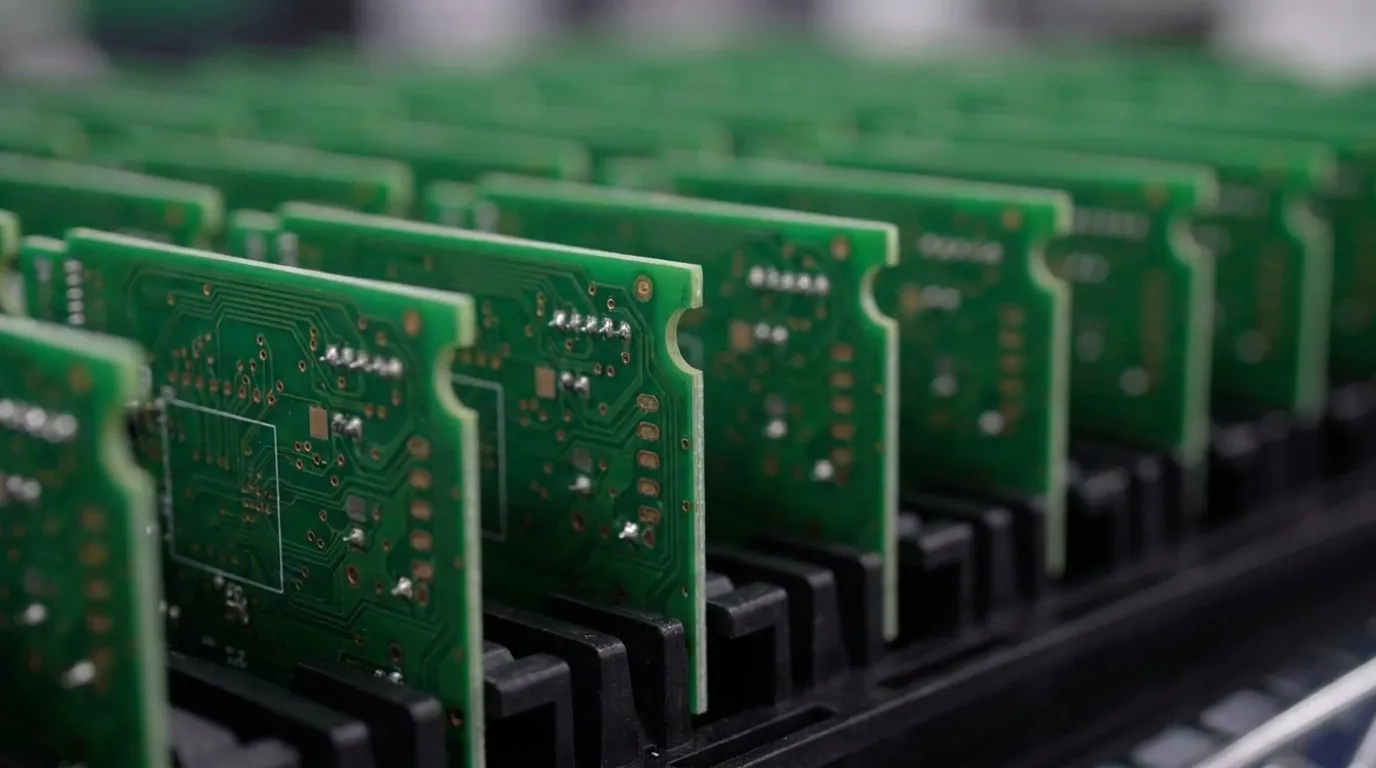
Key Takeaways for GaN Die Attach Programs
- GaN die attach services support high-power RF and aerospace applications where attachment method, voiding, bond-line thickness and placement accuracy control thermal performance and reliability.
- Silver sintering and AuSn eutectic attach serve high-reliability programs in different ways, with silver sintering delivering strong thermal conductivity and lead-free compliance and AuSn supporting low voiding and hermetic sealing.
- Key performance factors such as voiding percentage, bond-line thickness and placement accuracy require tight control and verification using X-ray, C-SAM and optical inspection to satisfy defense and aerospace standards.
- ITAR compliance, full traceability and AS9100-certified processes support U.S. defense and aerospace programs by preventing counterfeit parts and documenting chain-of-custody from raw material through final assembly.
- Pro-Active Engineering delivers integrated, ITAR-compliant GaN die attach services with seamless prototype-to-production scaling from its Wisconsin facility; discuss program requirements with the team.
GaN Die Attach Requirements for High-Power RF and Aerospace
GaN semiconductors deliver higher electron mobility, faster switching speeds and enhanced thermal efficiency compared with silicon-based devices. Those properties position GaN as a core material for high-power RF electronics in defense and aerospace programs.
As power densities rise, the die-attach layer has emerged as the primary bottleneck for thermal performance and long-term reliability. Engineering focus now extends beyond the semiconductor to packaging materials and controlled processes.
Wide-bandgap semiconductors such as GaN support higher power density in smaller form factors. These devices create concentrated heat flows that exceed the capability of traditional solder-based attach methods. Aerospace and high-altitude applications operate in vacuum environments without convective cooling, so direct conduction paths and low-outgassing thermal materials support sustained reliability.
North America holds a significant share of the global GaN semiconductor devices market, driven by defense and aerospace investment and government funding. That concentration of demand makes domestic, ITAR-compliant die attach capability a program-critical resource.
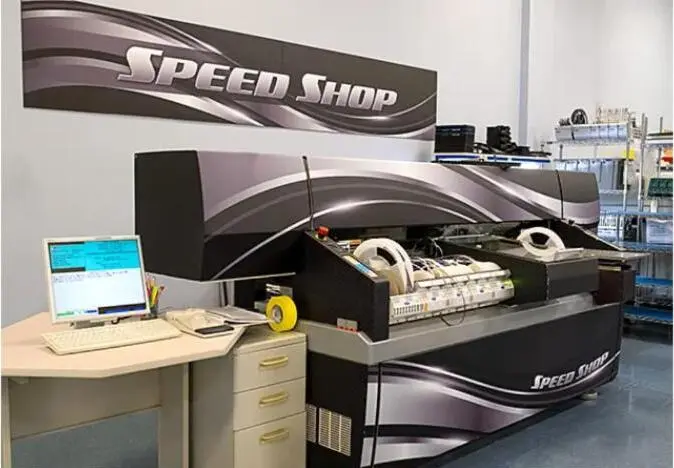
Pro-Active Engineering provides production-ready GaN die attach services from its Wisconsin facility, supporting defense and aerospace programs that require documented thermal performance, full traceability and seamless prototype-to-production scaling. Discuss thermal and traceability needs with the engineering team.
Attach Methods for GaN: Trade-Offs and Selection
Selecting the right attach method forms the first major technical decision in any GaN packaging program. Three primary attach methods appear in GaN packaging: silver sintering, AuSn eutectic attach and conductive epoxy. Each method carries distinct thermal, mechanical and process trade-offs that drive selection for high-reliability programs.
Silver sintering forms a porous metal layer at relatively low process temperatures that behaves like bulk silver. This structure delivers thermal conductivity above conventional solder and a melting point that supports continuous high-temperature operation. Advanced silver sintering pastes reach shear strengths and thermal conductivity values suitable for demanding SiC and GaN power modules. The process remains lead-free and fits well within high-mix production lines.
AuSn eutectic attach uses an 80/20 gold-tin alloy that forms an inorganic intermetallic bond. Properly implemented AuSn attach achieves low voiding, does not outgas and supports hermetic package sealing, which makes it an established choice for high-reliability RF modules in military and space applications. However, these performance advantages come with process constraints, including limited rework cycles and tighter atmospheric and temperature controls than sintering.

Conductive epoxy cures at lower temperatures and carries lower material cost. Thermal conductivity remains significantly lower than either sintering or AuSn, and outgassing limits hermeticity. Epoxy fits low-power devices where cost drives decisions rather than high-power GaN performance targets.
Selection criteria for defense and aerospace programs typically prioritize thermal conductivity, voiding performance, hermeticity compatibility and long-term reliability under thermal cycling. Pro-Active Engineering evaluates each program’s substrate, package type, operating environment and volume to recommend an attach method. Start an attach method evaluation with the team.
Critical GaN Attach Metrics: Voids, Bond Line and Placement
Three measurable process outputs indicate whether a GaN die attach meets reliability requirements: voiding percentage, bond-line thickness and placement accuracy. Each metric affects thermal dissipation, mechanical integrity and long-term field performance.
Voiding refers to gas pockets trapped in the bond line during attach. Under-stripe voids in AuSn die attach can increase effective spreading thermal resistance compared with peripheral voids of equal area and create localized hot spots that degrade device performance. Engineering practice targets voiding within a tight range for silver-paste sintering and below a low threshold for eutectic processes. Void inspection uses X-ray per MIL-STD-883 and acoustic microscopy (C-SAM) methods.
Bond-line thickness directly affects thermal resistance. Sintered silver die attach produces a bond line thinner than a conventional solder joint, which reduces the thermal path between the die and substrate. Bond lines that fall below minimum thickness thresholds can increase thermal resistance and reduce mechanical strength and electrical conductivity. Consistent dispensing and process control hold bond-line targets across every unit in a production run.
Placement accuracy determines die registration to the substrate pad. Advanced flip-chip, SiP and chiplet architectures drive placement requirements to tight tolerances that standard die bonding equipment cannot reach without purpose-built tooling and process controls. GaN’s smaller die geometries require tighter tip dimension tolerances and carefully engineered ejector pin and pick-up tool geometry to support clean die release and stress-free handling.
Pro-Active Engineering applies documented process controls for each of these factors, with inspection gates at each stage of the attach workflow. Review specific performance targets with the engineering team.
Silver Sintering Benefits for High-Power GaN Modules
Silver sintering has become a preferred attach method for high-power GaN and SiC modules where thermal performance and long-term reliability remain critical. Semikron Danfoss has run silver sintering in mass-produced modules since 2007, which establishes the process as production proven at scale.

The sintering process forms a porous metallic network at process temperatures below those required for conventional solder reflow. Conventional Sn-based solders cannot meet high-temperature requirements for GaN and SiC packaging because their melting points cause rapid deterioration of joint performance at elevated temperatures. Sintered silver addresses this limitation through a high-melting-point metallic bond that supports continuous operation above solder limits.
Hybrid sintering technologies combine metallic heat conduction pathways with engineered mechanical flexibility to dissipate heat efficiently while absorbing stress from thermal expansion mismatch during power cycling. This characteristic supports GaN devices mounted on substrates with differing coefficients of thermal expansion.
Recent work on pressureless silver sintering pastes demonstrates die-shear strengths that show no degradation after extended thermal cycling and high-temperature aging. These results confirm the long-term mechanical stability of sintered joints in demanding environments.
For defense and aerospace programs, silver sintering also supports lead-free compliance and removes the outgassing concerns associated with organic adhesives. Advanced sintering pastes are lead-free, halogen-free and contain no nanoparticles, which simplifies handling and environmental compliance documentation.
ITAR, AS9100 and Traceability in GaN Die Attach
Defense and aerospace GaN die attach programs require technical process capability and a documented compliance framework that satisfies prime contractor qualification requirements and government program office expectations.
Pro-Active Engineering is ITAR registered with the Directorate of Defense Trade Controls. ITAR registration and controlled technical data handling apply to any U.S. company manufacturing or providing services related to defense programs. Pro-Active maintains access controls, data-handling procedures, documentation practices and foreign-national access restrictions consistent with DDTC requirements.

Traceability operates at every stage of the die attach workflow. AS9100 Rev D Clause 8.5.2 requires unique identification where customer, regulatory or risk requirements demand it, with traceability retrievable from finished part back to raw material and process history. Pro-Active’s quality management system implements this requirement across incoming material, in-process inspection and final documentation packages.
AS9100 certification functions as a baseline supplier-qualification requirement for prime contractors and OEMs across the aerospace and defense supply chain. Pro-Active holds AS9100 certification alongside ISO 9001:2015, JCP certification and Nadcap accreditation.
Counterfeit part prevention integrates into the traceability workflow. AS9100 traceability supports counterfeit parts prevention by providing documented chain-of-custody, and Pro-Active applies SAE AS5553B counterfeit avoidance methodology and SiliconExpert BOM scrubbing to every program. Request a compliance summary for a specific program type.
Scaling GaN Assembly from Prototype to Production
Scaling GaN die attach from prototype to production often introduces risk for complex programs. Processes not designed for production from day one can trigger redesigns that affect qualification timelines, customer commitments and revenue.
The core scaling challenge involves process transfer fidelity. Die bonding scaling often breaks down when moving between different systems, software and process logic, which introduces variation that affects stability and increases development effort for complex applications such as GaN power devices. Aligning development and production from the start, using the same hardware principles, bonding technologies and process recipes, enables direct transfer of validated processes without a second development loop.
GaN’s high-frequency switching generates localized heat that demands precise thermal interface management at the die attach level. Uniform adhesive or solder distribution through accurately specified dispensing tooling supports consistent thermal performance across every production unit rather than batch averages.
Pro-Active Engineering’s prototype workflow uses the same production processes, equipment and inspection standards as volume builds. Prototypes built through the Speed Shop carry the same documentation and traceability as production units, so process validation data transfers directly to volume qualification. Programs can start at a single unit and scale to production volumes without requalifying the attach process.
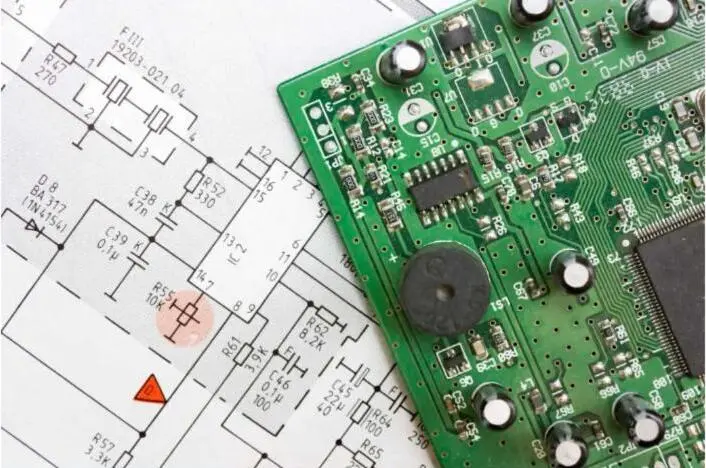
For defense and aerospace programs with strict first-article inspection and qualification requirements, this continuity reduces schedule risk and limits the yield loss that typically appears during a process transfer between separate prototype and production environments. Review volume requirements and scaling timelines with the team.
Engagement Process for GaN Die Attach Programs
Engaging Pro-Active Engineering for GaN die attach services follows a structured process that reduces program risk from the first interaction.
- Share project details. Provide die dimensions, substrate or package type, attach method preference or constraints, volume requirements and any applicable certifications or compliance requirements. Detailed context supports a faster and more precise engineering assessment.
- Engineering review. Pro-Active’s engineering team reviews the design for manufacturability, identifies attach method trade-offs and flags any compliance or traceability requirements that affect the build plan.
- Prototype build. First articles are built using full production processes, with inspection and documentation packages generated at each stage. Results are reviewed against program requirements before production release.
- Production scaling. Validated processes transfer directly to volume production. Traceability records, process parameters and inspection data carry forward without requalification.
Pro-Active Engineering serves defense, aerospace and high-power electronics programs nationally from its Sun Prairie, Wisconsin facility. All GaN die attach work takes place under one roof, under a single quality management system, with a single point of accountability. Start the GaN die attach engagement process.
Frequently Asked Questions
What attach methods does Pro-Active Engineering support for GaN die attach?
Pro-Active Engineering supports advanced die attach methods for GaN and other high-power semiconductor devices. The engineering team evaluates each program’s substrate, package type, operating environment and volume to recommend a method. Conductive epoxy remains available for low-power applications where thermal and hermeticity requirements permit its use.
How does Pro-Active Engineering ensure ITAR compliance for GaN die attach programs?
Pro-Active Engineering is ITAR registered with the Directorate of Defense Trade Controls. The facility applies access controls, data-handling procedures, documentation practices and foreign-national access restrictions consistent with DDTC requirements. All GaN die attach work takes place domestically at the Sun Prairie, Wisconsin facility under a quality management system certified to ISO 9001:2015, AS9100 and JCP standards, with Nadcap accreditation for special processes.
What traceability documentation is provided with GaN die attach assemblies?
Every assembly includes full lot traceability from raw material receipt through final inspection. Documentation includes material certifications, in-process inspection records, acceptance authority records and a certificate of conformance. AS9100 configuration management requirements apply so that as-built records can be compared against as-designed baselines throughout the product lifecycle. Counterfeit part prevention documentation appears per SAE AS5553B methodology.
Can Pro-Active Engineering support both prototype and production volumes for GaN die attach?
Pro-Active Engineering supports programs from a single unit through production volumes. Prototype builds use the same equipment, processes and inspection standards as production runs, so first-article data transfers directly to volume qualification without a separate process development loop. The Speed Shop rapid prototyping line focuses on fast-turn builds, and production scaling is managed within the same facility under the same quality management system.
What inspection methods are used to verify GaN die attach quality?
Pro-Active Engineering applies X-ray inspection per MIL-STD-883 Method 2030 and acoustic microscopy (C-SAM) to verify voiding in die attach bond lines. Automated optical inspection supports placement accuracy verification. Bond-line thickness is confirmed through cross-section analysis and optical inspection. All inspection results are documented and included in the program traceability package.
Conclusion: Integrated U.S. GaN Die Attach Support
The global GaN and SiC power semiconductors market continues to expand toward 2031, driven by defense investment, 5G infrastructure and advanced power electronics. As that demand grows, domestic, ITAR-compliant GaN die attach services become a program-critical supply chain requirement.
Managing separate partners for die attach, traceability, compliance and production scaling introduces risk at every handoff. Pro-Active Engineering consolidates silver sintering and AuSn eutectic GaN die attach, full traceability documentation, ITAR-compliant manufacturing and prototype-to-production scaling under one roof in the United States.
Programs that benefit most from this integrated model include defense and aerospace electronics requiring hermetic packaging, high-power RF assemblies demanding low voiding and documented thermal performance and programs transitioning from prototype to production where process continuity shapes the qualification schedule.
Pro-Active Engineering holds ISO 9001:2015, AS9100, ITAR, JCP and Nadcap certifications and applies SAE AS5553B counterfeit avoidance and NIST 800-171 aligned data handling to every program. This structure creates a single accountable partner from first article through production delivery. Engage the engineering team on a GaN die attach program.