
Key Takeaways
- Solder die attach bonds bare dies to substrates with metallic solder alloys for strong thermal performance and mechanical stability.
- Defense, aerospace and power electronics programs are shifting to domestic providers because of CHIPS Act funding, ITAR rules and traceability demands.
- Buyers specify substrate, alloy, bond-line thickness, voiding limits, placement accuracy, inspection methods and volume to support qualification.
- Pro-Active Engineering provides ITAR-registered solder die attach in Wisconsin with ISO 9001:2015, AS9100, Nadcap and JCP certifications for full traceability.
- Request a quote to review solder die attach requirements with Pro-Active Engineering’s engineering team.
Domestic Demand for Solder Die Attach
Demand for domestic solder die attach services is rising across defense, aerospace and power electronics programs. North America holds a significant share of the global semiconductor bonding market, and aerospace and defense electronics drive demand for bonding solutions that meet strict reliability standards.

Federal investment accelerates this shift. The CHIPS and Science Act supports domestic semiconductor manufacturing and creates demand for advanced bonding equipment and services as new facilities ramp production. Many recent North American packaging expansion projects include advanced die attach materials that improve device reliability and production efficiency.
Compliance pressure compounds these supply chain shifts. ITAR restrictions apply to bonding processes in defense and aerospace applications and limit cross-border transfer of process recipes and qualification data. Programs that rely on offshore or fragmented vendor networks face traceability gaps, audit exposure and geopolitical risk that integrated domestic providers help avoid.
Request a quote to discuss solder die attach requirements with Pro-Active Engineering’s team.
Technical Details Buyers Need to Define
A complete solder die attach specification covers more than alloy selection. Buyers define several core parameters before engaging a provider.
- Substrate type and surface finish: Wetting and voiding depend on the carrier surface, so the substrate material and metallization condition must be defined upfront.
- Alloy selection: Eutectic AuSn, high-lead alloys and lead-free options each carry different process temperatures, thermal performance profiles and qualification needs.
- Bond-line thickness: Bond-line thickness directly affects thermal resistance, wetting and fatigue performance and must align with program targets.
- Voiding limits: Explicit voiding acceptance criteria outperform generic workmanship standards because voids affect heat dissipation and mechanical strength.
- Placement accuracy: Providers should state the exact placement accuracy and the verification method used.
- Inspection methods: Top-view camera inspection cannot verify internal void level or full solder coverage, so criteria for X-ray or acoustic microscopy must be defined.
- Production volume and mix: Volume influences process economics, tooling investment and qualification scope.
Qualification of a solder die attach provider should cover mechanical placement capability and internal joint quality, not visual conformance alone.
Solder Die Attach on Ceramic Substrates
Ceramic substrates support high-reliability microelectronics because they provide thermal stability, hermeticity and dimensional consistency. Reliable solder wetting on ceramic carriers requires clean, oxide-free metallization. Surface finish selection and pre-bond cleaning act as critical process inputs rather than late-stage adjustments.
Ceramic substrates also introduce CTE mismatch relative to the die and solder layer. This mismatch makes the bond-line thickness control mentioned earlier especially important because thermal cycling stress concentrates where thickness drifts from target. Small deviations can amplify stress distribution and affect long-term joint reliability.
Atmosphere control during reflow adds another ceramic-specific requirement. Solder die attach on ceramic substrates benefits from defined heated tools or stages, inert or reducing atmosphere and controlled cooling. These controls manage oxidation, wetting and thermal expansion during bonding.
Comparing Eutectic and Solder Paste Attach
Eutectic die attach and solder paste reflow represent two distinct process approaches suited to different application profiles.
Eutectic die attach uses a solid preform that melts at a single, well-defined temperature, which supports precise process control. The 80Au/20Sn eutectic alloy forms a stable gold-tin intermetallic during bonding that does not grow or degrade below its service temperature limit and avoids Kirkendall voiding. Controlled scrubbing during the liquid phase further reduces void content compared with unscrubbed processes. These properties make eutectic attach a strong fit for military and space applications that restrict epoxy in high-reliability devices.
Solder paste reflow applies paste through stencil printing before die placement and reflow. Vacuum-assisted reflow combined with tuned stencil aperture design can reduce voiding, although the process window and voiding behavior differ from eutectic preform attach. Solder paste reflow aligns well with standard SMT infrastructure and suits programs where specifications do not mandate eutectic alloys.
The choice between methods depends on thermal performance needs, applicable military or space standards, substrate metallization, die fragility and program cost constraints. Many hermetic military and space packages that require zero organic content, and the highest-power applications with demanding thermal performance, justify solder die attach.
Inspection and Quality Controls for Joint Integrity
Joint integrity verification works best with a layered inspection strategy. Visual inspection confirms placement and gross defects but cannot reveal internal voiding. A complete quality plan for solder die attach includes several complementary methods.
- Automated optical inspection (AOI): Confirms die presence, orientation and surface-level placement accuracy after reflow.
- X-ray inspection: Confirms void content and fillet formation after reflow and serves as the standard method for verifying voiding criteria in high-reliability programs.
- Acoustic microscopy: Detects internal voids and delamination that X-ray may miss in certain material combinations.
- Die shear testing: Uses destructive shear testing to verify bond strength and confirm metallurgical bonding across the die footprint.
Strong documentation, electronic component traceability and structured supplier management support compliance and audits in regulated industries. Every inspection record at Pro-Active Engineering feeds a documented quality trail that supports program audits and customer reviews.
Request a technical review of solder die attach inspection requirements with Pro-Active Engineering.
ITAR-Aligned Domestic Manufacturing Advantage
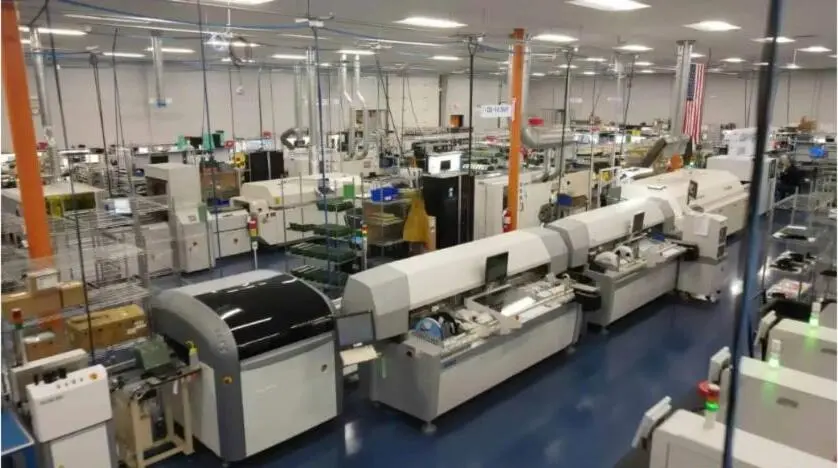
Pro-Active Engineering operates as an ITAR-registered, single-roof manufacturing partner in Sun Prairie, Wisconsin. All solder die attach work, from engineering review through production and inspection, takes place in one controlled facility under documented access and data-handling procedures aligned with DDTC requirements.
The company holds ISO 9001:2015, AS9100, Nadcap and JCP certifications and maintains NIST 800-171 alignment with CMMC readiness. These certifications function as parts of an integrated quality management system that governs process control, documentation, traceability and personnel training across every program.
Organizations that rely on manual supplier visibility processes often face fragmented engagement, inconsistent audit coverage and missing audit-ready documentation. These gaps emerge because each vendor in a multi-tier supply chain introduces new sub-suppliers that require separate tracking and audits. Pro-Active’s single-location model eliminates this exposure by keeping all work under one roof, with no sub-supplier handoffs.
Counterfeit electronic components create high risk in aerospace and defense industries and can lead to product failures and increased quality assurance costs. Pro-Active’s SAE AS5553B-aligned sourcing methodology and SiliconExpert BOM scrubbing address counterfeit risk at the material intake stage.
Working with Pro-Active Engineering
The engagement process follows a structured path from requirements intake through production.
- Requirements intake: Buyers submit die attach specifications including substrate type, alloy preference, voiding limits, placement accuracy, inspection criteria and production volume.
- Engineering review: Pro-Active’s engineering team evaluates design for manufacturability, identifies process risks and confirms capability alignment before production.
- Prototype build: First articles use the same processes and equipment as production runs so prototype results translate directly to volume output.
- Inspection and qualification: AOI, X-ray and shear testing verify joint integrity against program acceptance criteria, and documentation supports customer review and program records.
- Production ramp: Qualified processes scale to production volume with maintained traceability, process controls and quality documentation across the program lifecycle.
A compliance-by-design approach integrates regulatory considerations into engineering, procurement, sourcing and lifecycle management from the outset and reduces the risk of certification delays and redesigns. Pro-Active applies this approach to every program from the first engineering discussion.
Programs That Benefit from an Integrated U.S. Partner
Solder die attach sits at the intersection of material science, process control, inspection rigor and compliance documentation. Programs that gain the most from an integrated domestic partner include defense and aerospace electronics that require ITAR-controlled manufacturing, high-reliability assemblies governed by military or space packaging standards, power electronics with demanding thermal management needs and programs that require continuous prototype-to-production traceability without vendor transitions.

Pro-Active Engineering consolidates engineering, die attach, inspection and compliance documentation under one roof in the United States. This structure reduces vendor fragmentation, supports full traceability and provides a single accountable partner from requirements intake through production ramp.
Request a quote and connect with Pro-Active Engineering’s solder die attach team.
Frequently Asked Questions
What certifications should a solder die attach provider hold for defense and aerospace programs?
Defense and aerospace programs typically require ISO 9001:2015 and AS9100 certifications as baseline quality management credentials. Nadcap accreditation demonstrates process-specific capability in advanced manufacturing disciplines. JCP certification (DD Form 2345) applies to programs involving military-critical technical data. ITAR registration is mandatory for any provider that handles controlled defense articles or technical data. Pro-Active Engineering holds all of these certifications and maintains NIST 800-171 alignment with CMMC readiness to support programs with strict documentation and compliance requirements.
How does vendor fragmentation create risk in solder die attach programs?
When separate vendors manage design, die attach, inspection and compliance documentation, accountability gaps emerge at every handoff. Process changes made by one vendor may not reach others and can create traceability breaks that surface during audits or failure investigations. Each additional supplier introduces another tier of sub-supplier visibility risk, counterfeit exposure and schedule dependency. Programs that consolidate these functions under a single provider gain a continuous documentation chain, unified process ownership and one point of contact for program management and compliance reporting.
When is eutectic die attach required instead of solder paste or epoxy?
Eutectic die attach is required when specifications mandate zero organic content in the bond joint, when applicable military or space packaging standards prohibit conductive epoxy or when thermal performance needs exceed what solder paste or epoxy can deliver. High-power devices that generate substantial heat per die depend on the low thermal resistance of eutectic metallic bonds to maintain safe junction temperatures. The choice between methods depends on thermal performance requirements, applicable military or space standards, substrate metallization, die fragility and program cost constraints. Solder paste reflow remains a viable option for programs where eutectic alloys are not mandated and standard SMT infrastructure is sufficient.
What inspection methods verify solder die attach joint quality?
A complete inspection plan for solder die attach combines multiple methods because no single technique reveals all failure modes. Automated optical inspection confirms placement accuracy and surface-level defects after reflow. X-ray inspection serves as the standard method for quantifying internal void content and verifying fillet formation. Acoustic microscopy adds resolution for detecting delamination and subsurface voids in certain material combinations. Die shear testing provides a destructive method that confirms bond strength and metallurgical integrity across the die footprint. High-reliability programs define acceptance criteria for each method in advance and require documented results as part of the deliverable package.
Can Pro-Active Engineering support both prototype and production volumes for solder die attach?
Pro-Active Engineering supports programs from initial prototype through production ramp within a single integrated workflow. Prototype builds use the same processes, equipment and quality controls as production runs, so qualification data from prototyping transfers directly to volume manufacturing without process revalidation. This continuity removes the prototype-to-production disconnect that creates late-stage manufacturability issues when separate vendors handle each phase. Programs can start with a small first-article build and scale to higher volumes without changing partners, processes or documentation systems.