

Key Takeaways for Wire-Bonding Capacity Planning
- Wire bonding remains a high-volume interconnect method. Scaling from prototype to production requires accurate forecasting of throughput, yield and capacity to avoid shortfalls or compliance issues.
- Effective output follows a simple capacity equation: Effective Output = (UPH × Utilization) × Yield. Bonds per package, equipment utilization and process yield directly shape results.
- Six constraints shape capacity: bond count, wire material choice, fine-pitch complexity, equipment lead time, yield and SPC controls, and transitions to alternative bonding. Each one changes at least one term in the equation.
- Regulated programs under ITAR and AS9100 must embed documentation, traceability and SPC into the production plan from the start to protect yield and schedule.
- Pro-Active Engineering provides integrated DFM, wire bonding, advanced packaging and certified processes under one roof. Align capacity planning with Pro-Active Engineering to match production capability with program requirements.
Wire-Bonding Capacity Equation for Production Planning
Effective wire-bonding capacity depends on four variables: bonds per package, equipment throughput in units per hour (UPH), equipment utilization and process yield. The relationship can be expressed as:
Effective Output = (UPH × Utilization) × Yield
UPH reflects the machine’s rated throughput at a specific bonds-per-package count. Utilization accounts for scheduled downtime, changeovers and setup. Yield represents the share of assemblies that pass inspection and test without rework or scrap.
Program leaders can insert program data into this equation to stress-test any production plan. A high bond count reduces effective UPH. Frequent changeovers reduce utilization and compound that effect. Yield targets that ignore latent defect mechanisms overstate real output. Each constraint below connects directly to one or more of these variables.
Constraint 1: How Bond Count Changes Real Throughput
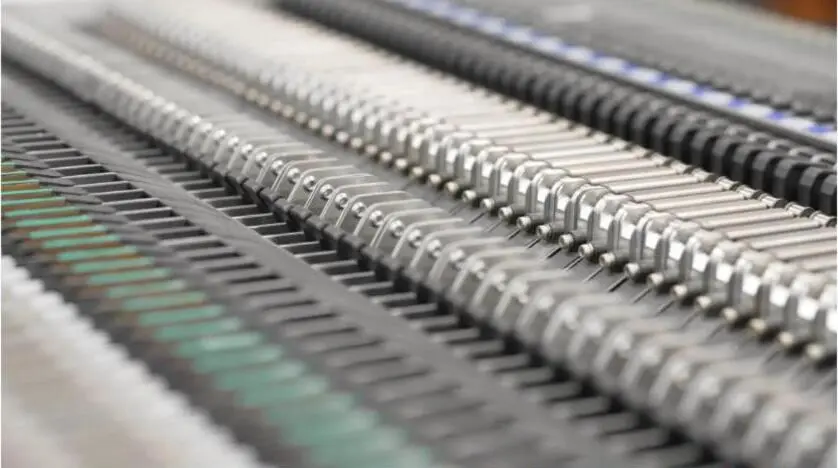
Machine-rated UPH reflects a reference bond count. As package complexity increases, effective UPH drops. Modern thermosonic wire bonders achieve multiple bonds per second during stitch bond formation, but that rate applies to simple geometries. Dense bond maps, stacked die and multi-tier looping require slower indexing, extra tool repositioning and more inspection steps.
The capacity equation absorbs this reality through UPH. A program that models throughput using a simple rated speed without adjusting for actual bond count overestimates output and underplans capacity.
A practical checklist for this constraint follows a clear sequence. First, document the actual bond count per package, not the package family average. Use that count to obtain UPH data from the bonder at the target bond count and loop geometry. Then factor in index time, vision-system cycle time and any multi-pass inspection requirements to reach real throughput. In high-mix programs, recalculate effective UPH for each package type, then identify which package drives the capacity bottleneck so equipment allocation centers on that limiting case.
Start a bond-count and throughput review with Pro-Active Engineering to align bonds-per-package and volume targets with its integrated workflow.
Constraint 2: Copper and Gold Wire Choices at Production Scale
Once bond count and throughput are mapped, wire material selection becomes the next variable affecting UPH, utilization and yield. Copper wire offers lower raw material cost than gold but can increase pad stress, cratering risk, capillary wear and oxidation sensitivity. These effects often require changes to EFO systems, protective atmosphere, bond parameters and package qualification.
Those changes consume engineering time, extend qualification cycles and reduce utilization during transition. In applications that demand extreme reliability under harsh environmental conditions, gold wire bonding often remains the preferred or only viable option. Gold’s long qualification history in regulated programs reduces compliance risk and supports stable yield over extended production runs.
Copper bonding can support high-volume programs when the bond-pad structure supports the required process window and recurring material cost drives decisions. A controlled conversion plan that separates baseline establishment, machine readiness, capillary tooling, process window development and package qualification protects yield and reliability at scale.
A practical checklist for this constraint starts with the bond pad. Confirm that bond-pad metallization and substrate support copper bonding without cratering risk. Assess whether existing equipment requires EFO hardware, gas-delivery or software changes. Evaluate the qualification timeline for copper against the program schedule. Determine whether gold’s reliability history in the target environment justifies retaining it. Model the yield impact of a material transition on the capacity equation before committing.
Review copper and gold tradeoffs with Pro-Active Engineering and connect material decisions to interconnect performance.
Constraint 3: Fine-Pitch Layouts and Loop-Shape Limits
Fine-pitch wire bonding introduces inspection and process limits that reduce achievable yield. Wire sweep during encapsulation occurs when wires run too long or loop profiles sit too high, which causes shorts or breaks. This effect becomes a direct manufacturability constraint in fine-pitch layouts. Non-stick on pad and non-stick on lead failures in high-volume production often stem from surface contamination, improper machine parameters or oxidation. These risks compound in high-mix environments with frequent changeovers.
Inspection capability must scale with bonding capability. Conventional automated optical inspection systems often lack the depth resolution, contrast control and configurability required for ultra-fine, reflective wires in aerospace and automotive applications. Advanced 3D metrology systems improve measurement fidelity but introduce throughput tradeoffs at high volume.
A practical checklist for this constraint focuses on geometry and inspection. Confirm that pad pitch and geometry meet minimum requirements for the target wire diameter and bonding method. Specify loop height and profile requirements before tooling selection. Identify whether 2D AOI is sufficient or whether 3D metrology is required for the target pitch. Assess contamination control protocols across upstream assembly steps. Model the yield impact of inspection escapes on the capacity equation.
Connect with Pro-Active Engineering to assess fine-pitch requirements using its DFM and metrology expertise.
Constraint 4: Equipment Lead Time and Utilization in High-Mix Factories
Utilization in the capacity equation changes with factory behavior. It reflects scheduled uptime minus changeovers, maintenance, qualification runs and setup for new part numbers. In high-mix, regulated programs, changeover frequency is high and each setup requires documented parameter verification.
High-mix manufacturing often combines multiple bonding technologies with frequent setup changes. Each transfer between systems introduces variation that reduces process stability. Wire bond quality depends on bond-pad surface condition, tool selection, ultrasonic energy, force, time and process window discipline, not only the presence of a bonder.
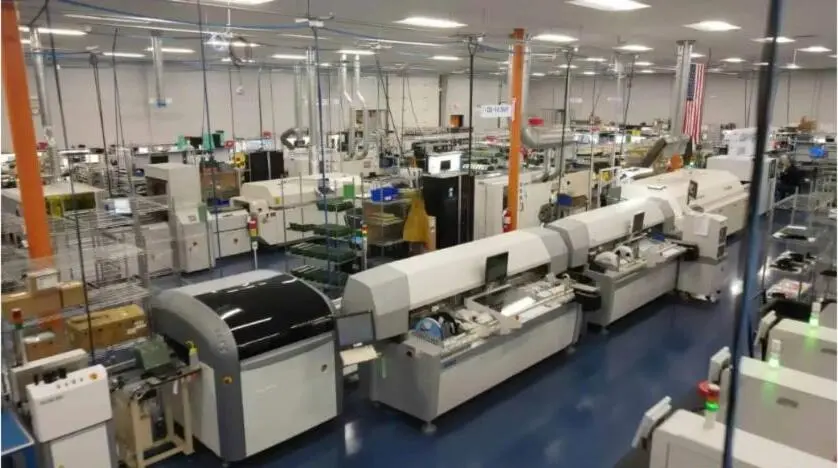
A large share of advanced semiconductor packaging currently occurs offshore, which leaves domestic programs exposed to supply chains that add lead-time and compliance risk. Onshore infrastructure with documented, repeatable processes supports utilization targets and traceability requirements.
A practical checklist for this constraint starts with mix definition. Identify the number of distinct part numbers that require wire bonding in the production mix. Estimate changeover time per part number and calculate its impact on weekly utilization. Confirm that production equipment can run validated prototype recipes without a second development loop. Assess whether the supplier’s infrastructure supports required documentation and traceability at production volume. Factor equipment lead time into the program schedule before committing to a ramp date.
Discuss equipment and utilization plans with Pro-Active Engineering and validate assumptions against its single-roof model.
Constraint 5: Yield, SPC and Compliance in Regulated Production
Yield often becomes the most consequential variable in the capacity equation for regulated programs. In high-volume production, even a small yield drop can create significant losses in revenue and schedule. Latent defect mechanisms increase this risk. Wire bond lift, voids in die attach and die cracks often escape initial electrical testing yet cause field failures after thermal cycling or vibration exposure.
Statistical process control, pull and shear testing and scanning acoustic microscopy help detect latent failures before field exposure. Under ITAR and AS9100, these controls must be documented, traceable and auditable. Compliance overhead functions as a yield-protection mechanism that belongs in the production plan from the start.

A practical checklist for this constraint focuses on targets and controls. Define the yield target for each package type and map it to the capacity equation. Identify which destructive and nondestructive tests the applicable standards require. Confirm that SPC control charts exist for critical bond parameters. Verify that traceability records link each assembly to its process parameters and inspection results. Assess whether the supplier’s quality system holds AS9100 certification and ITAR registration.
Clarify yield and compliance plans with Pro-Active Engineering and align them with its certified processes.
Constraint 6: When to Shift to Thermocompression or Hybrid Bonding
Wire bonding reaches scalability limits as pitch shrinks and package density increases. The process window narrows and inspection overhead grows. Fine-pitch hybrid bonding continues to advance toward high-volume readiness, but the transition carries its own qualification burden and infrastructure needs.
Thermocompression bonding addresses some fine-pitch limits but requires tighter thermal control, different tooling and separate qualification. Production environments for heterogeneous integration must manage more materials, more process combinations and tighter tolerances than before, while device architectures evolve faster than traditional tools can adapt.
The capacity equation should guide decisions to move away from wire bonding. When achievable yield at the target pitch falls below the program minimum, or when UPH at the required bond count cannot meet volume demand, an alternative interconnect method deserves evaluation.
A practical checklist for this constraint begins with current performance. Calculate whether the current wire-bonding process can meet the yield target at the required pitch. Assess whether thermocompression or hybrid bonding qualification timelines fit the program schedule. Identify whether the supplier offers multiple interconnect methods under one roof to avoid requalification at a new facility. Evaluate the infrastructure and tooling investment required for the alternative method. Confirm that the alternative method meets applicable reliability and compliance standards.
Explore hybrid and thermocompression options with Pro-Active Engineering inside its advanced packaging workflow.
Next-Step Checklist for Scaling Wire-Bonded Programs
The capacity equation introduced earlier connects every constraint to a production forecast. Each constraint modifies at least one variable in that equation. Overlooking any constraint produces an optimistic forecast that fails under production conditions.
Program leaders preparing to scale a wire-bonding process can work through the following steps:
- Build an internal volume forecast by part number, including mix variability and ramp schedule.
- Define yield targets for each package type based on program requirements and applicable standards.
- Establish a compliance matrix that maps ITAR, AS9100 and traceability requirements to specific process controls.
- Evaluate wire material selection against the bond-pad structure, reliability environment and qualification timeline.
- Assess fine-pitch and loop-complexity requirements against available inspection and metrology capability.
- Shortlist suppliers that provide integrated DFM, advanced interconnect and certified manufacturing in a single domestic workflow.
Pro-Active Engineering delivers wire bonding, flip chip assembly and hybrid high-density interconnect under one roof in Sun Prairie, Wisconsin. AS9100 certification, ITAR registration and Nadcap accreditation support regulated programs from prototype through production.
Begin a capacity-planning discussion with Pro-Active Engineering and connect forecasts to its advanced interconnect capabilities.
Frequently Asked Questions
How does high-mix production affect wire-bonding yield and throughput?
High-mix production introduces frequent changeovers between part numbers. Each changeover requires setup verification, parameter confirmation and often a first-article inspection. Every changeover reduces utilization and creates an opportunity for process drift.
When bond parameters lack full documentation and reproducibility, yield variation increases across the mix. Programs that qualify a process on a single package type and then apply it across a broad mix without re-verification often see yield degradation that prototype work did not predict. A strong solution involves a manufacturing partner that maintains documented, validated recipes for each part number and uses a production platform capable of running multiple processes without manual requalification between lots.
When should a program consider switching from gold to copper wire bonding?
This decision depends on three factors: bond-pad metallization compatibility, program reliability requirements and production volume. Copper bonding requires a process window that the pad structure can support without cratering or oxidation-related defects.
For programs in defense, aerospace or medical applications where long-term reliability under thermal cycling and vibration is mandatory, the qualification history mentioned earlier often outweighs material cost. Copper becomes a stronger candidate when volume is high enough that material cost becomes a significant recurring expense and the pad structure and equipment configuration can support a stable copper process window. Any transition requires a structured qualification plan that validates yield and reliability before production commitments.
What compliance documentation do ITAR-regulated wire-bonding programs require?
ITAR-regulated programs require that the manufacturing facility holds registration with the Directorate of Defense Trade Controls and maintains access controls, data-handling procedures and personnel training records consistent with ITAR obligations. AS9100 certification adds documented process controls, first-article inspection records, nonconformance tracking and corrective action systems.
Wire-bonding processes in regulated programs typically require pull and shear test records, SPC data for critical parameters and full traceability linking each assembly to its process parameters and inspection results. Programs subject to MIL-STD or equivalent specifications add destructive bond testing at defined intervals. A supplier that embeds these documentation requirements into its standard workflow reduces the compliance burden on the program team.
How does Pro-Active Engineering support the move from prototype to production?
Pro-Active Engineering integrates DFM into the design phase so wire-bonding process parameters, pad geometry and loop specifications receive validation before the first prototype build. Prototypes run on the same equipment, processes and quality controls as production, so validated recipes transfer directly without a second development loop.
The single-roof model covers design, rapid prototyping, wire bonding, advanced packaging, inspection and system integration. This structure removes the handoff risk that often causes process drift when programs move between separate vendors. AS9100 certification and ITAR registration extend across the full workflow, so compliance documentation remains continuous from prototype through production.
What inspection methods does production-scale wire bonding require?
Production-scale wire bonding relies on a mix of automated optical inspection, pull and shear testing and, for latent defect detection, scanning acoustic microscopy and thermal cycling. Conventional 2D AOI often falls short for fine-pitch geometries because it lacks the depth resolution needed to verify loop height and detect wire sag or deformation on reflective wire surfaces.
Advanced 3D metrology systems improve measurement fidelity for complex loop geometries but introduce throughput tradeoffs that belong in the capacity plan. For regulated programs, inspection records must remain traceable to individual assemblies and retained under the applicable quality management system. Programs that defer inspection investment until yield problems appear in production face higher recovery costs than programs that specify inspection requirements during DFM.