

Key Takeaways
-
IPC Class 3 PCBA is a customer-specified requirement that applies the highest acceptance criteria across bare-board fabrication, soldering and assembly workmanship.
-
Four primary IPC documents govern a Class 3 build: IPC-6012 for the bare board, J-STD-001 for soldering, IPC-A-610 for assembly acceptance and IPC/WHMA-A-620 for cable and harness. Each must be called out on drawings and purchase orders.
-
Class 3 tightens inspection, documentation and traceability compared with Class 2, which increases cost and process control. It fits applications where failure risks life, mission or regulatory compliance.
-
Effective procurement packages state the document, revision and class for every layer, plus inspection, traceability and any ITAR or AS9100 flow-downs, so the requirement becomes enforceable.
Defining IPC Class 3 for High-Reliability Electronics
IPC, now operating as the Global Electronics Association, defines three product performance classes. Class 3 is the highest. It applies where continued performance or performance on demand is critical and the operating environment may be harsh. Life-support systems, flight-critical electronics and mission-critical defense hardware are representative applications.
Class 3 is a requirement the customer specifies and then verifies, not a certification a shop earns and displays. IPC product classes represent levels of product performance and the potential consequences of service interruption. They are contract terms, not marketing tiers, and the class must appear in the contract or purchase order.
Program teams assign Class 3 based on a risk analysis of the specific application. Aerospace, medical or military labels alone do not determine the classification.
The Standards Stack That Creates a Class 3 Build
Class 3 functions as a stack of documents, with each standard controlling a different part of the build. Specifying only IPC Class 3 without naming the applicable standards leaves the requirement ambiguous and unenforceable. The four primary documents are:
IPC-6012 Qualification and Performance Specification for Rigid Printed Boards. This standard governs the fabricated bare board. It defines measurable acceptance criteria for hole plating, annular ring, dielectric spacing, registration, solder mask adhesion and thermal stress survival across the three performance classes. Class 3 imposes tighter plating requirements, stricter void and crack limits and more frequent coupon-based conformance testing than Class 2. IPC-6012 is a bare-board fabrication specification only and does not govern assembly workmanship or soldering processes.
J-STD-001 Requirements for Soldered Electrical and Electronic Assemblies. This standard governs materials and soldering processes. It defines flux classification, process controls, facility environment requirements and verification criteria for solder joints. J-STD-001 tells the production line how to solder. It does not define visual acceptance criteria for the finished assembly, which is IPC-A-610 role. Most aerospace and defense contracts require both standards together.
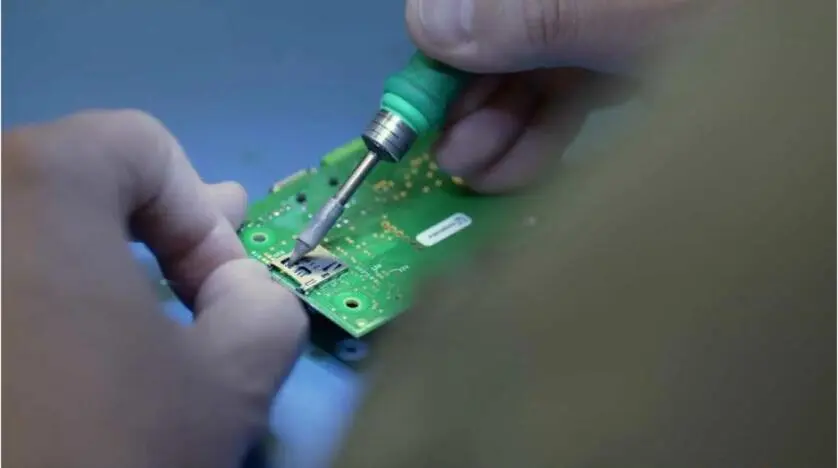
IPC-A-610 Acceptability of Electronic Assemblies. This standard governs workmanship acceptance criteria and inspection of the assembled board. It defines in visual and dimensional terms whether a PCBA passes or fails. Under Class 3, inspection discipline tightens significantly, conditions treated as process indicators at Class 2 become defects at Class 3 and documentation requirements increase. IPC-A-610 is not an assembly process standard and does not authorize repair or product change.
IPC/WHMA-A-620 Requirements and Acceptance for Cable and Wire Harness Assemblies. This standard governs cable and wire harness assemblies as a distinct controlled object. It applies when the PCBA sits inside a cabled or box-built system. IPC-A-620 does not govern the printed board or its solder joints. Those remain under IPC-6012, J-STD-001 and IPC-A-610.
The scope boundary matters. The end product assembly IPC class should not exceed the performance classification invoked for the bare PCB. Specifying Class 3 on the assembly while leaving the bare board at Class 2 creates a mismatch that puts the program at risk.
Discuss the standards stack for an upcoming Class 3 build with a Pro-Active engineer.
Comparing IPC Class 2 and Class 3 for PCB Assembly
The Class 2 versus Class 3 decision reflects a risk and cost trade-off, not a workmanship preference. Class 3 is a specific set of acceptance criteria for products where failure can hurt someone or end a mission.
Class 3 tightens acceptance criteria, inspection discipline and documentation requirements compared with Class 2. That tightening increases cost and process control burden.
Class 2 is sufficient for many commercial and industrial products. Most industrial controls, telecom infrastructure and commercial electronics ship as Class 2. Over-specifying Class 3 on a Class 2 design increases cost without improving the underlying design.
Class 3 becomes mandatory when the end product has a regulatory requirement, when downtime or field failure risks life or a mission or when a customer contract explicitly requires it. Aerospace flight hardware, defense electronics and medical life-support equipment are common examples.
The practical trap is a class mismatch across the build. A purchase order that simply states IPC compliant does not provide the necessary details for suppliers. Specifying Class 3 on the assembly drawing while leaving the bare board at Class 2 or the reverse creates a gap between what is fabricated and what is inspected. That gap is where compliance failures originate, and it usually starts on the drawing.
Specifying Class 3 on Drawings and Purchase Orders
The drawing and purchase order make Class 3 enforceable. Vague notes such as build to IPC Class 3 create ambiguity because they do not identify which standard governs each part of the build.
A clear requirement names the standard, revision and class for each layer of the build. IPC-6012 requires that a fabrication drawing state the document, revision and class together as a single clause, such as IPC-6012F Class 3, because a bare IPC-6012 leaves the revision and class ambiguous. The same logic applies to the assembly and workmanship standards.
A complete procurement package for an IPC Class 3 PCBA program should address each layer separately:
-
The bare board standard, revision and class, for example IPC-6012F Class 3, with any applicable addendum called out explicitly if the program requires it
-
The soldering process standard and class, for example J-STD-001J Class 3
-
The workmanship and acceptance standard and class, for example IPC-A-610J Class 3
-
The cable and harness standard and class if the PCBA is part of a cabled or box-built system, for example IPC/WHMA-A-620F Class 3
Beyond the standards callout, the procurement package should state inspection and acceptance expectations, documentation and traceability requirements and any program-specific flow-downs such as ITAR handling requirements or AS9100 quality system obligations. Those fields make the requirement complete. A requirement missing the controlled object, designation and revision, class, agreed exceptions, precedence, acceptance evidence or approval authority is not ready to release to suppliers.
Verifying That a Supplier Builds to IPC Class 3
Supplier verification functions as an ongoing discipline, not a one-time audit. Class 3 acceptance criteria apply at incoming inspection, in-process and at final inspection. The documentation a buyer requests should reflect that scope.
For bare board conformance, a complete supplier document package should include a Certificate of Conformance, material certificates, electrical test reports, AOI inspection summaries, dimensional inspection reports, microsection photos and measured values, thermal stress or solderability records and impedance coupon reports where controlled impedance is required.
For assembly conformance, IPC Class 3 requires full traceability. Each assembly should be traceable to the specific operator, equipment, materials, inspection records and test results. Documentation packages for Class 3 programs typically include first article inspection reports, solder profile validation records, X-ray reports for BGAs and bottom-terminated components and any program-specific documentation required by the customer.

Regulated-program verification extends beyond visual workmanship acceptance into end-to-end serialized traceability. Every panel, assembly, component lot, operator and test result must bind to the unit serial number. That depth matters because lot-level traceability cannot answer the mission-critical question of which specific board failed and what went into it.
A supplier that can produce this documentation on request demonstrates Class 3 capability in practice. Pro-Active Engineering holds ISO 9001:2015 and AS9100 certifications, ITAR registration, JCP certification and Nadcap accreditation and documents work to IPC-A-610 and J-STD-001. The same production processes run from prototype through volume, so Class 3 discipline established in development carries into production without a process break. An engineering-led model builds DFM and quality planning in from the first review, which reduces late-stage manufacturability surprises that can threaten Class 3 compliance.
See how Pro-Active documents Class 3 builds from prototype through production.
Class 3 Within Regulated Defense, Aerospace and Medical Programs
Verification grows more complex when the program layers compliance regimes on top of the IPC standards stack. A Class 3 requirement rarely travels alone. Defense, aerospace and medical programs typically add further obligations.
AS9100D is a quality management system standard for a supplier organization, not a technical PCB specification. Holding AS9100D certification does not certify that a board meets a given IPC requirement, so buyers still define the applicable IPC standard on the drawing. AS9100D and IPC Class 3 stack together, and each covers a different requirement.
ITAR, the International Traffic in Arms Regulations, is a separate export-control regime that applies to manufacturers, exporters and handlers of technical data for defense articles on the U.S. Munitions List. ITAR registration covers U.S. persons who manufacture, export or handle technical data for defense articles, including shops that never export directly. An assembly partner ITAR registration status matters as much as its workmanship standard when the program involves controlled technical data or controlled unclassified information.

CMMC Cybersecurity Maturity Model Certification requirements apply to contractors handling Federal Contract Information and Controlled Unclassified Information, with the required level depending on the contract. These regimes operate alongside IPC Class 3 and AS9100 obligations.
Pro-Active Engineering operates as an ITAR-registered facility. Access controls, data-handling procedures, documentation practices, foreign-national access restrictions per DDTC and personnel training records are in place. That posture addresses the full regulated-program stack, not just the workmanship standard, which aligns with defense and aerospace program needs.
Start a regulated Class 3 program with an ITAR-registered, AS9100-certified partner.
Clarifying Type 3 PCBs and IPC-620 in Class 3 Contexts
Because the standards stack uses several similar labels, some adjacent terms often cause confusion. One common example is the phrase type 3 PCB. In IPC documentation, board type refers to construction characteristics, such as whether a board has plated holes, blind vias or buried vias, not to the performance class. A type 3 board in that context describes a construction family, not a reliability tier. The performance classification always appears as Class 1, Class 2 or Class 3.
IPC-620, formally IPC/WHMA-A-620, governs cable and wire harness assemblies, not the printed board itself. It applies when a PCBA integrates into a cabled or box-built system and the harness must also meet Class 3 acceptance criteria. It does not replace or overlap with IPC-6012, J-STD-001 or IPC-A-610 for the board and its solder joints.
Conclusion: Turning Class 3 Requirements Into Documented Builds
IPC Class 3 PCBA is specified and verified across a stack of standards, not purchased off a shelf. Each layer of the build has a governing document, and each must be called out explicitly to make the requirement enforceable.
The practical sequence is straightforward. Map the applicable standards to the drawing and purchase order with the document, revision and class stated for each layer. Define documentation and traceability requirements in the procurement package. Evaluate suppliers against those requirements rather than against certifications alone.
Pro-Active Engineering is a Wisconsin-based, engineering-led, ITAR-registered PCBA manufacturer with ISO 9001:2015, AS9100, JCP and Nadcap credentials and documented compliance to IPC-A-610 and J-STD-001. An integrated workflow from DFM and rapid prototyping through volume assembly, conformal coating and box build keeps Class 3 discipline consistent from the first prototype to full production.
Start a Class 3 build with a partner that documents every step.