
Last updated: August 24, 2026
Key Takeaways for Regulated PCB Programs
- Offshore quick-turn PCB services introduce ITAR exposure, tariffs and unstable logistics that raise total cost for regulated programs.
- Vendor fragmentation across design, fabrication and assembly creates accountability gaps and delays when defects or schedule slips occur.
- Integrated DFM during design, not after file submission, reduces respins and improves first-pass yield from prototype through production.
- AS9100, ITAR registration, JCP and Nadcap together provide the traceability and access controls required for defense and aerospace work.
- Pro-Active Engineering delivers ITAR-compliant US quick-turn PCB fabrication and assembly under one roof; evaluate fit for the next program with a detailed quote from the team.
How Fragmented Vendors Increase PCB Program Risk
Splitting design, fabrication, assembly and testing across separate providers creates accountability gaps at every handoff. When a defect surfaces late, no single partner owns the root cause. Communication slows and schedule risk compounds.
The structural problem is fragmentation itself. Each vendor focuses on its own scope and metrics. No one manages the full program, so engineering teams spend time coordinating instead of developing new designs.
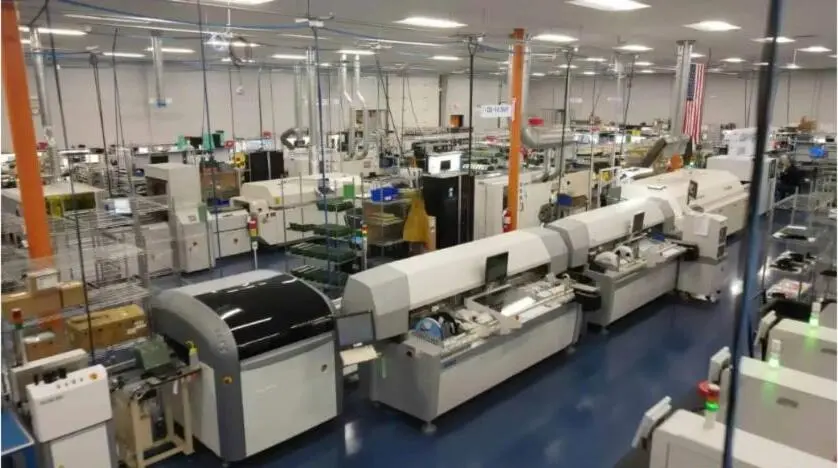
An integrated domestic partner removes those handoffs. Pro-Active Engineering consolidates PCB design, rapid prototyping, assembly, conformal coating, testing and box build into one workflow. One point of contact owns the program from concept through integration. Visibility improves and accountability stays clear.
How Late DFM Discoveries Delay Development
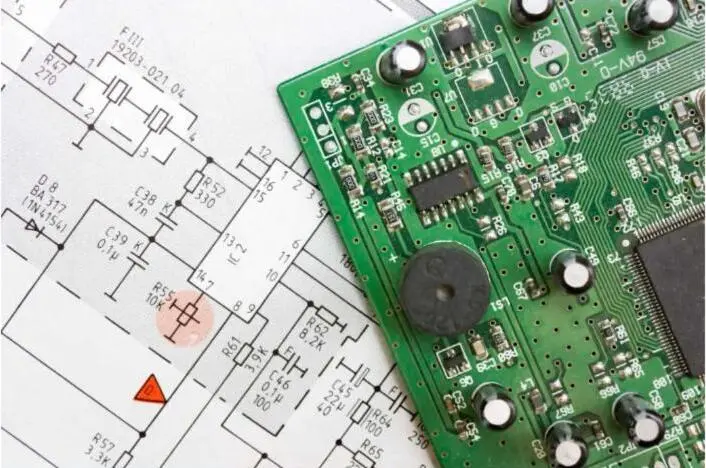
Manufacturability issues that surface after prototypes are ordered are expensive to resolve because they require design respins, new tooling and schedule changes. These late discoveries often carry into production. Poor DFM implementation leads to yield losses from warpage, delamination and solder defects that could have been prevented during layout.
The cost compounds at every stage. Effective DFM practices focus on catching issues during design rather than after fabrication. Early review reduces design iterations and respins when programs move from prototyping to volume manufacturing.
Reputable US quick-turn providers run automated DFM checks before fabrication starts. These checks verify clearances, annular ring, solder mask registration and impedance targets as an early gate. The strongest providers combine automated checks with engineering review for complex builds.
Pro-Active Engineering integrates DFM into the design phase, not as a downstream gate. Engineering and manufacturing operate within one workflow. Sourcing insight and quality planning become active inputs during layout. Programs reach the production line with fewer surprises and shorter corrective-action cycles.
Compliance Gaps That Expose Regulated PCB Programs
Beyond manufacturability, regulated programs face a second structural challenge: compliance exposure. Offshore routes introduce compliance gaps that defense and aerospace programs cannot absorb. AS9100 Rev D functions as the baseline supplier qualification for nearly every US defense prime contractor and aerospace OEM. AS9100 certification is separate from ITAR registration, and a manufacturer can hold one without the other, but programs handling defense-related technical data and hardware typically require both.
Technical data under ITAR includes information required for the design, development, production, manufacture, assembly, operation, repair, testing, maintenance or modification of defense articles. This scope covers CAD models, drawings, schematics, manufacturing notes and test procedures. Sending that data offshore creates exposure that ITAR registration is designed to prevent.
Military and defense PCB applications frequently require MIL-STD, ITAR and Nadcap together for complete compliance. Pro-Active Engineering holds ISO 9001:2015, AS9100, ITAR registration, JCP certification and Nadcap accreditation. The facility applies documented access controls, data-handling procedures and personnel training records consistent with ITAR requirements and NIST 800-171 alignment. Full traceability and documentation control are standard on every build.

Why Prototype-to-Production Handoffs Create Friction
A common failure point in PCB programs is the handoff from quick-turn prototype to volume production. When the prototype vendor and the production vendor differ, processes diverge. Quality baselines shift and first-article failures increase.
Transitioning from prototype to production requires locking the BOM, resolving component end-of-life risks, establishing alternate approved part numbers and defining a scalable test strategy. These steps stay straightforward when one partner owns both phases. They become coordination problems when vendors change.
Pro-Active Engineering builds prototypes on the same processes, equipment and quality standards used for full-scale production. Assemblies that pass inspection at the prototype stage pass inspection at volume under the same criteria. The transition becomes a controlled ramp instead of a restart.
Comparing US Quick-Turn Provider Models
Engineers evaluating domestic PCB alternatives encounter several provider categories, and each model carries distinct trade-offs.
Offshore brokers offer low unit prices but introduce IP exposure, counterfeit risk, geopolitical supply chain vulnerability and long logistics cycles. Offshore PCB assembly lead times from Asia often exceed domestic cycles, which requires safety stock that erodes the unit-price advantage.
Large EMS providers prioritize high-volume programs. Prototype and low-volume builds receive less engineering attention. DFM integration often stays limited to automated file checks instead of collaborative design review.
Design-only firms produce layouts without production ownership. Manufacturability issues surface at the fabricator instead of during design, and the design firm carries no accountability for yield or schedule.
Local job shops offer proximity and responsiveness but often lack automated inspection infrastructure, Class 3 workmanship standards and the certification posture required for regulated programs.
An engineering-led domestic manufacturer addresses the gaps across all four categories. It provides ITAR-compliant manufacturing, integrated DFM, advanced inspection and scalable production under one accountable partner.
Checklist for Selecting a US Quick-Turn PCB Partner
Selecting a US quick-turn PCB partner requires alignment with specific program needs. The following checklist covers criteria that matter most for regulated and complex work.
- Certifications: Confirm ISO 9001:2015, AS9100, ITAR registration and any program-specific requirements such as JCP or Nadcap accreditation.
- Inspection methods: Look for 100% automated optical inspection, flying probe or in-circuit testing and X-ray capability for BGA and bottom-terminated components.
- Traceability practices: Require lot-level component traceability, documented BOM scrubbing and counterfeit avoidance methodology such as SAE AS5553B.
- DFM integration: Confirm that DFM review occurs during design, not only at file submission, and that engineering and manufacturing share one workflow.
- Prototype-to-production continuity: Verify that prototypes run on production processes and that the same facility handles volume builds.
- Advanced capability fit: For high-density or thermally demanding designs, confirm availability of HDI stackups, heavy copper, metal-core constructions, wire bonding or flip chip assembly as needed.
- Onboarding readiness: Ask about pilot project options, NPI process steps and transition support for programs moving from an existing supplier.
Connect with Pro-Active Engineering’s team to walk through these criteria for a specific program and determine fit for domestic quick-turn manufacturing.
When an Integrated Domestic PCB Partner Makes Sense
Vendor fragmentation, late DFM discoveries, compliance gaps and prototype-to-production friction compound across a program lifecycle. A program that starts with an offshore quick-turn prototype, discovers a manufacturability issue at volume and then needs to requalify a domestic supplier for ITAR compliance loses time, budget and schedule margin at every step.
An integrated domestic manufacturer reduces that exposure structurally. Engineering, manufacturing and quality operate within one system. Compliance documentation is built into the workflow instead of assembled after the fact. Prototypes are production-ready by design.
For programs in defense, aerospace, medical and industrial markets where reliability, traceability and regulatory compliance remain nonnegotiable, the integrated domestic model becomes the lower-risk path when total program cost is the measure.
Frequently Asked Questions
How do US quick-turn PCB providers integrate DFM to reduce prototype-to-production risks?
Strong US quick-turn providers integrate DFM at two levels. Automated checks run at file submission to flag clearance violations, annular ring issues, solder mask registration problems and impedance targets before fabrication begins. Engineering review follows for complex builds and covers stackup feasibility, component placement for assembly yield, thermal relief, fiducial placement and test point accessibility.
Providers that combine both levels catch issues before prototypes are built instead of after. When engineering and manufacturing share one workflow, DFM inputs also include sourcing insight and quality planning. This approach reduces the risk of component obsolescence, footprint mismatches and process incompatibilities during the production transition. Pro-Active Engineering applies DFM during the design phase as a standard part of its integrated workflow, not as a separate downstream gate.
What ITAR and AS9100 requirements apply to defense and aerospace PCB programs?
ITAR registration with the U.S. Department of State’s Directorate of Defense Trade Controls is required for any US manufacturer handling defense-related technical data and hardware. This scope includes design documentation, manufacturing notes and test procedures. ITAR registration governs access controls, data-handling procedures, foreign-national access restrictions and personnel training records.
AS9100 Rev D is the Quality Management System standard for aviation, space and defense industries. It incorporates the full ISO 9001:2015 standard and adds aerospace-specific requirements including configuration management, counterfeit parts prevention, First Article Inspection, lot-level traceability, operational risk management and product safety provisions. As noted earlier, AS9100 and ITAR are distinct requirements that defense programs need together.
Beyond those two certifications, programs also require IPC-A-610 Class 3 workmanship standards and documented component sourcing from authorized distributors. Nadcap accreditation applies to specific manufacturing processes including specialized coating, chemical processing and non-destructive testing. Pro-Active Engineering maintains the full certification posture described earlier: ISO 9001:2015, AS9100, ITAR registration, JCP and Nadcap.
How does total cost of ownership compare between domestic and offshore options for regulated prototypes?
The unit-price gap between domestic and offshore PCB fabrication narrows once a complete cost model is applied. A full total cost of ownership comparison includes the fabrication quote, inbound freight, tariff exposure, safety stock carrying costs, expedite premiums, rework and scrap rate differences and engineering iteration costs, including change orders.
For regulated-industry prototypes in defense, aerospace and medical programs, domestic fabrication provides faster engineering iteration, domestic origin documentation, restricted supply-chain controls and reduced IP and compliance risk. These factors carry program value that does not appear in a simple fabrication quote comparison. At low and prototype volumes, logistics friction, minimum-order requirements and rework risk associated with offshore sourcing often offset the unit-price advantage. For programs with ITAR requirements, offshore sourcing introduces compliance exposure that adds cost and risk regardless of unit price.
What advanced interconnect and thermal capabilities are common among US providers for complex applications?
US providers serving defense, aerospace and industrial applications offer advanced capabilities beyond standard PCB assembly. On the interconnect side, capabilities include HDI stackups with tight-tolerance microvias, blind and buried vias, via-in-pad designs, wire bonding, flip chip assembly and hybrid high-density assemblies. These options support compact, high-performance designs where standard through-hole and surface mount approaches are insufficient.
On the thermal side, providers offer metal-core constructions, heavy copper integration, direct thermal path technology and silver sintering for high-power and high-current applications. These engineered solutions reduce thermal resistance and extend product life in demanding environments. Pro-Active Engineering provides advanced interconnect and packaging capabilities including wire bonding, flip chip assembly and hybrid assemblies, along with thermal management solutions including silver sintering, direct thermal path technology, advanced metal-core constructions and heavy copper integration within its integrated engineering and manufacturing workflow.
Conclusion: Selecting a US Quick-Turn PCB Partner
The search for US quick-turn PCB alternatives to PCBWay reflects a clear program need for reliable domestic manufacturing that covers compliance, traceability and prototype-to-production continuity without requiring teams to manage multiple vendors. Offshore quick-turn services introduce IP exposure, logistics uncertainty and compliance gaps that regulated programs cannot absorb. Fragmented domestic supply chains create accountability gaps that delay development and inflate total program cost.
An integrated domestic manufacturer that combines engineering, ITAR-compliant manufacturing and production-ready processes under one roof addresses those problems structurally. Pro-Active Engineering has delivered that model for defense, aerospace, medical and industrial customers since 1996 from its facility in Sun Prairie, Wisconsin.
Start the conversation with Pro-Active Engineering’s team about ITAR-compliant prototype and production services from an integrated US manufacturer.