

Last updated: July 31, 2026
Key Takeaways
- Fragmented suppliers for design, fabrication, assembly and test create compounding risks that delay programs and expose teams to compliance gaps.
- USA quick-turn PCB fabrication succeeds when prototypes use full production processes, which supports smooth scaling to volume manufacturing.
- Domestic sourcing reduces logistics risk, supports ITAR and AS9100 compliance and improves traceability for defense, aerospace and medical programs.
- Evaluating providers on engineering depth, DFM integration, quality systems, supply-chain resilience and scalability identifies partners that prevent handoff failures.
- Pro-Active Engineering delivers integrated domestic workflows through its Speed Shop. Request a quote to align capabilities with the next program.
Quick-Turn PCB Fabrication for Production-Ready Prototypes
Quick-turn PCB fabrication for prototypes covers the full sequence from design files to tested assemblies on a compressed schedule. The process includes bare-board fabrication, component sourcing, SMT and through-hole assembly, automated optical inspection and functional or flying-probe testing.
The critical distinction is whether the prototype uses production processes or bench methods. Prototype assemblies that rely on manual soldering or semi-automated methods diverge from production environments, which creates a gap that often surfaces as rework, redesign or yield loss when volume ramps. Production-ready prototypes use the same pick-and-place programming, reflow profiles and inspection standards as full-scale builds. Successful designs then move from development to production without process changes.
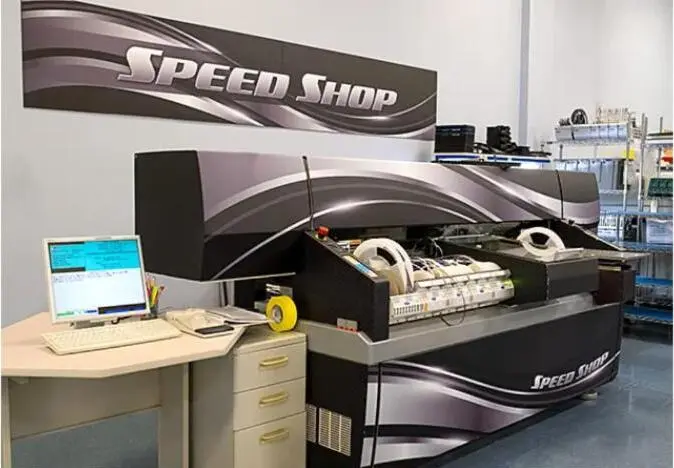
Pro-Active Engineering’s Speed Shop delivers prototype assemblies through a dedicated fast-turn SMT and through-hole line, with AOI included and a minimum order quantity of one unit.
Why Domestic PCB Sourcing Supports Speed and Compliance
Domestic sourcing directly affects quick-turn performance, compliance and risk. Supply-chain conditions reinforce the case for domestic PCB fabrication. Component lead times for certain memory and logic devices have extended, and US tariffs on Chinese imports have pushed electronics manufacturers to diversify sourcing and explore nearshoring options.
Many mid-market manufacturers are bringing supply chains home, reinforced by tariffs and strong reshoring tailwinds. For defense, aerospace and medical programs, the motivation extends beyond cost. These industries face layered compliance requirements that domestic sourcing helps satisfy. ITAR registration requires that controlled technical data and hardware remain within a compliant domestic environment. AS9100 and Nadcap accreditation build on that foundation and require documented process control and traceability that offshore or fragmented supply chains struggle to maintain across multiple sites.
Domestic fabrication also reduces logistics risk. Fewer international transit legs mean fewer opportunities for damage, delay or chain-of-custody gaps that complicate traceability audits.

Evaluation Framework for U.S. Quick-Turn PCB Partners
Engineering and program teams evaluating domestic quick-turn PCB assembly partners can assess providers across five practical dimensions.
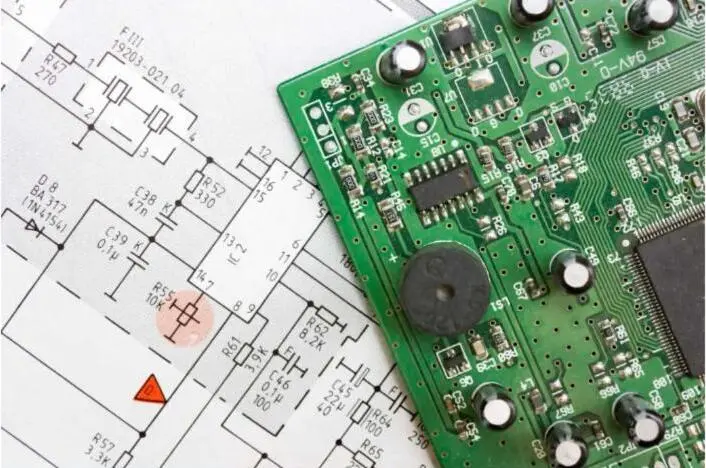
- Engineering depth and DFM integration. A capable partner embeds DFM into the design phase rather than reviewing files after submission. Integrated PCBA services enable early DFM and DFA analysis that identifies trace width violations, via-in-pad concerns and component placement conflicts before production begins. Early input prevents CAM holds and late design changes.
- Prototyping capability using full production processes. The fast-turn line should use the same equipment, inspection standards and documentation as the production floor. This process continuity from prototype to volume supports a smooth production transfer.
- Quality systems and compliance frameworks. For regulated programs, the minimum baseline includes ISO 9001:2015 and IPC-A-610 workmanship standards. Defense and aerospace programs typically require AS9100, ITAR registration and Nadcap accreditation. Medical programs may require additional quality system alignment. Pro-Active Engineering holds ISO 9001:2015, AS9100, ITAR registration, JCP certification and Nadcap accreditation.
- Supply-chain resilience and documentation control. BOM scrubbing for obsolescence risk, counterfeit avoidance methodology aligned to SAE AS5553B and real-time ERP visibility signal a mature supply-chain program.
- Scalability from prototype to low-volume production. Engineers evaluating PCB assembly partners should ask whether the supplier can scale from prototype to higher volumes within the same facility and quality system to avoid new DFM reviews, component qualifications and transition risks.
Request a quote to discuss how Pro-Active Engineering’s integrated workflow maps to a specific program’s requirements.
Cost, Integration and Supplier Model Trade-Offs
Cost per unit often trades against integration depth. Offshore PCB assembly can achieve lower all-in costs for small prototype runs, while domestic U.S. providers carry higher per-unit costs for single units. This creates a cost-speed trade-off for nonurgent versus time-critical builds. For regulated programs, however, per-unit cost rarely controls the decision. Rework, redesign, compliance gaps and program delays carry costs that exceed modest fabrication savings.
The single-partner versus multi-vendor decision follows similar logic. Traditional multi-vendor workflows introduce communication gaps from siloed operations, shipping delays between facilities and quality risks due to difficulty determining whether defects originate from fabrication or assembly. A single accountable partner removes those gaps and concentrates traceability in one quality system.
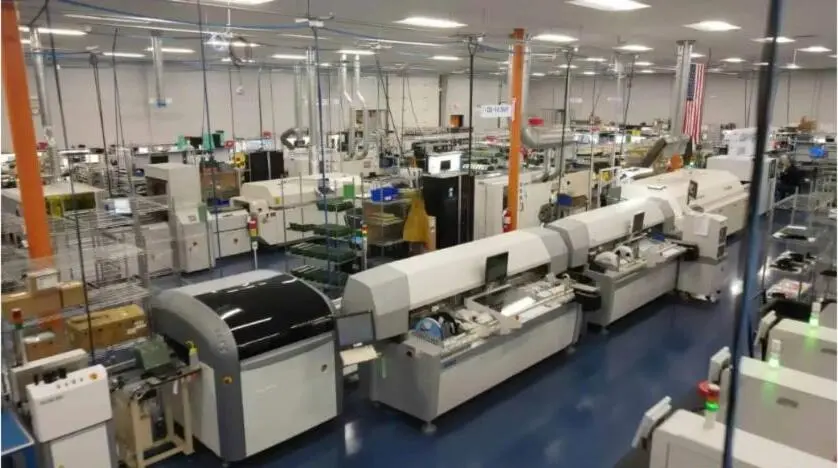
Vertical integration removes supplier handoffs and reduces repeated incoming inspection, inter-site freight, rework disputes and stacked scheduling buffers that occur in multi-supplier models. For programs with frequent revisions or uncertain demand, the consolidated model also supports faster iteration and easier audit access.
Best Practices for Fast, Reliable Quick-Turn Builds
Programs that move through quick-turn fabrication without delays share a consistent set of upstream practices.
- Engage DFM collaboration early. Production manufacturing demands stronger DFM discipline than prototyping, including considerations for minimum annular ring, copper balancing, via reliability, panel utilization, component spacing and automated assembly compatibility. Addressing these in the design phase prevents CAM holds that delay fabrication release.
- Maintain rigorous documentation control. Complete Gerber or ODB++ files, a clean BOM, centroid data and assembly notes submitted at job start remove many common causes of schedule slippage. Revision control discipline at the design stage then carries directly into production documentation packages.
- Plan the test strategy before layout is complete. Test point access, flying-probe compatibility and functional test requirements influence board layout. Defining the test approach early avoids costly respins and ensures the prototype validates what the production build must prove.
- Align prototype builds with production intent. Material selection, stack-up, surface finish and assembly processes should match the planned production environment whenever possible. This alignment reduces requalification work and supports a direct path from prototype approval to volume release.
- Coordinate supply-chain constraints early. Early BOM review, lifecycle checks and alternate identification reduce the risk of last-minute part shortages. This coordination supports predictable quick-turn schedules.
Common Pitfalls That Delay Quick-Turn Programs
The most damaging delays in quick-turn programs share common root causes.
- Late-stage manufacturability discoveries. When teams treat DFM as a pre-production gate instead of a design-phase input, issues surface after tooling is committed. High-quality prototype PCBs reduce overall development costs by identifying incorrect footprints, thermal failures, power delivery problems, stack-up issues and signal degradation before committing to production tooling or large inventory. Catching these issues in design rather than fabrication delivers strong schedule and cost benefits.
- Prototype-to-production disconnects. When prototypes use bench processes or materials selected only for availability, the transition to volume manufacturing often requires a new qualification cycle. Transitioning materials later can introduce impedance mismatches and signal integrity issues. Using production processes from the first prototype reduces this risk.
- Incomplete file packages at job start. Missing centroid files, unresolved BOM alternates or ambiguous assembly notes trigger clarification cycles that consume days. Submitting complete, reviewed documentation at job start remains the most controllable factor in prototype lead time.
Request a design review or quote to identify manufacturability risks before they reach the fabrication floor.
Frequently Asked Questions
How do integrated workflows compare with separate fabrication and assembly suppliers?
Integrated workflows consolidate fabrication, component sourcing, assembly, inspection and test under a single quality system and a single point of accountability. Separate suppliers require engineering and program teams to manage file transfers, incoming inspection at each handoff and rework disputes when defects are discovered. An integrated partner such as Pro-Active Engineering runs DFM, sourcing and production planning in parallel, which compresses total cycle time and removes the communication gaps that cause late-stage surprises. For regulated programs, a single quality system also simplifies traceability documentation and audit preparation.
What compliance considerations apply to defense and aerospace prototypes?
Defense and aerospace prototypes typically require ITAR registration at the manufacturing facility, which governs access to controlled technical data and hardware. AS9100 certification establishes the quality management system framework for aviation, space and defense manufacturing. Nadcap accreditation covers specific aerospace manufacturing processes. JCP certification applies to programs that require controlled access to military specifications. Programs involving controlled unclassified information may also require alignment with NIST 800-171 and CMMC readiness. Pro-Active Engineering holds all of these certifications and registrations and applies documented access controls, personnel training and data-handling procedures consistent with ITAR and CMMC requirements.
How does domestic sourcing affect supply-chain predictability?
Domestic sourcing reduces exposure to international logistics variability, tariff-driven cost swings and geopolitical disruptions that have extended offshore lead times in recent years. A U.S.-based partner with established distributor relationships and BOM scrubbing tools can identify component lifecycle risks and source alternates before they affect the build schedule. Domestic manufacturing also removes customs clearance delays and reduces the number of transit legs where damage or chain-of-custody gaps can occur. For programs with strict delivery requirements, the reduction in logistics variables translates directly into more predictable schedule performance.
What documentation supports traceability in regulated programs?
Traceability in regulated programs depends on a complete documentation package that follows the assembly through every stage of production. This includes revision-controlled design files, a BOM with approved component sources and lot traceability, first-article inspection records, process traveler documentation, AOI and X-ray inspection reports, test results and certificates of conformance. For defense and aerospace programs, counterfeit avoidance documentation aligned to SAE AS5553B and workmanship records to IPC-A-610 Class 3 standards are standard requirements. Pro-Active Engineering maintains full documentation control through its ERP system and quality management processes, producing traceability packages that support program audits and lifecycle management.
Conclusion: Next Steps for Quick-Turn Program Teams
The evaluation framework above provides a structured basis for shortlisting domestic quick-turn PCB fabrication partners. Engineering depth, DFM integration, production-process prototyping, compliance certifications, supply-chain resilience and scalability separate integrated partners from bare-board fabricators and fragmented assemblers.
Program teams can map internal requirements against each criterion before engaging suppliers. Teams can identify which compliance certifications are nonnegotiable, whether the program requires ITAR controls and whether the prototype build must use production processes to support a smooth volume transition. Shortlisted providers should then demonstrate all of those capabilities under one roof.
Pro-Active Engineering offers design-to-assembly workflows, Speed Shop rapid prototyping and the compliance certifications that defense, aerospace, medical and industrial programs require, all from a single domestic facility in Sun Prairie, Wisconsin.
Request a quote to start a conversation about an upcoming prototype or production program.