
Key Takeaways
- The box build supply chain links sourcing, procurement, inventory and logistics to deliver complete, tested electromechanical units.
- Coordination risk peaks at final integration where every sourced item must arrive together, which creates the simultaneous-arrival problem.
- Clear-to-build (CTB) acts as the checkpoint that confirms components, documentation, firmware and tooling are ready before production starts.
- JIT, VMI and safety stock work best when matched to component risk profiles, with single-source consolidation reducing coordination overhead.
- Pro-Active Engineering provides integrated box build and full system integration services that streamline complex supply chains. Start a box build discussion with Pro-Active Engineering.
The Box Build Supply Chain Stage By Stage
The box build assembly supply chain follows a structured sequence from BOM to shipped unit. Each stage has a defined handoff, and each handoff introduces coordination risk. The ordered flow below outlines how material and information move through a box build program.
- Component Sourcing And BOM Scrubbing: Active and passive components, connectors and ICs are sourced against the approved BOM. Lifecycle and obsolescence risk are reviewed at this stage. Tools such as SiliconExpert support BOM scrubbing and flag end-of-life exposure before procurement commits.
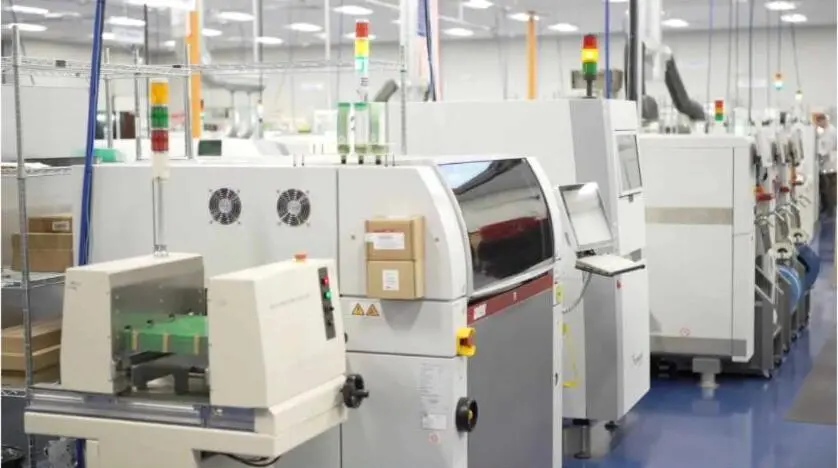
- PCBA: Surface-mount and through-hole assembly, automated optical inspection and board-level test verify the printed circuit board assemblies before they move downstream. IPC-A-610 and J-STD-001 govern workmanship and soldering acceptance at this stage.
- Mechanical And Enclosure Sourcing: Sheet metal, machined parts, plastics, hardware and surface finishes are procured in parallel with PCBA. Custom enclosures are frequently among the longest-lead items in box build programs and often set the schedule, although lead time ultimately depends on whichever item has the longest lead, including enclosures, custom cables, tooling or test fixtures. Purchase orders for these items must be placed early to avoid stalling final integration.
- Cable And Harness Fabrication: Wire, connectors, crimps and routing are built to IPC/WHMA-A-620, the cable and wire harness workmanship standard. Harness fabrication functions as a separate discipline from PCBA with its own certification requirements.
- Sub-Assembly: PCBAs are integrated into mechanical enclosures, where thermal interface materials are applied, standoffs are torqued and brackets are fitted. Isolating these specialized tasks at the sub-assembly stage lets final integration move faster.
- Final Box Build And System Integration: All sub-assemblies, harnesses and enclosure components come together into the finished unit. Firmware is loaded, wiring is dressed and secured, and labeling is applied.
- Functional And Burn-In Test: The complete unit, not just the board, is verified under powered conditions. Functional test exercises the intended system behavior. Burn-in testing runs units under continuous load to surface early-life failures before shipment.
- Packaging And Logistics: Protective packaging, regulatory markings, serialization and shipping documentation are completed. Outbound logistics close the supply chain loop and release finished units to distribution or end customers.
Map a current or upcoming program to this stage-by-stage flow.
Vendor Coordination And The Simultaneous-Arrival Problem
Those eight stages share one vulnerability at the point where they must converge. Coordination risk in the box build supply chain concentrates at final integration. Every sourced item, including PCBA, enclosure, harness, hardware and firmware package, must arrive together before a build can start. This simultaneous-arrival problem often becomes the primary failure mode in fragmented box build supply chains.
When one enclosure shipment arrives late, the entire build stalls. Partial kits consume floor space and working capital. Expediting costs rise across multiple vendors at once. Schedule confidence erodes because no single party owns the full picture. Every transfer between suppliers creates opportunities for revision mismatches, scheduling conflicts and unclear accountability.
Vendor coordination in box build depends on recognizing that the challenge is structural. Fragmented sourcing multiplies the number of schedules that must converge. Each additional vendor adds a handoff, and each handoff becomes a point where documentation, revision control and timing can diverge.
What Is CTB in Supply Chain?
Clear-to-build (CTB) describes the verified state in which all components, sub-assemblies, documentation and tooling required for a build are on hand and released, so production can start without partial-kit stalls. CTB functions as a daily gating check that scans the BOM for every planned order against real-time inventory and distinguishes fully green orders from those held by a single missing component.
In box build, CTB extends beyond material availability. It confirms that the enclosure revision matches the current mechanical drawing, that the firmware package is released and revision controlled, that test fixtures are calibrated and available and that documentation is complete. A PCBA-only supplier manages CTB across a single commodity category. A box build program manages CTB across electronics, mechanicals, harnesses and firmware at the same time, which makes the simultaneous-arrival problem structurally harder to solve than in board-only production.
JIT vs VMI for Box Build Inventory
In box build, JIT, VMI and safety stock act as responses to the simultaneous-arrival problem and the CTB checkpoint that precedes every build start.
Just-in-time (JIT) reduces carrying cost and floor space by receiving material only as demand dictates. JIT rests on three preconditions, which include stable demand, reliable supply and smooth, rhythmically stable flow. In box build, JIT concentrates risk at the simultaneous-arrival point. If any single line item slips, such as a harness connector, a custom gasket or a firmware release, the entire build stalls. JIT fits programs with reliable suppliers and stable demand but offers little buffer when either condition changes.
Vendor-managed inventory (VMI) shifts stocking responsibility to the supplier, who replenishes based on shared consumption data. VMI targets just-in-time replenishment that lowers on-hand inventory and cuts carrying costs while the supplier monitors real-time inventory data and replenishes automatically when stock hits a preset threshold. VMI can smooth arrival timing across multiple commodity categories, which directly addresses the simultaneous-arrival problem. It requires data sharing and capable suppliers, and it moves much of the replenishment burden away from the OEM planning team.
Safety stock buffers against volatility and long-lead components. Many resilient electronics operations adopt a hybrid model that uses JIT for low-risk, short-lead-time items and safety stock for strategic parts where single sourcing, foundry concentration or export controls create step-function risk. In box build, safety stock is most defensible for components that would stall a CTB check if they were missing, such as long-lead enclosures, custom connectors and sole-sourced ICs.
Each strategy connects directly to CTB. A build cannot achieve a green CTB state if any BOM line remains unfilled. The inventory approach chosen for each component category shapes how reliably CTB can be reached on schedule.
Discuss inventory strategy for a current box build program.
Supplier Consolidation: What Changes When One Partner Owns The Build
When a single partner owns PCBA, mechanicals, harnesses and final integration, the coordination equation changes. One partner holds one schedule and one documentation trail, so handoffs and vendor management overhead fall away. Combining processes under one supplier improves quality control across processes, reduces coordination issues and streamlines logistics and production flow.

Turnkey box build, where one partner manages procurement, assembly, test and delivery, concentrates accountability in a way that multi-vendor models cannot match. The comparison between box build and contract manufacturing often centers on a single question. Does the partner own the full BOM, or does the OEM remain the de facto supply chain coordinator?
Pro-Active Engineering is an ITAR-registered, US-based partner with a centralized engineering and manufacturing facility in Sun Prairie, Wisconsin. The company consolidates PCB design and engineering, rapid prototyping through its Speed Shop, PCB assembly, advanced interconnect and packaging, thermal management, conformal coating and box build and full system integration. Pro-Active operates under ISO 9001:2015, AS9100, ITAR registration, JCP certification and Nadcap accreditation, with workmanship governed by IPC-A-610 Class 2 and Class 3 and J-STD-001. BOM scrubbing uses SiliconExpert for lifecycle risk mitigation, scheduling visibility runs through Manex ERP and counterfeit avoidance follows SAE AS5553B methodology.
Single-Source vs Multi-Vendor: A Clear-Eyed Comparison
Multi-vendor sourcing can provide niche expertise and price leverage per commodity. Dual and multi-source models improve supply chain resilience by giving manufacturers alternate approved sources when a single supplier cannot provide capacity during unexpected demand flexes. The tradeoff appears in coordination overhead. Each vendor operates on its own schedule with its own documentation standards and quality processes, and the OEM absorbs the cost of reconciling them.
In box build versus PCBA-only supplier comparisons, the distinction sharpens. A PCBA-only supplier answers whether the board is built correctly. A box build supplier answers whether the product is ready to use. When those functions sit with different vendors, accountability for the integration layer between them often becomes diffuse.
When components such as PCBs and other fabricated elements are manufactured by different suppliers there is a greater risk of communication gaps, inconsistent documentation, production delays and problems discovered late in the process. Single-source consolidation concentrates accountability, simplifies CTB, improves documentation continuity and reduces the number of schedules to reconcile. The cost appears as reduced per-commodity price shopping.
Pro-Active Engineering positions itself as the single-source option for low-to-mid volume, high-complexity programs with capacity to scale as needs grow. The accountability model remains straightforward. One partner owns the build from BOM to shipped unit.
Risk And Compliance In The Box Build Supply Chain
Risk and compliance requirements shape every stage of a defense or aerospace box build program. Counterfeit avoidance sits at the center of that framework. SAE AS5553B sets requirements for organizations that procure or integrate electronic parts and covers counterfeit avoidance, detection, mitigation and disposition. When DFARS 252.246-7007 applies, contractors must maintain a risk-based counterfeit avoidance system, favor original or authorized sources and preserve traceability. Pro-Active sourcing methodology aligns with these requirements.

Obsolescence and lifecycle risk management begin at BOM scrubbing. SiliconExpert integration gives Pro-Active visibility into component lifecycle status before procurement commits. That visibility reduces the risk of building a program around a part approaching end of life.
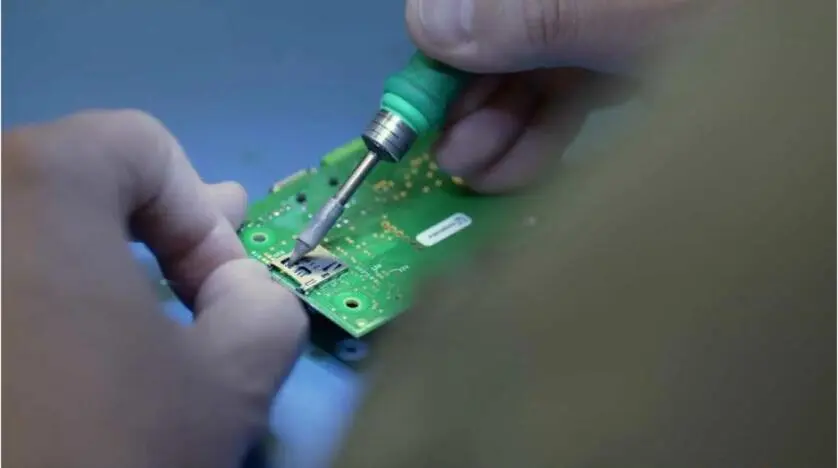
Workmanship and soldering standards govern every build stage. IPC-A-610 Class 2 and Class 3 define acceptability criteria for electronic assemblies. J-STD-001 governs soldering materials and methods. IPC-7711/7722 covers rework and repair. These standards apply at the PCBA stage and extend through electromechanical integration.
ITAR registration governs access to controlled technical data and manufacturing processes for defense-related programs. The Directorate of Defense Trade Controls (DDTC) administers ITAR. Registered facilities must maintain access controls, data-handling procedures, documentation practices, foreign-national access restrictions and personnel training records. Pro-Active is ITAR registered and operates within this framework. NIST SP 800-171 provides recommended security requirements for protecting the confidentiality of controlled unclassified information (CUI) in nonfederal systems, and CMMC builds on those requirements and flows down through the supply chain to subcontractors handling CUI.
Review program-specific risk and compliance needs with Pro-Active Engineering.
Frequently Asked Questions
What Is CTB in Supply Chain?
CTB stands for clear-to-build. In this article, CTB functions as the readiness checkpoint described earlier, where every BOM line is filled and every supporting element, including documentation, firmware and tooling, is released and aligned.
What Are the Five Pillars of a Box Build Supply Chain?
In this context, the five pillars refer to sourcing and BOM integrity, PCBA and sub-assembly execution, mechanical, harness and enclosure coordination, inventory and CTB discipline and test, documentation and logistics. Each pillar supports reliable CTB and smooth final integration.
How Does a Box Build Supply Chain Differ From a PCBA-Only Supply Chain?
A PCBA-only supply chain manages electronic components sourced from authorized distributors, assembled onto bare boards and tested at the board level. A box build supply chain adds mechanical enclosures, cable and harness fabrication, sub-assembly integration, firmware loading and system-level test. These elements come from different industries with different lead times, quality standards and minimum order quantities. Coordination complexity rises, and the simultaneous-arrival problem becomes a central planning concern.
What Is the Simultaneous-Arrival Problem?
The simultaneous-arrival problem describes the condition in which every sourced item, including PCBA, enclosure, harness, hardware and firmware package, must be present and released before final integration can begin. In a fragmented multi-vendor model, each item arrives on its own schedule. When one item arrives late, the entire build stalls and partial kits consume floor space and working capital without advancing the program.
When Should an OEM Consolidate Box Build Under One Partner?
Consolidation makes the strongest case when multiple vendors repeatedly handle the same components, when one vendor schedule frequently affects another, when purchasing or engineering acts as the primary coordinator between operations and when quality issues surface downstream. Programs with multiple wiring connections between subsystems, critical thermal management requirements, regulatory compliance obligations and low-to-mid production volumes often benefit from single-source consolidation.
How Do JIT and VMI Differ in a Box Build Context?
JIT receives material only as demand dictates and minimizes carrying cost but concentrates risk at the simultaneous-arrival point. If any single line item slips, the build stalls. VMI shifts replenishment responsibility to the supplier, who monitors consumption data and restocks automatically. VMI can smooth arrival timing across commodity categories and often performs better when lead times are volatile or supplier relationships support data sharing.
What Compliance Standards Matter in a Box Build Supply Chain?
IPC-A-610 governs workmanship acceptability for electronic assemblies. J-STD-001 governs soldering materials and methods. IPC/WHMA-A-620 governs cable and wire harness acceptance. IPC-7711/7722 covers rework and repair. SAE AS5553B addresses counterfeit avoidance. ISO 9001:2015 provides the baseline quality management standard. AS9100 applies to aerospace and defense programs. ITAR registration governs access to controlled technical data, and NIST 800-171 alignment with CMMC readiness addresses controlled unclassified information handling.
How Does Domestic, ITAR-Registered Sourcing Reduce Supply Chain Risk?
Domestic, ITAR-registered manufacturing reduces geopolitical and logistics exposure associated with offshore sourcing. It keeps controlled technical data within a regulated facility subject to DDTC oversight, access controls and personnel training requirements. It shortens and stabilizes transit times, which improves the predictability of CTB readiness. For defense and aerospace programs, ITAR registration functions as a baseline requirement, and combining it with domestic manufacturing and integrated box build capability under one roof reduces the number of compliance handoffs an OEM must manage.
Conclusion And Next Steps
The box build supply chain functions as an electronics-specific coordination challenge that spans eight stages and culminates at final integration. CTB provides the operational checkpoint that confirms readiness before a build starts, and inventory strategies such as JIT, VMI and safety stock shape how reliably that checkpoint is reached.
Multi-vendor sourcing distributes accountability across those stages, while single-source consolidation concentrates it. The tradeoff centers on ownership, including who holds the schedule, the documentation trail and the CTB checkpoint when something slips.
Pro-Active Engineering serves OEMs that manage low-to-mid volume, high-complexity box build programs. ITAR-registered and US based, Pro-Active consolidates PCB design and engineering, rapid prototyping, PCB assembly, advanced interconnect, thermal management and full system integration under one roof in Sun Prairie, Wisconsin. One accountable partner, one documentation trail and one schedule to manage.
The practical next step involves mapping the program BOM to the eight stages above, identifying where coordination risk concentrates and assessing whether consolidating box build under one integrated partner reduces vendor management overhead and lifecycle risk.
Bring a box build supply chain under one accountable roof with Pro-Active Engineering.