

Key Takeaways for Regulated Box Build Programs
- Fragmented vendor chains create compliance and accountability gaps that raise risk in aerospace, defense and medical device programs.
- Integrated U.S. partners consolidate design, prototyping, PCBA, coating, testing and box build under one roof, which improves traceability and reduces handoff errors.
- Early DFM, production-grade prototypes and a single quality management system lower redesign costs and reduce prototype-to-production transfer risk.
- Certifications such as AS9100, ITAR registration, Nadcap and JCP, combined with documented traceability and counterfeit-parts prevention, support compliance in regulated programs.
- Pro-Active Engineering delivers these integrated capabilities from its Wisconsin facility; start an initial consultation to review program needs.
The Problem: Fragmented Vendor Chains Increase Risk
Separate partners for design, prototyping, assembly, coating, testing and system integration create structural risk. Each handoff between vendors introduces a potential gap in documentation, quality records and accountability. Fragmented supply chains reduce accountability and increase opportunities for defects during supplier transitions, which compounds in aerospace, defense and medical device programs where traceability requirements are nonnegotiable.
Disjointed supply chains lead to increased lead times, tolerance mismatches between domains and diffused accountability for OEMs developing sophisticated electromechanical products. When no single partner owns the full workflow, program managers absorb the coordination burden and accept the related compliance exposure.
Integrated, Engineering-Led U.S. Manufacturing Partners
An integrated, engineering-led U.S. partner consolidates every stage from concept through box build under one roof. Consolidating higher-level assembly under a single EMS provider improves supply chain management, enables faster product launches and enhances traceability by maintaining complete records from components through final assemblies.
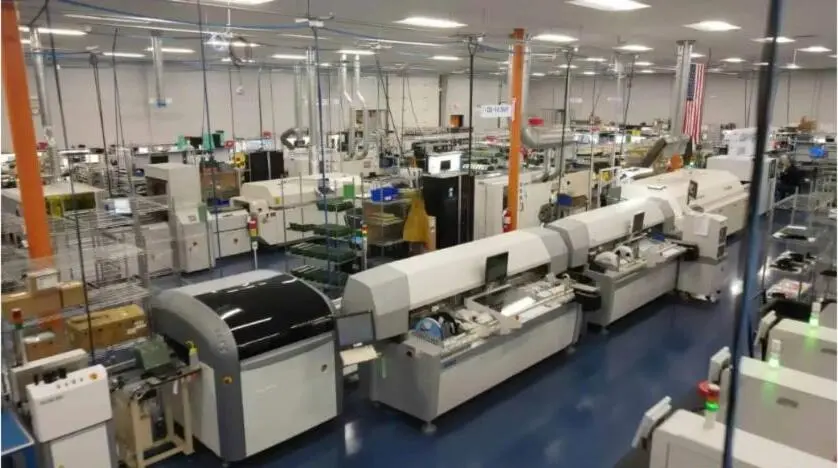
Pro-Active Engineering operates from a facility in Sun Prairie, Wisconsin, where PCB design, rapid prototyping, assembly, conformal coating, testing and full box build integration run within one quality management system. That structure addresses the handoff risks outlined above by maintaining one quality system across all stages.
Share project details to begin evaluating fit for integrated box build services.
Pain Point 1: Early DFM to Reduce Redesign Risk
Late-stage manufacturability issues create some of the most expensive problems in complex programs. When design and manufacturing sit in separate organizations, DFM feedback often arrives after tooling decisions are locked. Integrating DFM at the conceptual design stage limits the cost of change to a fraction of the cost once a program reaches full production.
An integrated partner embeds DFM into the design phase. Engineering and manufacturing share one workflow, so PCBA placement, cable routing, connector orientation, enclosure tolerance and test point accessibility are validated before the first prototype build. DFM balances performance with manufacturability, cost and scalability across process selection, material selection, tolerance specification, assembly design and supply chain resilience.
Questions to ask a prospective partner include when DFM review occurs relative to design release, who owns the feedback loop between design and manufacturing, and how enclosure tolerance and connector alignment are validated at the design stage.
Pain Point 2: Vendor Fragmentation and Accountability Gaps
Distributed accountability across multiple vendors means no single partner owns the outcome. Quality escapes that cross vendor boundaries are difficult to trace and expensive to resolve. When one manufacturing partner assumes full responsibility for the entire tested electromechanical assembly, it simplifies communication, problem-solving and quality assurance for the OEM.
A fragmented supply chain generates operational bottlenecks including increased risk of quality errors at supplier interfaces, dilution of warranty liability and significant extension of time-to-market. Consolidation with one partner reduces those interfaces and aligns accountability with outcomes.
Questions to ask a prospective partner include who serves as the single point of contact for quality escapes that span design, assembly and integration, how accountability is documented across the full build record, and how defects discovered after final assembly are handled.
Pain Point 3: Prototype Speed Versus Production Readiness
Beyond the accountability challenges of fragmented vendors, another structural risk appears when prototyping and production use different processes. Rapid prototyping that relies on different methods than production creates transfer risk. A prototype that passes validation may behave differently in volume production if assembly methods, materials or inspection standards change.
Pro-Active Engineering’s Speed Shop delivers prototypes using the same SMT and through-hole processes as full production runs, so successful designs in development scale without surprises. Turnkey sourcing reduces first-article failure rates compared with consigned builds because BOM errors such as footprint mismatches or wrong polarity are caught during DFM review rather than on the assembly floor. Production-ready prototypes built under the same quality management system as volume builds reduce the prototype-to-production disconnect.
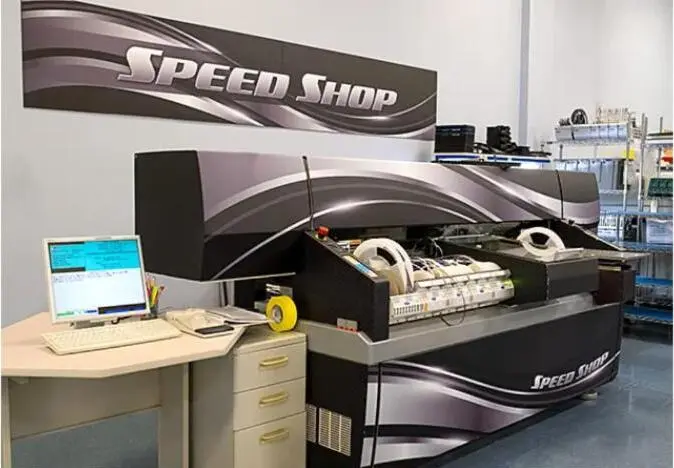
Questions to ask a prospective partner include whether prototypes run on the same line and processes as production units, whether DFM review covers the full BOM before the first prototype, and how prototype test results carry forward into production documentation.
Pain Point 4: Compliance, Documentation and Traceability
Regulated programs require documented traceability from raw components through final delivery. AS9100 Rev D Clause 8.5.2 requires aerospace suppliers to maintain identification and traceability so that process outputs can be reconstructed from raw material through final delivery, including material lots, operators, inspection results and dispositions.
ITAR adds access-control requirements on top of traceability records: controlled technical data must be restricted to U.S. persons, stored on compliant systems and protected according to NIST SP 800-171. Pro-Active Engineering holds ISO 9001:2015, AS9100, ITAR registration and JCP certification, with Nadcap accreditation, and applies SAE AS5553B counterfeit-avoidance methodology across its sourcing process.

Questions to ask a prospective partner start with whether a complete build history can link purchased components, assembly steps, test results and nonconformance records to a single serial number. This traceability foundation should be supported by documented ITAR access controls that withstand audit scrutiny. Finally, confirm the counterfeit-parts prevention methodology, since that process protects the integrity of the entire documented chain.
Pain Point 5: Advanced Interconnect and Thermal Challenges
Aerospace and defense programs increasingly require compact, high-performance assemblies that exceed standard PCB assembly capabilities. High-density layouts create risks around enclosure fit, connector alignment, cable routing and interference between conductors and nearby components. Thermal management must be treated as an interdisciplinary task considered from the beginning of development, alongside mechanical design, circuit design and material selection, rather than as a downstream optimization step.
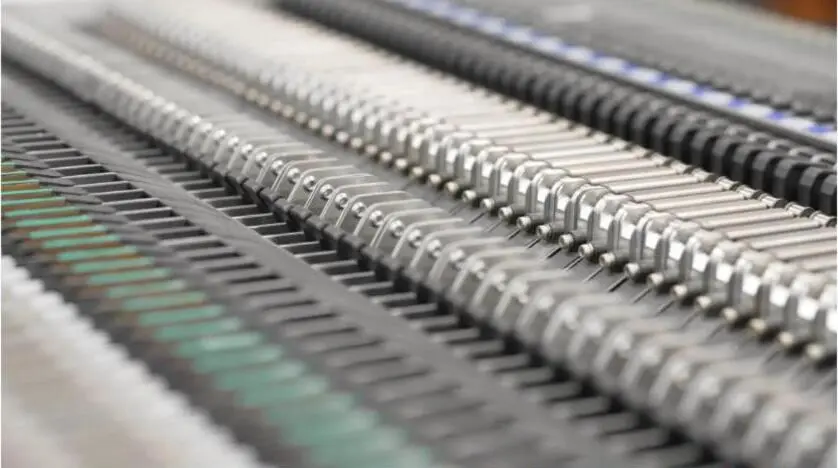
Engineering-led providers treat thermal design as system-level work from the beginning by combining electrical, mechanical and materials decisions to maintain a continuous low-resistance heat path. Pro-Active Engineering provides wire bonding, flip chip assembly, hybrid high-density assemblies, silver sintering, direct thermal path technology and advanced metal-core constructions, which address both interconnect density and thermal performance within the same integrated workflow.
Questions to ask a prospective partner include whether thermal analysis occurs during DFM review or only after assembly, which advanced interconnect capabilities are available in-house versus outsourced, and how thermal and mechanical constraints are coordinated between electrical and mechanical engineering teams.
Pain Point 6: Total Cost of Ownership Versus Unit Price
Unit price comparisons between integrated domestic partners and offshore or fragmented models often omit lifecycle costs. Consolidating higher-level assembly under a single EMS provider lowers total program cost through improved efficiency, lower logistics costs, fewer quality escapes and elimination of margin stack-up, even if individual component pricing is not always the lowest.
Domestic U.S. assembly avoids Section 301 tariffs that apply to Chinese-origin components and assemblies in 2026, while also enabling faster revision cycles in the same time zone. Rework, redesign, vendor management overhead and compliance remediation rarely appear in a unit-price comparison but consistently affect program outcomes.
Questions to ask a prospective partner include the documented rework rate, how vendor management overhead is reflected in total program cost, and which compliance costs are absorbed within the integrated model versus passed through separately.
A Repeatable 7-Step Box Build Process with Early DFM Gates
A standard box build manufacturing process begins with engineering and NPI support that includes design review, DFM feedback and prototype-to-production readiness review to identify practical risks affecting manufacturing readiness. The following sequence reflects how Pro-Active Engineering structures the box build manufacturing process with DFM checkpoints at each stage.
- Engineering review and DFM gate: Design files, BOM and mechanical drawings are reviewed for assembly feasibility, PCBA placement, connector orientation, enclosure tolerance and test point accessibility before any build begins.
- Component sourcing and BOM validation: SiliconExpert BOM scrubbing identifies lifecycle risk and obsolescence exposure. SAE AS5553B counterfeit-avoidance methodology guides sourcing decisions.
- PCB fabrication and PCBA: SMT and through-hole assembly run on full production processes, with automated optical inspection and flying probe or in-circuit testing included.
- Conformal coating and ruggedization: Coating and potting follow program requirements, with process parameters documented in the build record.
- Prototype build and mechanical fit validation: Prototype evaluation verifies mechanical fit, assembly sequence, cable routing, module placement, test access and packaging requirements before advancing to pilot production.
- Electromechanical integration and cable assembly: PCBAs, cable harnesses and mechanical components are integrated into enclosures with continuity verification and torque-controlled fastening.
- System-level testing, inspection and documentation: Functional testing, final inspection and complete build-record documentation are completed before shipment, with full traceability linking every component to the finished unit.
Certification and Traceability Checklist for Box Build Partners
The following certifications and standards serve as baseline buyer signals when evaluating a box build integration partner for regulated programs.
- ISO 9001:2015 – Foundation quality management system covering documented procedures, process control and continuous improvement.
- AS9100 – Aerospace quality management standard adding traceability, configuration management, risk management, first article inspection and counterfeit-parts prevention requirements.
- ITAR registration – Legal registration administered by the U.S. Department of State’s DDTC, required for manufacturers handling defense articles and technical data on the U.S. Munitions List.
- JCP certification (DD Form 2345) – Required for access to military specifications and standards.
- Nadcap accreditation – Industry-managed accreditation for special processes in aerospace and defense manufacturing.
- IPC-A-610 Class 2 and Class 3 – Workmanship standards for electronic assemblies, with Class 3 required for high-reliability and mission-critical applications.
- J-STD-001 – Soldering materials and processes standard.
- SAE AS5553B – Counterfeit electronic parts avoidance, detection and mitigation methodology.
Confirm certification requirements for a specific program before the first design review.
How Common Provider Models Compare for Regulated Programs
Offshore brokers offer low unit pricing but introduce IP exposure, counterfeit component risk and extended logistics cycles that conflict with ITAR-controlled programs. Geopolitical and tariff exposure adds schedule and cost variability that is difficult to model at program inception.
Large EMS providers prioritize high-volume production. Programs with low-to-mid volume, high-complexity builds or frequent design iterations are often deprioritized in scheduling, and engineering integration typically reflects what the customer delivers rather than what the partner contributes.
Design-only firms provide engineering expertise but carry no production ownership. The handoff from design to a separate manufacturer reintroduces the vendor-boundary problems that drive programs toward integrated partners.
Local job shops offer proximity and responsiveness but typically operate with narrow service scopes. Scalability, advanced inspection capabilities and Class 3 workmanship standards are not consistently available across that category.
A genuinely integrated manufacturing approach connects design through final assembly in a cohesive operational model where mechanical and electronics disciplines are deeply intertwined, rather than merely co-located. That distinction separates structural integration from vendor aggregation.
Questions to Ask a Box Build Partner
The following questions help engineering and program managers assess whether a prospective partner’s model matches the accountability and compliance requirements of a regulated program.
- Does DFM review happen before design release, and who owns the feedback loop between engineering and manufacturing?
- Are prototypes built using the same processes, equipment and quality standards as production units?
- What certifications are current and verifiable through third-party registrars such as the IAQG OASIS database?
- How does the partner document traceability from incoming components through final assembly and shipment?
- What is the partner’s counterfeit-parts prevention methodology, and how is it applied to sourcing decisions?
- How are ITAR access controls maintained, documented and audited?
- What is the onboarding process for a new program, and how is production transfer managed?
- Can the partner scale from prototype quantities to production volumes without changing the quality management system or primary engineering contacts?
Decision Framework: When an Integrated U.S. Model Fits
An integrated U.S. model fits when a program operates in a regulated industry such as aerospace, defense or medical devices, requires ITAR-compliant domestic manufacturing, demands full traceability from component to finished unit, involves advanced interconnect or thermal management requirements, or needs rapid prototype-to-production transfer without process discontinuity.
Programs with straightforward commercial designs, no regulatory traceability requirements and high-volume commodity production may find that other models provide adequate cost efficiency. The integrated model’s structural advantages of single-roof accountability, embedded DFM, certified quality management and advanced capabilities deliver the most measurable value when program complexity and compliance requirements are high.
Consolidating PCB fabrication, assembly and box build with a single ITAR-registered U.S. partner eliminates inter-vendor handoff delays, preserves traceability from bare board through finished unit and provides one accountable quality record. That structure sets the baseline for predictable outcomes in regulated programs.
Next Steps with Pro-Active Engineering
Pro-Active Engineering serves aerospace, defense and medical device programs from its integrated facility in Sun Prairie, Wisconsin. The team covers PCB design and engineering, rapid prototyping, PCBA, conformal coating, advanced interconnect, thermal management and full box build integration under one quality management system.
Project details such as program type, volume range, certification requirements and current supply chain structure help shape the initial consultation. The engineering team reviews each inquiry and responds with a structured assessment of fit and next steps.
Connect with the engineering team to discuss box build integration needs.
Frequently Asked Questions
What is included in box build integration services, and how does it differ from standard PCBA?
Standard PCBA covers the fabrication and population of a printed circuit board, including component sourcing, SMT and through-hole assembly, inspection and board-level testing. Box build integration services extend that scope to cable and wire harness assembly, mechanical enclosure integration, conformal coating, system-level functional testing and final packaging into a shippable unit.
The distinction matters for regulated programs because box build integration requires coordinated DFM across electrical, mechanical and software domains. The traceability record must link every component and process step to the finished system, not just to the board. Pro-Active Engineering manages the full scope from PCB design through final box build under one quality management system, so the build record remains continuous and auditable from first component receipt through shipment.
How does Pro-Active Engineering maintain ITAR compliance across the box build process?
Pro-Active Engineering is ITAR registered with the U.S. Department of State’s Directorate of Defense Trade Controls. ITAR compliance in a box build context covers access controls on technical data, personnel authorization, documentation practices and foreign-national access restrictions consistent with DDTC requirements.
The facility is domestic, and all manufacturing, engineering and quality functions operate within the same controlled environment. The company aligns with NIST 800-171 and is pursuing CMMC readiness, which supports programs that involve Controlled Unclassified Information under DFARS requirements. Customers with ITAR-controlled programs should confirm specific program requirements during the initial consultation so that the appropriate controls are documented before production begins.
Can Pro-Active Engineering handle low-volume, high-complexity box builds, or is the model optimized for high-volume production?
Pro-Active Engineering specializes in low-to-mid volume, high-complexity builds for aerospace, defense and medical device programs. The Speed Shop rapid prototyping line accepts orders as small as a single unit and delivers assemblies using full production processes.
That capability supports R&D, validation and early-stage program builds without a separate prototype vendor. As programs scale, the same engineering team, quality management system and manufacturing processes carry forward, which reduces prototype-to-production transfer risk compared with models that use separate vendors for each phase.
The integrated model is structured for programs where complexity, compliance and reliability requirements outweigh the cost advantages of high-volume commodity manufacturing.
What certifications should a box build partner hold for aerospace and defense programs?
For aerospace programs, AS9100 serves as the baseline quality management standard. It adds traceability, configuration management, risk management, first article inspection and counterfeit-parts prevention requirements on top of ISO 9001.
ITAR registration is a legal requirement for any partner handling defense articles or technical data on the U.S. Munitions List. It does not function as a quality certification and cannot be replaced by other standards. Nadcap accreditation covers special processes such as conformal coating and soldering that require independent process validation.
IPC-A-610 Class 3 workmanship standards apply to high-reliability and mission-critical assemblies. JCP certification is required for access to military specifications. SAE AS5553B provides the counterfeit-parts avoidance methodology. Pro-Active Engineering holds all of these credentials. Buyers should verify certification currency through third-party registrars such as the IAQG OASIS database before program award.
How does Pro-Active Engineering handle the transition from an existing supplier without disrupting an active program?
The onboarding process is structured to minimize disruption. New programs typically begin with a pilot build that allows the engineering team to review existing documentation, validate the BOM, perform DFM analysis and confirm that the quality management system is configured for the program’s specific traceability and compliance requirements.
That pilot phase produces a complete build record and identifies any gaps before volume production begins. Many customers start with a single assembly type or a prototype run to establish the working relationship and confirm performance before transferring additional work.
The engineering team maintains regular communication throughout the transition. The integrated workflow keeps design questions, sourcing decisions and quality issues within one organization rather than across multiple vendor contacts.