
Key Takeaways for Conformal Coating Programs
- Fragmented vendor workflows for PCB design, assembly and conformal coating create compliance gaps and schedule risk for defense, aerospace and medical programs.
- AS9100, Nadcap, ISO 9001:2015 and ITAR credentials form the baseline certifications that separate qualified U.S. conformal coating providers from generalists.
- Integrated providers that perform design, assembly and coating under one roof reduce handoff errors, maintain traceability and avoid requalification cycles when scaling from prototype to production.
- Material selection across acrylic, urethane, silicone, epoxy and Parylene must follow the operating environment, not what is fastest or easiest to apply.
- Pro-Active Engineering consolidates PCBA design, assembly and conformal coating under a single certified roof; explore integrated workflow options to consolidate program activity with one partner.
Conformal Coating Fundamentals for Mission-Critical Electronics
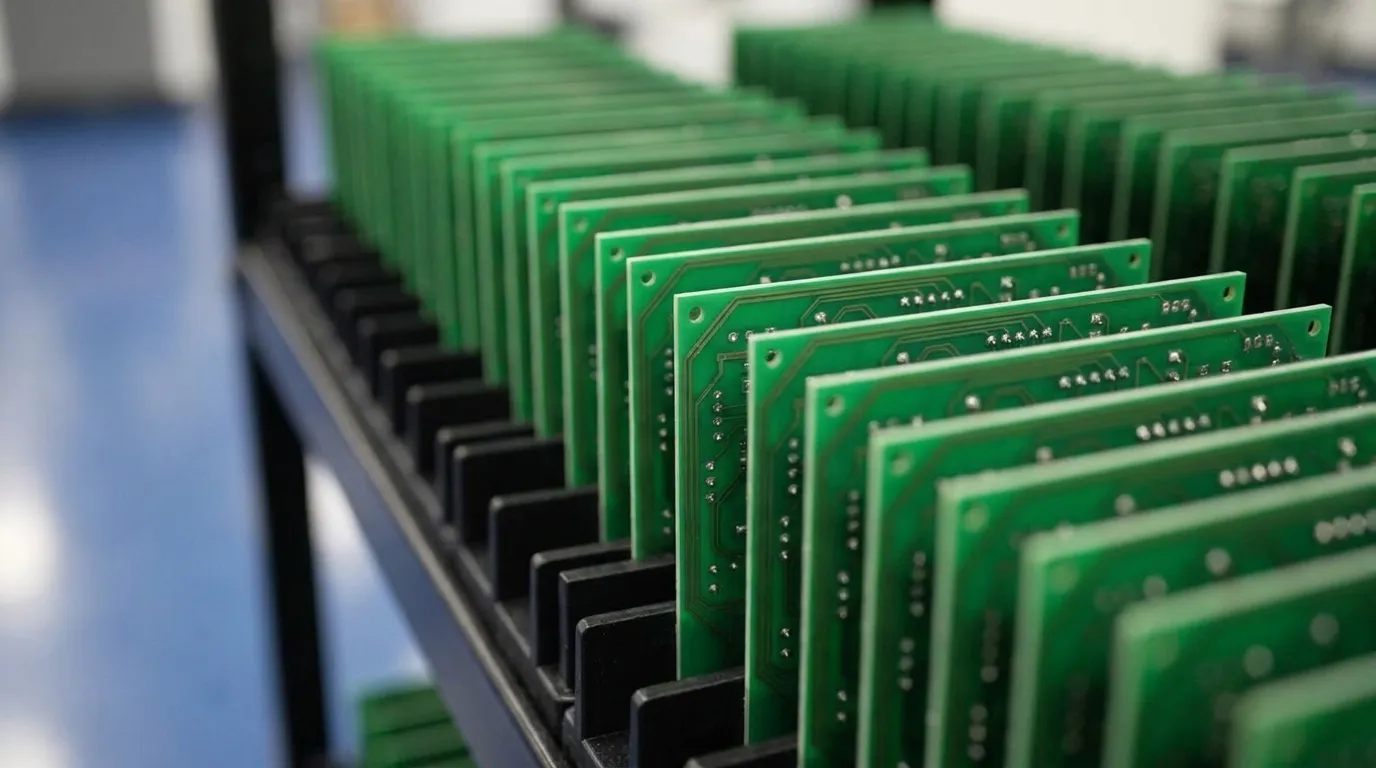
Conformal coating is a protective polymer film applied to assembled PCBs to guard against moisture, vibration, temperature extremes, chemical contamination and corrosion. The coating conforms to the board surface, covering components, solder joints and traces while leaving designated areas such as connectors and test points uncoated.
In regulated industries, coating functions as a core reliability control. IPC reliability data indicates that properly coated PCBs demonstrate significantly longer operational lifespans in harsh environments compared to unprotected assemblies. The same data shows that a substantial share of PCB field failures trace directly to environmental contamination and moisture ingress. For defense, aerospace and medical programs where field repair is costly or impossible, conformal coating becomes a primary reliability investment.
The stakes are high enough that the industry maintains multiple governing standards. IPC-CC-830B qualifies liquid conformal coatings through standardized tests covering moisture resistance, thermal shock, dielectric withstanding voltage and fungus resistance. MIL-I-46058C, though declared inactive for new designs, remains relevant for legacy defense systems and requires third-party verification via a Qualified Products List. Providers serving regulated industries must demonstrate command of both standards and prove that internal processes align with them through formal certification.
Certifications That Signal Qualified Conformal Coating Providers
Certification depth separates capable providers from compliant ones. The following credentials form the baseline for defense, aerospace and medical programs.
AS9100 is the aerospace-specific quality management system standard confirming continual improvement, regulatory compliance and tight supply chain controls for traceability and risk reduction. It functions as the minimum QMS credential for aerospace coating work.
Nadcap accreditation, administered by the Performance Review Institute, verifies specialized processes including coatings, chemical processing and non-destructive testing through regular audits of process control, personnel qualification and traceability. Nadcap does not operate as a self-certification, since it requires independent audit and ongoing surveillance.
ITAR compliance is required for providers handling military or dual-use parts to ensure lawful handling, documentation and shipment of controlled technologies. Without ITAR registration, a provider cannot legally participate in most defense programs.
ISO 9001:2015 establishes the baseline QMS framework. ISO 9001 certification demonstrates that a coating provider has a comprehensive quality management system verifying process consistency and ongoing improvement. Because AS9100 builds on ISO 9001 with aerospace-specific requirements, providers holding AS9100 automatically satisfy ISO 9001 requirements, which makes AS9100 the more comprehensive credential for aerospace programs.
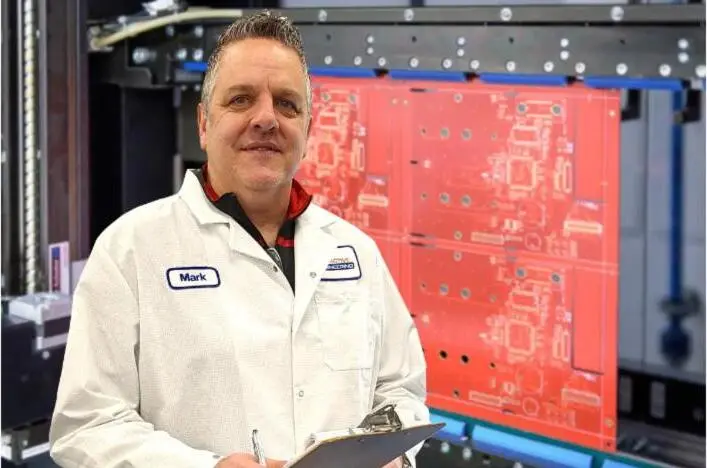
Pro-Active Engineering holds ISO 9001:2015, AS9100 and Nadcap accreditation and is ITAR-registered under one roof alongside full PCBA design, prototyping and assembly capability. That combination remains uncommon among standalone coating specialists.
How to Evaluate U.S. Conformal Coating Service Providers
Several practical criteria determine whether U.S.-based conformal coating providers can support regulated programs. These factors apply whether teams search nationally or focus on providers near a specific facility.
Engineering integration. A provider that only coats boards assembled elsewhere lacks context on design intent, keep-out requirements and component sensitivities. Providers that perform design, assembly and coating within a single workflow carry that context through every step and reduce coating defects caused by upstream decisions.
Certification depth. Certifications must be current and must cover the specific processes involved. AS9100 and Nadcap accreditation for coating processes differ from holding a general ISO 9001 certificate. Scope documentation clarifies that distinction.
Material-to-environment matching. A qualified provider selects coating chemistry based on the operating environment, not on what is easiest to apply. Providers without in-house engineering capability often default to a single chemistry regardless of application requirements.
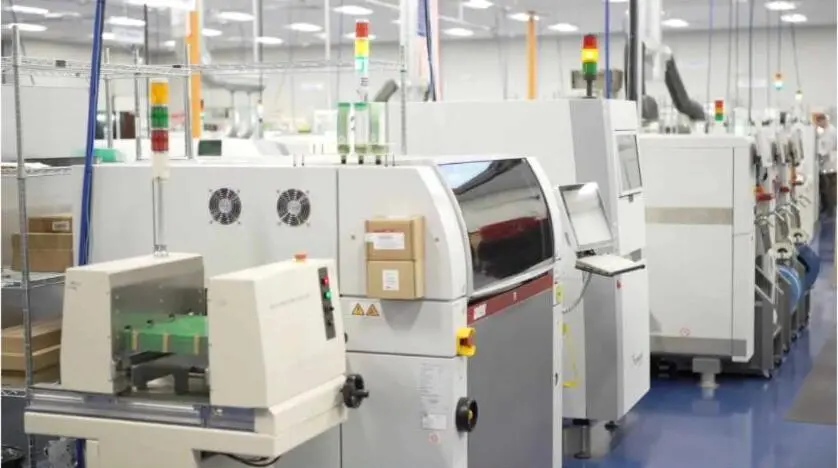
Application method and process control. Process choice for conformal coating is driven primarily by production volume, board geometry and keep-outs, and required reliability levels. Selective robotic coating, spray, dip and brush methods each suit different volume and complexity profiles. A provider with only one application method may not align with every program.
Domestic supply-chain resilience. Tariff uncertainty and logistics disruptions have accelerated reshoring of PCB and box-build capacity, with domestic content rules in defense electronics driving new plant investment in the United States. A U.S.-based provider avoids IP exposure, freight variability and geopolitical risk that offshore or near-shore alternatives introduce.
Traceability and documentation. Defense and aerospace programs require full traceability from raw material through finished assembly. Providers must demonstrate documentation control systems that support audit, failure analysis and program reporting.
Conformal Coating Services for Aerospace PCBAs
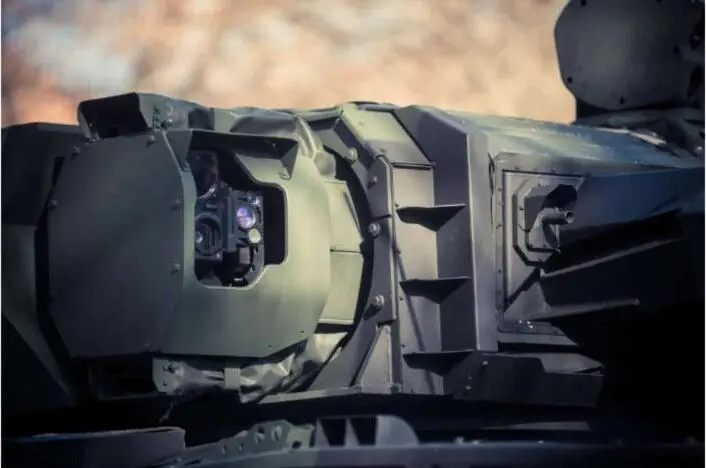
Aerospace PCBAs face a demanding combination of stresses that include wide temperature swings, vibration, altitude-driven humidity cycling and long service intervals with limited access for repair. AS9100 and Nadcap accreditation function as standard credentials for aerospace coating providers, and programs managed by major primes often require both.
Integrated workflows create a structural advantage for aerospace programs. When the same facility that designed the board and built the assembly also applies the coating, the engineering team understands component placement, thermal gradients and keep-out criticality. That knowledge reduces coating defects and avoids requalification cycles that arise when a separate coating vendor encounters an unfamiliar assembly.
Fragmented workflows that split design, assembly and coating across multiple firms introduce handoff risk at every transition. Each handoff can create documentation gaps, process misalignment and schedule slippage. For low-to-mid volume, high-complexity aerospace programs, those risks compound quickly.
Pro-Active Engineering supports aerospace customers with integrated design, assembly and conformal coating capability backed by the certified systems described earlier. Programs move from prototype to production within a single controlled environment.
Material Selection for High-Reliability Coating
Coating chemistry selection functions as an engineering decision. The operating environment, including moisture exposure, thermal cycling range, vibration profile, chemical exposure and repairability requirements, determines which material fits the application.
Acrylic (AR) coatings offer solid moisture protection and straightforward reworkability, which suits general-purpose electronics and builds where field repair is anticipated. Acrylic is positioned for benign indoor electronics that may require field rework due to fast application and redissolvability in common solvents. It does not serve as the preferred choice for sustained high-humidity or aggressive thermal cycling environments.
Urethane (UR) coatings deliver strong chemical, abrasion and moisture resistance. Urethane provides a strong balance of moisture resistance, chemical resistance, adhesion and mechanical toughness for most high-humidity PCB applications. It functions as a common choice for automotive, industrial and marine applications where chemical exposure matters.
Silicone (SR) coatings provide the broadest thermal operating range among common chemistries and remain flexible through thermal cycles that would crack harder coatings. Silicone targets heat, thermal cycling and condensing humidity environments. Silicone remains flexible and functional across a wide temperature range, providing strong moisture protection and low mechanical stress on components, which makes it suitable for vibrations and thermal cycling in aerospace and military electronics.
Epoxy (ER) coatings offer high hardness and strong chemical resistance. Epoxy coatings are hard, brittle and virtually impossible to rework or repair, which limits their use primarily to niche legacy applications. They suit programs where maximum durability justifies a permanent, non-reworkable film.
Parylene (XY) is applied via chemical vapor deposition, which produces a pinhole-free, ultra-thin, uniform film. Parylene is the preferred choice for aerospace and space applications requiring NASA low-outgassing compliance and for medical and implantable devices needing biocompatibility. Parylene delivers strong moisture barrier performance among common conformal coatings due to its pinhole-free chemical vapor deposition process. The trade-off involves process complexity and limited reworkability.
Effective chemistry selection requires a complete view of the environmental profile for the application. An integrated provider with in-house engineering capability performs that analysis as part of the design and manufacturing workflow, not as a late decision at the coating stage.
Integrated PCBA and Coating vs Fragmented Vendor Chains
Integrated workflows reduce failure points that arise when multiple vendors share responsibility. In regulated industries, each failure point carries compliance consequences along with schedule risk.
When design, assembly and coating occur within a single quality management system, process control remains consistent. IPC-A-610 Class 3 workmanship standards, documentation requirements and traceability records apply uniformly across every step. That consistency removes gaps between what the assembly vendor documented and what the coating vendor received.
Industry guidance confirms that conformal coating performs most reliably when completed as part of an integrated manufacturing flow from PCB fabrication through assembly rather than outsourced to a third party. As noted earlier, integrated workflows maintain traceability and quality control that fragmented vendor chains cannot match.
For ITAR-controlled programs, integration also reduces compliance exposure. Each vendor transition creates a potential data-handling event. A single ITAR-registered facility with documented access controls, personnel training and data-handling procedures simplifies management of ITAR obligations across the program.
Pro-Active Engineering consolidates PCB design, rapid prototyping, assembly, conformal coating and box build under one certified roof in Sun Prairie, Wisconsin. Programs gain a single accountable partner with full traceability from design through ruggedized finished assembly.
Move the program to a single-source partner and reduce the compliance complexity of managing ITAR and quality requirements across multiple suppliers.
Key Questions for Conformal Coating Service Providers
Targeted questions help engineering and procurement teams assess capability, compliance and fit before selecting a provider.
- What certifications cover coating processes specifically? AS9100 and Nadcap accreditation should cover coating operations, not only the facility quality system.
- Is PCBA assembly performed in-house, or are boards coated from external sources? Integrated providers carry design and assembly context into the coating step, while standalone coaters lack that continuity.
- How are coating coverage, thickness and defects documented? Automated optical inspection, image archiving and per-order traceability support audit and failure analysis.
- What application methods operate on-site, and how is each method selected? Selective robotic coating reduces masking labor and improves repeatability for high-mix production. A provider with only one method may not align with every program.
- How are ITAR-controlled assemblies handled? Registration status, access controls and data-handling procedures should be verified independently.
- Can the facility scale from prototype to production within the same process? Providers that use production processes for prototypes avoid requalification risk when programs scale to volume.
Conclusion: Selecting an Integrated Conformal Coating Partner
Effective evaluation of conformal coating service providers in the United States requires attention to more than coating capability alone. The right partner for defense, aerospace and medical programs holds current AS9100, Nadcap, ISO 9001:2015 and ITAR credentials, selects coating chemistry through engineering analysis of the operating environment, applies materials using methods matched to production volume and board complexity, and maintains full traceability within a single quality management system.
The strongest partners integrate coating into the broader PCBA workflow as a designed-in step that begins at the DFM phase. That integration removes communication gaps, compliance handoffs and schedule variability that fragmented vendor models introduce.
Pro-Active Engineering delivers that integrated capability from its facility in Sun Prairie, Wisconsin. With experience serving defense, aerospace and medical customers, the company provides PCB design, rapid prototyping, assembly, conformal coating and full system integration under one certified roof.
Start the conversation about the next program with a partner that delivers design, assembly and coating in a single controlled environment.
Frequently Asked Questions
What certifications should a conformal coating provider hold for defense and aerospace?
The baseline credentials for defense and aerospace conformal coating work are AS9100, Nadcap accreditation for coating processes, ITAR registration and ISO 9001:2015. AS9100 confirms that the provider quality management system meets aerospace-specific requirements for traceability, risk management and continual improvement. Nadcap accreditation is independently audited and covers the specific coating processes performed, not a general quality claim. ITAR registration functions as a legal requirement for providers handling military or dual-use assemblies. Programs with medical device content may also require ISO 13485. Each certification should be current, and its scope should explicitly cover coating operations relevant to the program, not only the facility quality system.
What is the difference between integrated and standalone conformal coating providers?
An integrated provider performs PCB design, assembly and conformal coating within a single facility under a unified quality management system. A standalone coating provider receives boards built elsewhere and applies coating without direct knowledge of design intent, component sensitivities or assembly process history. The practical difference involves traceability and process control. In an integrated workflow, the engineering team that designed the board and the technicians who assembled it remain in direct communication with those applying the coating. That continuity reduces coating defects caused by upstream decisions, removes documentation gaps at handoff points and simplifies compliance management for ITAR-controlled programs. For regulated industries where full traceability is a contractual requirement, integrated providers carry a structural compliance advantage over fragmented vendor chains.
How is conformal coating material selected for a specific application?
Material selection follows the operating environment of the finished assembly. Primary factors include moisture and humidity exposure, thermal cycling range and rate, vibration and mechanical stress, chemical and solvent exposure, and whether the assembly may require field rework or repair. Acrylic coatings suit general-purpose electronics where reworkability matters. Urethane coatings perform well in chemically aggressive or high-humidity environments. Silicone coatings are preferred where wide thermal operating range and flexibility through thermal cycling dominate requirements. Parylene is selected for applications demanding pinhole-free moisture barrier performance, biocompatibility or low outgassing, which are common in aerospace and implantable medical devices. Epoxy coatings offer maximum hardness and chemical resistance where reworkability does not factor into requirements. An integrated provider with in-house engineering capability performs this analysis as part of the design and manufacturing workflow, which ensures that coating chemistry matches the application before production begins.
Why does domestic U.S. manufacturing matter for conformal coating on defense and aerospace PCBAs?
Defense and aerospace programs often involve ITAR-controlled technologies that cannot be handled by foreign nationals or processed at non-registered facilities without specific authorization. Offshore or near-shore coating providers introduce IP exposure, documentation complexity and geopolitical supply-chain risk that domestic providers avoid. A U.S.-based, ITAR-registered facility with documented access controls and data-handling procedures simplifies compliance management and reduces program risk. Domestic manufacturing also shortens logistics cycles, improves communication responsiveness and supports domestic content requirements that many defense contracts impose. As reshoring momentum continues in the electronics manufacturing sector, U.S.-based integrated providers offer compliance assurance and supply-chain resilience that offshore alternatives cannot match.
Can a single provider handle both rapid prototyping and production-volume conformal coating?
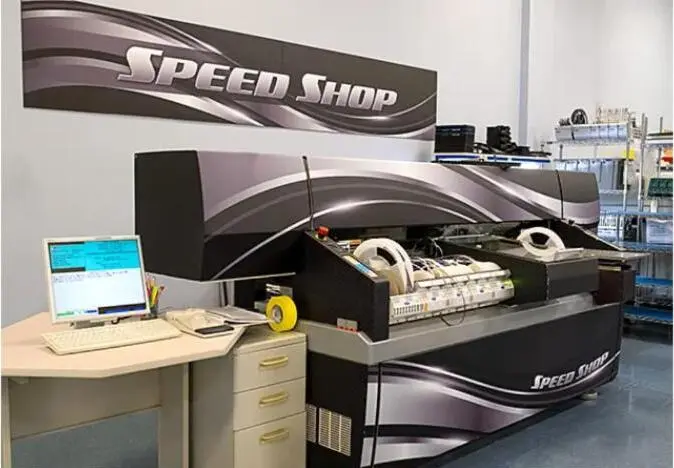
A single provider can support both stages when production processes also support prototype builds. Providers that run prototypes on separate, lower-fidelity lines introduce requalification risk when programs scale to volume, since the coating process, chemistry and application parameters may differ between prototype and production environments. Pro-Active Engineering’s Speed Shop delivers production-ready prototypes using the same processes, materials and quality controls as full-scale production runs. That continuity means coating performance validated at the prototype stage translates directly to production without process requalification and removes a common source of late-stage program risk.