

Key Takeaways for Defense Electronics Programs
-
Defense electronics assembly relies on IPC Class 3 workmanship, AS9100, ITAR registration and documented traceability to protect mission outcomes.
-
Six evaluation dimensions guide partner selection: engineering integration, prototyping speed, manufacturing scope, compliance posture, supply-chain resilience and lifecycle support.
-
Conformal coating, potting, counterfeit prevention and CMMC-aligned cybersecurity protect assemblies that operate in harsh, high-risk defense environments.
-
Integrated DFM, single-facility workflows and four-layer traceability reduce program risk by removing vendor hand-offs and late compliance surprises.
-
Pro-Active Engineering delivers a single accountable workflow from design through IPC Class 3 assembly and system integration within an AS9100, ITAR-registered facility; evaluate fit for a program with a technical consultation.
Evaluation Framework: Six Dimensions for Defense Electronics Partners
Program managers and lead engineers evaluating contract manufacturers need a repeatable framework that addresses every category of program risk. The following six dimensions provide that framework by covering the full scope of risk in defense electronics assembly.
-
Engineering integration: The partner embeds design-for-manufacturability from the first layout review, not after prototypes fail.
-
Prototyping speed: The partner operates a dedicated fast-turn line that uses full production processes, so prototype results translate directly to production.
-
Manufacturing scope: The partner handles surface mount, through-hole, conformal coating, box build and system integration under one roof.
-
Compliance posture: The partner holds active AS9100, ITAR registration, Nadcap accreditation and IPC certifications and maintains documented trade compliance and cybersecurity programs.
-
Supply-chain resilience: The partner sources from authorized distributors, applies SAE AS5553 counterfeit avoidance controls and maintains full component traceability.
-
Lifecycle support: The partner provides obsolescence monitoring, rework capability per IPC-7711/7722 and documentation that supports long-service-life programs.
Discuss how Pro-Active Engineering maps to each of these dimensions for a specific program.
Standards and Certifications That Govern Defense Electronics Assembly
IPC Class 3 assembly applies to high-performance and high-reliability products where failure carries unacceptable consequences. It requires 100% solder joint inspection, validated reflow profiles for each board design, X-ray inspection for bottom-terminated components, full operator and material lot traceability and current IPC J-STD-001 and IPC-A-610 certifications for all operators and inspectors. Class 3 also imposes tighter fillet dimensions, zero tolerance for solder bridging and stricter component alignment than Class 2.
AS9100 is the quality management system standard for aerospace and defense manufacturing. It governs risk management, configuration control, first article inspection and the documented processes that support consistent, auditable production. ITAR registration under 22 CFR Part 122 is mandatory for any U.S. manufacturer handling defense articles or controlled technical data on the United States Munitions List, even when no physical export occurs. Registration must be paired with a documented Trade Compliance Program covering USML classification, restricted-party screening, recordkeeping and employee training.
Beyond ITAR and AS9100, defense electronics assembly requires additional process-level certifications. J-STD-001 governs soldering materials and processes, while Nadcap accreditation covers special processes including coating, chemical processing and non-destructive testing. Together, these certifications form the compliance baseline that defense primes and government programs require from sub-tier suppliers.
DFM integration from day one converts these standards from checkboxes into program protection. When engineering and manufacturing operate within a single workflow, compliance requirements shape the design before a prototype is built, which prevents costly rework when standards are applied late. Pro-Active Engineering holds AS9100, ITAR registration, Nadcap accreditation, JCP certification and IPC-A-610 Class 3 compliance within one integrated facility, so every certification informs the design process from the start.
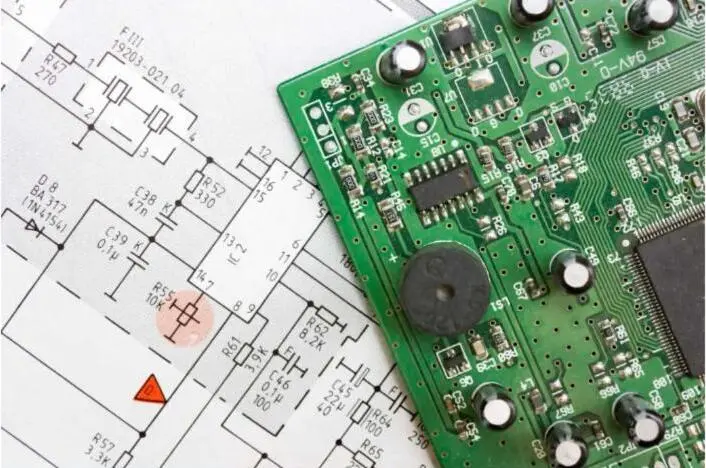
SMT and Through-Hole Choices for High-Reliability Builds
Surface mount technology enables high component density and supports automated, high-throughput assembly. It fits compact board designs and integrates efficiently with automated optical inspection and X-ray systems required for Class 3 builds.

Through-hole mounting is preferred in military PCB assembly for applications where mechanical stress, vibration and shock are primary concerns. Through-hole leads create strong physical bonds through the board, providing resistance to environmental loads common in defense platforms. Many defense assemblies combine both technologies, using SMT for density and through-hole for structural-critical connections.
The process trade-off decision belongs in the design phase, not after a prototype fails environmental testing. When the engineer making the placement decision and the technician running the assembly line work within the same workflow, the right process is selected before the first board is built. Pro-Active Engineering uses an integrated model that keeps that decision loop short and accountable.
Conformal Coating and Potting Strategies for Harsh Environments
Conformal coating applies a thin protective layer over assembled PCBs to resist moisture, dust, fungal growth and chemical exposure. Potting encapsulates assemblies in a cured compound, providing protection against severe shock, vibration and fluid ingress. Both methods are specified based on the end-use environment and the qualification requirements of the program.

Coating and potting decisions affect component accessibility for rework, thermal dissipation pathways and the solder joint inspection sequence. DFM reviews in NPI programs must account for coating coverage, masking requirements and cure process compatibility with the board thermal profile. When teams make these decisions after layout is complete, they often require board-level changes that delay qualification.
Pro-Active Engineering performs conformal coating and potting in-house as part of its integrated assembly workflow. Coating requirements are reviewed during the design phase, so masking, keep-out zones and inspection sequencing are built into the process plan before the first prototype is assembled.
Traceability and Counterfeit Prevention in Defense Electronics
A single counterfeit event costs aerospace and defense programs an average of $700,000, covering investigation, requalification testing, field replacement and reputational damage. ERAI reported a 25% increase in counterfeit electronic parts in 2024 compared to 2023.
DFARS 252.246-7007 requires prime contractors and their subcontractors to maintain a documented counterfeit electronic part detection and avoidance system. That system must include personnel training, inspection and testing, supply chain traceability with unique identifiers, quarantine procedures, GIDEP reporting and supplier selection processes. Best-practice mitigation prioritizes sourcing directly from original component manufacturers or authorized distributors to maintain an unbroken chain of custody.
Full PCB supply chain traceability requires documentation at four layers. Raw material certificates of conformance establish base material integrity. Component-level purchase order records document chain of custody from OEM through authorized distributors. Process-level logs record every manufacturing step. Test-level records link inspection and test results to individual board serial numbers. Together, these layers create a defensible traceability record for audits and investigations.
Pro-Active Engineering applies SAE AS5553 counterfeit avoidance methodology and uses SiliconExpert for BOM scrubbing, lifecycle risk monitoring and obsolescence management. Incoming inspection protocols and authorized-channel sourcing are embedded in the procurement workflow, not applied as an afterthought at receiving. That integration supports traceability that stands up under a prime contractor audit.
Supply-Chain Security and CMMC Readiness for Defense Programs
The U.S. defense electronics market reached $72.1 billion in 2025, with supply chain localization and strategic partnerships identified as critical for resilience and reduced dependency on external suppliers. Supply-chain reshoring incentives are projected to add measurable growth to the U.S. aerospace and defense market through 2031, with supplier footprints rebalancing toward domestic manufacturing clusters.
Supply chain disruptions in aerospace and defense rose 35% year-over-year in 2024, stretching lead times for defense-grade parts. A January 2024 National Defense Industrial Strategy stated that DOD dependence on adversarial sources is a mounting national security challenge, as foreign suppliers may cut off U.S. access to critical materials or introduce vulnerabilities into their technology.
Those vulnerabilities extend beyond physical supply chains into digital infrastructure. CMMC 2.0 enforcement under DFARS 252.204-7021 began Phase 1 in November 2025, with Phase 2 expanding Level 2 certification requirements starting November 2026. Every supplier in the defense electronics supply chain must meet defined cybersecurity standards as a mandatory flow-down requirement. Pro-Active Engineering maintains NIST 800-171 alignment and CMMC readiness, with access controls, data-handling procedures and personnel training records in place to support program compliance documentation.
Domestic, ITAR-registered manufacturing reduces IP exposure and deemed-export risks that accompany offshore production. Offshore production is illegal for defense contractors when ITAR-controlled technical data is transmitted to foreign nationals or overseas facilities, and violations carry severe criminal and financial penalties. Pro-Active Engineering uses a controlled domestic workflow that keeps technical data, manufacturing processes and personnel within a compliant, auditable environment.
Partner-Selection Criteria Aligned to Program Requirements
The six evaluation dimensions above translate into concrete supplier qualifications. The compliance baseline established in the framework above becomes the starting point for supplier selection. Beyond holding the certifications described earlier, the partner must demonstrate IPC Class 3 workmanship capability with certified operators, maintain documented counterfeit avoidance and traceability systems and operate within a cybersecurity posture aligned to NIST 800-171 and CMMC requirements.
Beyond certifications, the partner workflow structure shapes program risk. Defense and federal OEMs benefit from partnering with a single manufacturing and engineering firm that maintains integrated processes rather than relying on fragmented multi-vendor models that lack post-acquisition process integration or full prototyping-to-production support. Vendor fragmentation creates communication gaps, late-stage manufacturability issues and compliance exposure at every hand-off point.
One accountable partner from design through production removes those hand-offs. Pro-Active Engineering consolidates PCB design, rapid prototyping, assembly, coating, testing and box build into a single workflow at one facility, with one quality system governing every step.

Connect with Pro-Active Engineering’s engineering team to evaluate fit for a specific program.
Practical Checklist for Defense Electronics Assembly Partners
-
Is the facility ITAR-registered with DDTC and does it maintain a documented Trade Compliance Program with a designated Empowered Official?
-
Does the quality system hold active AS9100 certification and Nadcap accreditation for relevant special processes?
-
Are operators and inspectors currently certified to IPC-A-610 Class 3 and J-STD-001, with documented recertification records?
-
Does the partner perform DFM review before the first prototype build and is that review integrated with sourcing and quality planning?
-
What counterfeit avoidance methodology is in place, specifically, does the partner follow SAE AS5553 and source from authorized distributors?
-
Can the partner provide full four-layer traceability, including raw materials, component chain of custody, process logs and test records linked to individual serial numbers?
-
Is the partner aligned to NIST 800-171 and prepared to support CMMC compliance documentation for the program?
-
Does the partner offer conformal coating, potting and box build in-house or are those processes subcontracted?
-
Can prototypes be built using the same equipment, processes and operators as production builds?
-
Does the partner have lifecycle support capabilities including obsolescence monitoring and rework per IPC-7711/7722?
Next Steps: Map Requirements and Begin Technical Review
Defense electronics programs carry real consequences when the wrong partner is selected. Compliance gaps, counterfeit components, prototype-to-production disconnects and vendor fragmentation all translate into program risk that is difficult and costly to recover.
Pro-Active Engineering provides a single accountable workflow from initial PCB design and DFM through rapid prototyping, IPC Class 3 assembly, conformal coating, testing and full system integration within the same certified facility described earlier in Sun Prairie, Wisconsin. Every program benefits from the same quality system, the same traceability infrastructure and the same engineering team from first layout to production delivery.
Share project requirements with the Pro-Active Engineering team to begin a technical review. Engage the engineering team for a detailed program assessment.
Frequently Asked Questions
What is the difference between IPC Class 2 and IPC Class 3 for defense electronics assembly?
IPC Class 2 applies to general electronics where extended service life is required but failure is not catastrophic. IPC Class 3 applies to high-reliability products where failure is unacceptable because human life or mission success depends on the assembly. Class 3 imposes stricter solder joint criteria, tighter component alignment tolerances, zero tolerance for solder bridging, 100% inspection of all solder joints, validated reflow profiles for each board design and full traceability to operator, equipment and material lot records. Operators and inspectors must hold current IPC-A-610 and J-STD-001 certifications. If a purchase order or assembly drawing does not specify a class, most contract manufacturers default to Class 2. Defense programs must explicitly specify Class 3 in procurement documentation.
What does ITAR registration require from a defense electronics manufacturer?
ITAR registration under 22 CFR Part 122 is required for any U.S. manufacturer that produces defense articles listed on the United States Munitions List, even if the company never physically exports a finished product. Registration with the Directorate of Defense Trade Controls must be paired with a documented Trade Compliance Program. That program must address USML classification, restricted-party screening across the full transaction chain, export licensing procedures, deemed export controls for foreign-national access to controlled technical data, a minimum five-year recordkeeping system, annual self-assessments and a designated Empowered Official with authority to bind the organization on all export control matters. Registration alone does not constitute compliance. Civil and criminal penalties for ITAR violations are severe, and many prime contractors require subcontractor self-assessment documentation as a contract condition.
How does vendor fragmentation create risk in defense electronics programs?
When design, prototyping, assembly, coating and testing are distributed across multiple vendors, each hand-off point introduces communication gaps, documentation inconsistencies and accountability ambiguity. A DFM issue identified at the assembly stage may require re-engagement with the design firm, which delays resolution. Traceability records maintained by separate vendors may not integrate cleanly for a prime contractor audit. Counterfeit avoidance controls applied by one vendor may not extend to another. Each transition also creates schedule risk because delays at one vendor cascade through the chain. A single integrated partner eliminates these hand-offs by maintaining one quality system, one traceability infrastructure and one engineering team across the full workflow from design through production delivery.
What is CMMC and how does it affect defense electronics subcontractors?
The Cybersecurity Maturity Model Certification is a mandatory cybersecurity framework that flows down through the defense supply chain under DFARS 252.204-7021. It requires defense contractors and their subcontractors to meet defined cybersecurity standards for handling Controlled Unclassified Information. Phase 1 enforcement began in November 2025, with Phase 2 expanding Level 2 certification requirements starting November 2026. For defense electronics manufacturers, CMMC readiness means maintaining cybersecurity controls aligned to NIST 800-171, documenting those controls in a System Security Plan and being prepared to support prime contractor compliance verification. CMMC obligations are distinct from ITAR but complementary, because both frameworks protect sensitive defense information, with ITAR focused on controlled technical data and defense articles and CMMC focused on broader information-security posture across the supply chain.
Why does DFM integration at the design phase matter for defense programs?
Design-for-manufacturability review identifies layout issues, component placement problems, sourcing risks and process incompatibilities before a prototype is built. Industry data indicates that catching a design flaw during the design validation stage is substantially less expensive than correcting it during production. For defense programs, the cost of a late-stage redesign extends beyond direct engineering hours and includes requalification testing, documentation updates, schedule impact and potential compliance re-review. When DFM is integrated into the design phase by engineers who also own the manufacturing process, those issues are resolved before they become program events. Pro-Active Engineering embeds DFM into the design workflow, with sourcing insight and quality planning applied during layout rather than after manufacturing files are released.