
Key Takeaways on IPC Class 3 Training
- IPC Class 3 training sets the strictest workmanship standards for mission-critical electronics where failure carries unacceptable risk, with tighter acceptance criteria than Class 2 across every assembly type.
- Class 3 requirements must be embedded at the design stage, not applied only at final inspection, because design decisions around annular rings, vias and component placement directly determine compliance.
- Certification alone does not produce Class 3 assemblies; training delivers value only when integrated into a production system that includes DFM review, process controls, 100% inspection and full traceability.
- Programs in aerospace, defense and medical applications typically require Class 3 due to safety, mission or life-critical consequences, while Class 2 suits commercial electronics where extended service life is desired but continuous operation is not essential.
- Pro-Active Engineering delivers Class 3-ready manufacturing under ISO 9001:2015, AS9100, ITAR, JCP and Nadcap certifications, and evaluates how its integrated quality system supports high-reliability programs.
What IPC Class 3 Training Actually Covers
IPC Class 3 defines the highest tier of workmanship under IPC-A-610, the global acceptability standard for electronic assemblies. Electronics in life-critical environments must perform continuously under stress, vibration and thermal extremes. Class 3 training teaches operators and inspectors to classify every solder joint, termination and assembly condition as Acceptable, Process Indicator or Defect.
Acceptance criteria under Class 3 are tighter than lower classifications across every assembly type. Through-hole barrel fill requirements are stricter than Class 2, and surface-mount component alignment tolerances leave less margin for deviation. These tighter mechanical tolerances extend to hidden joints as well, so BGA voiding limits require X-ray inspection on every assembly, not sampling. Beyond the solder joints themselves, cleanliness requirements mandate flux residue removal and ionic contamination testing to protect long-term reliability.

Each of these acceptance criteria shapes how assemblies must be built, not just how they are inspected. These criteria are not inspection checklists applied at the end of production. Class 3 functions as a constraint set applied at CAD. Design decisions must satisfy these constraints before fabrication begins. Training that does not connect to DFM, process control and traceability delivers incomplete value.
Key Differences Between IPC Class 3 and Class 2
Class 2 covers general electronics where extended service life is desired but uninterrupted operation is not required. Class 3 applies where failure has safety, mission or life-critical consequences. The differences between the two classifications affect design rules, inspection protocols, traceability requirements and component qualification.
On the design side, Class 3 imposes tighter manufacturing margins than Class 2 across annular rings, conductor width and spacing reductions, plated-through-hole copper thickness and wicking distance. A board designed to Class 2 rules and submitted for Class 3 inspection will fail. Inner-layer annular rings across hundreds of vias often drive that failure.
On the inspection side, Class 3 requires 100% AOI and X-ray on every assembly, plus functional burn-in testing under simulated stress conditions. Class 2 typically uses sample-based AOI. Class 3 traceability then extends this rigor, because every part, lot number and process step must be documented with records available for audit years after shipment.
If no IPC class is specified on a purchase order, production defaults to Class 2. For aerospace, defense and medical programs with flow-down requirements, that default creates compliance exposure.
Business Value of IPC Class 3 Certification
The business case for Class 3 certification rests on risk reduction, not credential collection. Well-defined IPC-A-610 Class 3 acceptance criteria reduce field failure rates measurably, and uncertified operators increase inspection escapes compared to certified staff applying consistent criteria. Certification delivers the strongest value when embedded in a production system built to Class 3 from the start.
For program managers, the value calculation extends beyond training cost. Rework, field returns, audit findings and redesigns driven by late-stage DFM failures carry costs that dwarf the investment in certified workmanship. These downstream costs are avoided when Class 3 standards are embedded in a manufacturer’s daily operations, because defects are prevented at the source rather than caught and corrected later. The result is lower defect rates, smoother customer and regulatory audits and more predictable lifecycle performance.
Working with a manufacturer whose certifications already embed Class 3 standards removes the need to manage training compliance as a separate program risk. The certification infrastructure already supports production.
Discuss how Pro-Active Engineering’s Class 3-ready workflow applies to a specific program.
Typical Cost Ranges for IPC Class 3 Training
Training costs vary by certification level, delivery format and whether the program runs at a public training center or on-site. CIS-level courses for IPC-A-610 or J-STD-001 typically run several hundred to over a thousand dollars per student, while CIT-level instructor training runs higher. Combined module IPC courses often cost less than single-standard courses because of bundle savings of nearly $200. On-site team programs can reduce per-person cost compared to sending individuals to public sessions, but they require upfront investment and facility preparation.
Recertification is required every two years. Recertification costs less than initial training but must be completed before expiration to avoid retaking the full course. J-STD-001J, released in March 2024, introduced updated requirements, so personnel certified to prior revisions must recertify to the current standard.
Hidden program costs include lost production time during training, travel for off-site courses and the administrative burden of tracking certification expiration across a workforce. When a manufacturing partner already maintains active CIS and CIT certifications across its production staff, those costs shift from the buyer’s program budget to the manufacturer’s quality system.
Online and Remote Options for IPC Class 3 Training
IPC-A-610 CIS exams are available with remote proctoring through the IPC EDGE platform, and some training centers offer remote delivery for portions of the curriculum. Online options reduce travel cost and scheduling friction, particularly for geographically distributed teams.
Remote training has limitations for Class 3 applications. IPC-A-610 training objectives include hands-on inspection of through-hole, surface-mount and terminal connections, which requires physical samples and magnification equipment. J-STD-001 training adds hands-on soldering requirements that cannot be replicated remotely.
This limitation applies to remote training as well. A certified inspector working within a process that was not designed to Class 3 tolerances cannot recover compliance at inspection. Training delivers value only when it operates inside a production system built to Class 3 from the start.
Choosing Class 3 Versus Class 2 for a Program
Class 3 fits assemblies that operate in environments where failure has safety, mission or life-critical consequences. Aerospace and defense programs with flow-down requirements from prime contractors or government contracts typically mandate Class 3. Medical device assemblies classified as life-sustaining or implantable carry similar requirements. IPC Class 3 applies to high-reliability products such as medical life-support, military and aerospace electronics under IPC-2221 and IPC-6012.
Class 2 fits commercial electronics where extended service life is desired but continuous operation under extreme conditions is not required. Applying Class 3 to a Class 2 application adds cost without proportional reliability benefit.
The decision works best when made at program inception, not at first-article inspection. Flow-down requirements from the end customer, the operating environment, the service life expectation and the consequence of failure form the key inputs. A manufacturing partner with Class 3 experience can help evaluate those inputs during DFM review before design is finalized.
How Pro-Active Engineering Supports Class 3 Programs
Pro-Active Engineering operates under ISO 9001:2015, AS9100, ITAR, JCP and Nadcap certifications. These credentials define the quality management system, process controls, documentation practices and audit readiness that Class 3 programs require.
IPC-A-610 Class 3 and J-STD-001 workmanship standards are embedded in Pro-Active’s daily production operations. The quality system integrates DFM review, supplier qualification under SAE AS5553B counterfeit-avoidance methodology, BOM scrubbing through SiliconExpert and full traceability through Manex ERP. Every assembly moves through 100% Automated Optical Inspection. Advanced interconnect capabilities, including wire bonding, flip chip assembly and hybrid high-density assemblies, support compact, high-reliability designs for aerospace and defense programs.
Conformal coating, potting and ruggedization are performed in-house, with coverage and thickness controlled to documented drawings. Flying probe, in-circuit and functional testing close the loop before delivery. This structure creates a single accountable domestic partner that carries Class 3 compliance from design through production, without requiring the buyer to manage separate training and manufacturing vendors.

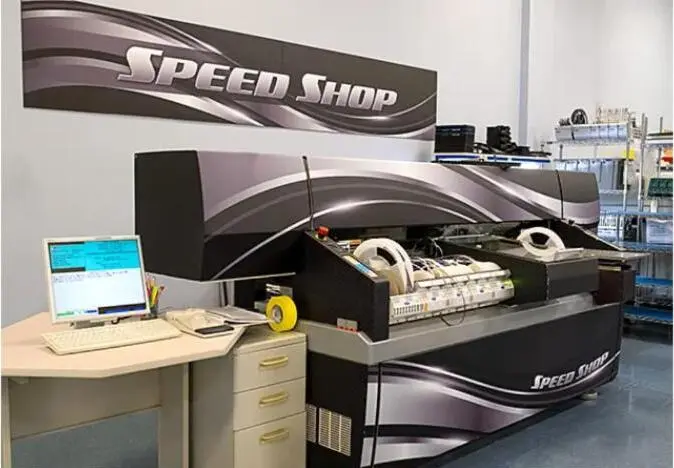
Pro-Active Engineering serves aerospace, defense and medical programs from a 45,000-square-foot facility in Sun Prairie, Wisconsin, with a workforce of more than 120 electronics professionals. Programs that start with rapid prototypes through the Speed Shop use the same processes and quality controls as full production runs, so Class 3 compliance remains consistent across every build stage.

Connect with Pro-Active Engineering’s engineering team to evaluate Class 3 requirements for an upcoming program.
Frequently Asked Questions
What is the difference between a CIS and a CIT certification for IPC-A-610?
A Certified IPC Specialist (CIS) is the operator and inspector-level credential. It confirms that an individual can apply IPC-A-610 acceptance criteria on the production floor, classifying assembly conditions as Acceptable, Process Indicator or Defect. A Certified IPC Trainer (CIT) is authorized to teach the standard and certify CIS candidates within an organization. CIS and CIT represent distinct roles, not a mandatory progression. Both credentials require renewal every two years and must be maintained to the current standard revision to remain valid.
How does IPC Class 3 traceability differ from Class 2?
Class 3 traceability is more comprehensive than Class 2 and functions as part of the production control system rather than supplemental documentation. For regulated programs, every panel, assembly, component lot, operator, test result, solder paste batch, reflow profile and inspection record must be bound to the unit serial number. Records must support an audit years after the unit ships. Class 2 traceability requirements are less prescriptive. Manufacturers serving aerospace, defense and medical customers under Class 3 typically manage this through an integrated MES or ERP system that links every process step to the assembly record in real time.
Does IPC Class 3 training reduce field failure rates?
Certified workmanship standards reduce field failure risk when integrated into production, not applied only at inspection. Well-defined Class 3 acceptance criteria, applied by certified operators and inspectors, reduce the rate of defects that escape to the field. The reduction comes from consistent criteria interpretation, mandatory 100% inspection including X-ray on BGA and complex joints, and process controls that prevent defects rather than detect them after the fact. Training alone, without the supporting process infrastructure, does not deliver the same outcome.
When does a program need to recertify to a new IPC standard revision?
IPC-A-610J and J-STD-001J were both released in March 2024 and are the current governing revisions. Personnel certified to prior revisions must recertify to maintain active status under the current standard. The J-STD-001JS Space and Military Addendum, released in January 2025, provides supplemental requirements for assemblies in extreme environments and must be tracked alongside base certifications for aerospace and defense suppliers. Recertification must be completed before the two-year expiration date. A lapsed certification requires retaking the full course rather than a challenge exam in most cases.
Conclusion: Lower Program Risk with One Class 3-Capable Partner
IPC Class 3 training delivers its full value only when embedded in a production system built to Class 3 from the start. Design rules, DFM review, process controls, traceability and supplier qualification must all operate at Class 3 standards for certification to translate into reliable assemblies and clean audits.
Pro-Active Engineering’s certifications reflect a quality management system that already operates at that level. Aerospace, defense and medical programs gain a single domestic partner accountable for Class 3 workmanship from design through delivery, without the complexity of managing training compliance and manufacturing quality as separate programs.