
Key Takeaways for Defense and Aerospace Teams
- Offshore wire bonding supply chains create reliability, traceability and ITAR compliance risks that compound across defense and aerospace program lifecycles.
- Three provenance tiers, U.S.-made, U.S.-assembled and foreign-critical-input, define realistic onshore sourcing options and their documentation requirements.
- Material and equipment gaps persist domestically, but an integrated engineering-led partner can qualify, control and document available sources to turn gaps into managed inputs.
- Programs must evaluate total cost of ownership, not unit price, because offshore fragmentation generates hidden costs in vendor management, inspection, rework and compliance remediation.
- Pro-Active Engineering consolidates design, wire bonding, thermal management and full traceability under one ITAR-registered roof in Wisconsin; discuss consolidating an onshore supply chain.
The Problem: Offshore Wire Bonding and Program Risk
Offshore sourcing creates compounding exposure across operational, technical and compliance dimensions.
Operationally, fragmented vendor chains multiply handoffs, extend logistics cycles and reduce schedule predictability. Technically, quality control and process visibility drop when die attach, wire bonding and hermetic sealing occur at overseas facilities outside direct program oversight. As Heisler Semiconductor notes, a chip whose die attach, wire bonding and hermetic seal happen overseas does not represent a domestic supply chain. It represents a domestic wafer in a foreign package.
From a compliance standpoint, ITAR controls extend beyond physical hardware. Design documentation, process recipes and test data shared with overseas assemblers constitute controlled technical data under ITAR. Civil penalties for ITAR violations can exceed $1.27 million per violation, and supply-chain liability rules can implicate upstream partners when downstream parties mishandle controlled data. Vendor fragmentation multiplies the number of access points where that exposure can occur.
The CHIPS Act committed roughly $52 billion to U.S. semiconductor manufacturing, with the National Advanced Packaging Manufacturing Program receiving about $3 billion, less than six cents of every dollar, for domestic advanced packaging capability. That imbalance closes the front-end fabrication gap faster than the packaging gap and leaves wire bonding as a persistent weak link in otherwise domestic supply chains.
Three Practical Onshore Provenance Tiers
Three provenance tiers apply to wire bonding supply chains, and each tier carries distinct legal and procurement implications.
The first tier, U.S.-made, is the strictest and carries the highest compliance burden. Under the FTC’s Made in USA Labeling Rule (16 CFR Part 323), an unqualified claim requires final assembly in the United States, all significant processing in the United States and all or virtually all components from the United States. These requirements make wire bonding difficult to qualify for this tier because domestic production of bonding wire and advanced bonders remains limited.
The second tier, U.S.-assembled, permits foreign inputs when substantial transformation occurs domestically. CBP ruling HQ H344034 (April 8, 2026) confirms that complex U.S. assembly of PCBAs via multistage processes constitutes substantial transformation, which makes the country of origin the United States even when components originate from foreign sources. Wire bonding performed domestically on foreign-sourced wire and substrates can qualify under this tier when the assembly process meets the complexity threshold.
The third tier, foreign-critical-input, acknowledges that certain materials, such as palladium-coated copper bonding wire, advanced bonder platforms and specialty substrates, currently lack sufficient domestic supply. Programs operating in this tier must document foreign inputs and manage them within traceability and counterfeit-avoidance frameworks. DoD trusted-supply programs largely measure where the die was fabricated, yet package provenance creates a distinct compliance consideration that procurement policy now begins to address.
Material Availability and Sourcing Capacity for Bonding Wire
Domestic bonding wire production is limited across gold, copper and palladium-coated copper.
Domestic production of gold bonding wire remains constrained, and the United States relies on imported wire for many applications. The global supply base for palladium-coated copper bonding wire is dominated by Asian and European firms, including Heraeus, Tanaka and Sumitomo Metal Mining. No U.S.-based companies appear among the top global producers. North America represents a notable share of global demand in this category, with use in defense, aerospace and medical segments.
An integrated engineering-led partner addresses this gap by qualifying and controlling available domestic and allied-nation sources. That partner maintains approved vendor lists and applies counterfeit-avoidance methodology, such as SAE AS5553B, to incoming material verification. This process discipline converts a structural supply gap into a managed, documented input rather than an uncontrolled program risk.
Discuss material sourcing strategy for a specific program.
Equipment and Tooling Access for Onshore Bonding
Material availability represents only half of the onshore sourcing equation. Programs also require access to qualified equipment and tooling.
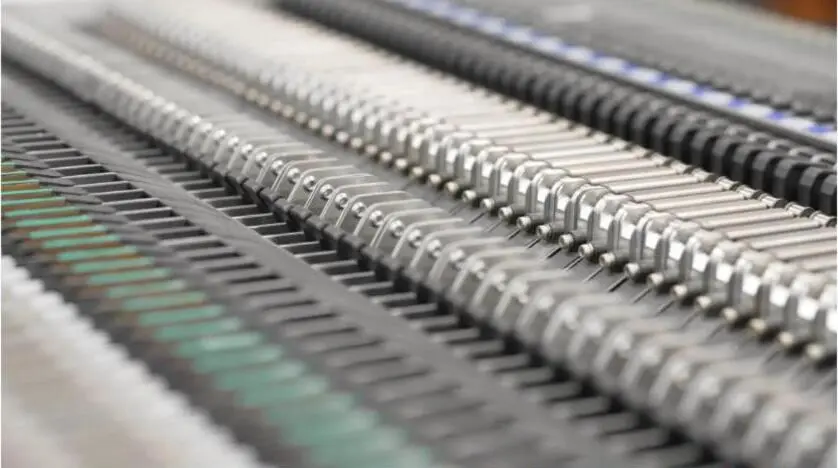
The U.S. wire bonding machine market relies on imported equipment. Domestic production focuses on specialized, low-volume and high-value segments. Advanced thermosonic copper ball bonders are not produced at scale domestically.
U.S.-based tooling and consumables suppliers serve the defense microelectronics community. Sunshine Semiconductor provides rebuilt and supported manual wire bonders, including K&S platforms, along with installation, training and process support for U.S. defense customers. U.S. suppliers of bonding wire and precision wire products include TopLine Corporation, The Bonding Source, Heraeus Electronics, AMETEK Coining, California Fine Wire and PICO Corporation. Hyperion Materials & Technologies supplies precision wire bonding jewel clamps manufactured from wear-resistant materials with NIST-traceable measurement practices and ISO-certified quality systems.
An engineering-led partner with installed U.S.-sourced equipment reduces access barriers by maintaining qualified tooling inventories, trained technicians and established service relationships. Programs cannot replicate those capabilities by sourcing wire bonding as a spot-market service.
Consumables Infrastructure and Service Models
Domestic consumables infrastructure for wire bonding, including capillaries, wedges, substrates and process chemicals, is fragmented but functional when managed by a partner with established supplier relationships. U.S. sources for wire bonding tooling, including wedges, capillaries and related consumables, include MPP, Kulicke & Soffa, DeWeyl Tool Company, PECO Precision Products, SPT Roth, TopLine Corporation and The Bonding Source.
The service model matters as much as the supplier list. A partner that consolidates consumables procurement, incoming inspection and process qualification under one roof removes the coordination burden that falls on programs managing multiple specialist vendors. Predictability improves when one accountable partner owns the full consumables chain instead of distributing that responsibility across a fragmented supply base.
Defense Qualification and Documentation Standards
Defense and aerospace wire bonding programs operate under overlapping qualification and documentation requirements. ITAR registration governs access to controlled technical data throughout the supply chain. An onshore wire bonding supply chain must control both physical product flow and engineering information flow because design files, process recipes and test data shared with assemblers constitute controlled technical data under ITAR.
DFARS 252.246-7007 requires contractors to maintain a risk-based counterfeit detection and avoidance system that includes personnel training, inspection and testing protocols, traceability to original manufacturers, GIDEP alert monitoring and quarantine procedures for suspect parts. These requirements flow down to all subcontractors, which makes supplier qualification a program-level responsibility.
Pro-Active Engineering holds ISO 9001:2015, AS9100, ITAR registration, JCP certification and Nadcap accreditation. That certification stack supports the documentation depth that defense prime contractors require, including full material traceability, process records and inspection data at every stage from incoming material through final assembly.
Total Cost of Ownership for Wire Bonding
Offshore wire bonding appears cost-competitive at the unit level, but the full lifecycle picture tells a different story. Hidden costs accumulate across vendor management overhead, incoming inspection for foreign-sourced assemblies, rework from quality escapes, schedule recovery after logistics disruptions and compliance remediation when traceability gaps surface during audits.
An integrated domestic partner reduces vendor count, moves DFM earlier in the program cycle and maintains process consistency from prototype through production. Each of these structural advantages reduces downstream cost exposure. Programs that evaluate wire bonding sourcing on unit price alone undercount the costs that offshore fragmentation generates across a program lifecycle.
Evaluate total cost of ownership for an integrated onshore approach.
Comparing Provider Models for Defense Wire Bonding
Four provider models compete for defense and aerospace wire bonding work, and each model presents distinct tradeoffs.
Offshore brokers offer low unit prices but introduce IP risk, counterfeit exposure, geopolitical supply disruption and ITAR provenance gaps. That model conflicts with programs that require full domestic traceability.
Large EMS providers have broad capacity but prioritize high-volume programs. Low-to-mid volume, high-complexity defense builds often receive less engineering attention and slower response times at large EMS organizations whose economics favor scale over complexity.
Design-only firms provide engineering expertise without production ownership. Programs that separate design from manufacturing introduce a handoff gap where DFM insights are lost and prototype-to-production transitions become high-risk events.
Local job shops offer geographic proximity and responsiveness but typically operate with narrow capability sets, limited automation and certification coverage that falls short of AS9100 or Nadcap requirements.
An integrated engineering-led partner combines engineering depth, advanced interconnect capability, certified quality systems and domestic ITAR-compliant manufacturing under one accountable relationship. That model fits low-to-mid volume, high-complexity defense and aerospace programs that cannot absorb the risks of the four alternatives.

Due-Diligence Checklist for Onshore Partners
Programs evaluating an onshore wire bonding partner should assess the following areas.
- Certifications: Confirm active AS9100, Nadcap, ITAR registration and JCP certification with current scope documentation.
- Inspection depth: Verify that AOI, bond pull testing and process validation occur in-house rather than through outsourced services.
- Traceability practices: Confirm lot-level traceability from incoming material through final assembly, with documentation available for prime contractor audits.
- Counterfeit avoidance: Confirm alignment with SAE AS5553B and DFARS 252.246-7007 requirements, including approved vendor lists and incoming authentication protocols.
- Engineering integration: Assess whether DFM review, design support and process engineering come from the same team that performs assembly.
- Transition readiness: Evaluate whether the partner can support a pilot build before full production transfer, with documented process qualification records.
- ITAR data controls: Verify that the ITAR data controls described above are documented, auditable and restricted to U.S. persons.
Conclusion: One Accountable Partner for Controlled Onshore Execution
The reliability, traceability and compliance risks outlined earlier are not theoretical. They accumulate across a program lifecycle when wire bonding remains offshore.
Material gaps, equipment import dependence and workforce concentration overseas represent structural realities that commodity sourcing cannot solve. Pro-Active Engineering consolidates design, rapid prototyping, wire bonding, advanced interconnect, thermal management and full traceability under one ITAR-registered roof in Sun Prairie, Wisconsin.

With AS9100 and Nadcap accreditation, SAE AS5553B counterfeit-avoidance methodology and an engineering-led workflow that integrates DFM from day one, Pro-Active serves as a single accountable domestic partner for defense and aerospace programs that need to close gaps in onshore wire bonding.
Start a conversation about consolidating an onshore wire bonding supply chain.
Frequently Asked Questions
How do U.S.-made, U.S.-assembled and foreign-critical-input tiers differ for wire bonding?
The U.S.-made tier is the most stringent and requires that all or virtually all components and processing occur domestically. For wire bonding, this tier is difficult to achieve because domestic production of bonding wire and advanced bonder platforms remains limited.
The U.S.-assembled tier permits foreign inputs when substantial transformation occurs domestically, which means the assembly process must be complex enough that components lose their individual identities and the finished article acquires a new name, character and use. Complex wire bonding and PCBA operations performed in the United States can qualify under this standard.
The foreign-critical-input tier applies when specific materials or equipment have no adequate domestic substitute. Programs operating in this tier must document foreign inputs, apply counterfeit-avoidance controls and manage those inputs within traceability frameworks. Clarity on the applicable tier determines documentation requirements, supplier qualification obligations and the compliance posture that a program must maintain.
Which provider model best fits low-to-mid volume defense programs?
Low-to-mid volume, high-complexity defense programs receive limited benefit from offshore brokers, large EMS providers focused on high-volume scale, design-only firms without production ownership and local job shops with limited certification coverage. An integrated engineering-led domestic partner aligns best with this segment because it combines engineering depth with advanced interconnect capability, certified quality systems and ITAR-compliant manufacturing under one accountable relationship.
That structure removes the handoff gaps that generate risk when design, prototyping and production sit in separate organizations. Programs in this segment also gain from DFM integration early in the design phase, which reduces late-stage redesign risk and supports smoother prototype-to-production transitions.
What should programs evaluate when switching to an onshore wire bonding partner?
Transition planning should address certifications, inspection capability, traceability depth, counterfeit-avoidance alignment, engineering integration and ITAR data controls. Programs should confirm that a prospective partner holds active AS9100, Nadcap and ITAR registration with current scope documentation.
Inspection capability, including bond pull testing and AOI performed in-house, should be verified. Traceability practices should support lot-level documentation from incoming material through final assembly. Counterfeit-avoidance processes should align with DFARS requirements and flow down to subcontractors.
A pilot build before full production transfer allows programs to validate process qualification records and communication practices before committing full volume. Starting with a defined pilot scope reduces transition risk and provides objective performance data to support the decision.
How does CHIPS Act funding affect domestic packaging capacity timelines?
The CHIPS Act directs the large majority of its funding toward front-end wafer fabrication, with the National Advanced Packaging Manufacturing Program receiving a comparatively small share for domestic advanced packaging capability. As a result, domestic wire bonding and packaging capacity expands more slowly than wafer fabrication capacity.
CHIPS R&D incentives announced in July 2026 totaling $874 million across seven companies target advanced packaging, substrates, materials and memory technologies, which will strengthen the domestic ecosystem over time. Funding disbursements remain milestone-based, equipment lead times are extended and workforce development for wire bonding and packaging processes requires years rather than quarters.
Programs that need qualified domestic wire bonding capacity now cannot rely on CHIPS-funded capacity expansion to solve near-term sourcing requirements. Working with an established, certified domestic partner with installed equipment and trained technicians provides a practical path for programs operating on current schedules.