

Last updated: August 23, 2026
Key Takeaways
- Domestic quick-turn PCB prototypes have become a strategic requirement for defense, aerospace and medical programs as DoD sourcing rules tighten and component lead times extend.
- Fragmented multi-vendor models create communication gaps, diffuse accountability and inflate total cost of ownership through rework, freight and compliance risk.
- Integrated engineering-to-manufacturing workflows with early DFM review cut late-stage defects, shorten time-to-market and keep prototypes aligned with production standards.
- Certification posture (AS9100, ITAR, JCP, Nadcap) and supply-chain security now function as baseline filters that remove non-compliant suppliers before technical evaluation.
- Pro-Active Engineering delivers end-to-end PCB design, rapid prototyping, assembly and box build under one certified quality system, and discuss your mission-critical program with our team.
The Problem: Fragmented PCB Sourcing Drives Cost and Risk
Most PCB sourcing models split work across a design firm, a bare-board fabricator, an assembly house, a coating vendor and a systems integrator. Each handoff introduces communication gaps, undocumented decisions and diffuse accountability. When a defect surfaces in production, no single partner owns the root cause.
A complete total cost of ownership model includes acquisition, supply-chain, quality, warranty and risk-related costs, not just unit price. Multi-vendor models inflate every category beyond the acquisition line. Rework, freight, redesign cycles and compliance gaps accumulate across vendors and erode program margins. Design and manufacturing that happen in sequence rather than together produce tolerance stack-up failures, unstable BOMs and reactive quality systems that cost more to correct than to prevent.
The seven criteria below give engineering and program management teams a structured framework for evaluating whether a domestic quick-turn PCB prototype manufacturer can eliminate these risks. The first consideration is delivery speed because compressed development schedules magnify every downstream risk when prototypes arrive late.
1. Speed of Prototype Delivery
Large EMS providers focus on high-volume throughput. Prototype runs compete for capacity against production orders and are routinely deprioritized. Lead times become unpredictable, which compresses development schedules and delays design validation.
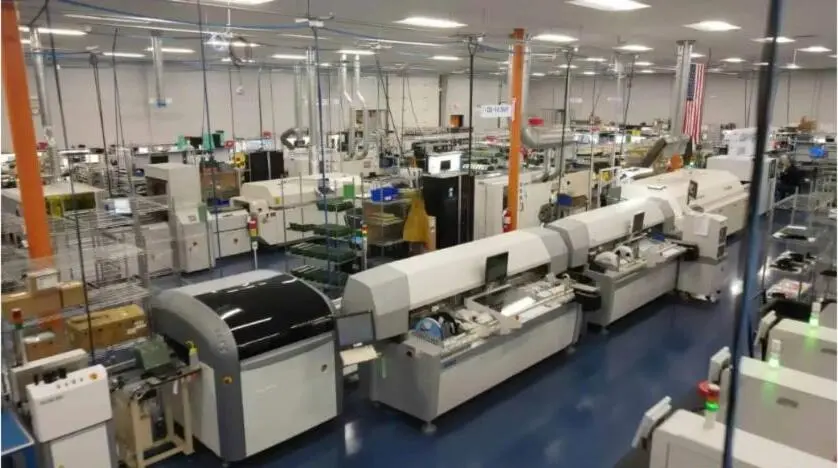
Pro-Active Engineering operates a dedicated rapid prototyping line, the Speed Shop, that uses the same SMT and through-hole processes as full production builds. Because these prototypes do not require process translation or equipment changeovers when moving to production, the Speed Shop can commit to fixed delivery windows without competing against high-volume orders. This dedicated-line model removes the scheduling bottleneck that large EMS providers create when prototypes must wait for production-line availability.
2. Engineering Integration and DFM Support
Without DFM, manufacturing issues surface late during prototyping or even production. With DFM, teams address these issues during the design phase. The cost of engineering changes increases at every development stage. Changing a sketch takes minutes. Changing tooling or production processes after launch can cost far more.
Successful prototype builds often hide manufacturability issues because they tolerate manual intervention and slower inspection that production lines cannot support. Teams sometimes assume a working prototype proves the design is ready for volume, even when process windows remain fragile.
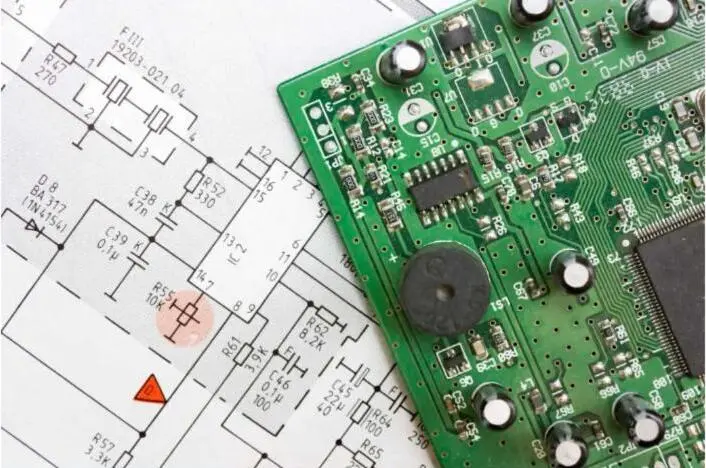
Pro-Active integrates PCB layout, embedded control design, firmware development and DFM into a single engineering-to-manufacturing workflow. Design and manufacturing engineers work within the same program, resolving trace width, component placement, thermal constraints and sourcing risks before design freeze. Companies that apply DFM early in development typically reduce manufacturing costs and shorten time-to-market while lowering defect rates during pilot runs.
3. Certification and Traceability for Regulated Programs
AS9100 Rev D incorporates the full ISO 9001:2015 standard and adds aerospace-specific requirements. These include counterfeit parts prevention, First Article Inspection, configuration management, lot-level traceability and operational risk management. An ISO 9001-certified manufacturer has not met AS9100 requirements and should not support aerospace or defense PCB assembly without a thorough independent audit.
ITAR registration under 22 CFR Part 122 is required for any U.S. PCB manufacturer that produces defense articles, even without exporting. Manufacturers that lack these credentials are typically removed from defense and aerospace sourcing programs before technical evaluation begins.
Pro-Active holds ISO 9001:2015, AS9100, ITAR registration, JCP certification and Nadcap accreditation. Assemblies follow IPC-A-610 Class 3 workmanship standards with full lot-level traceability and documentation control. For medical programs, the FDA Quality Management System Regulation took full effect on February 2, 2026, incorporating ISO 13485:2016 by reference and raising documentation, traceability and supplier quality requirements for PCB suppliers in medical applications. Pro-Active’s quality management system supports these obligations.
Verify our certification posture for your specific program.
4. Prototype-to-Production Continuity in One Facility
Prototype-to-production region transfers carry risk when the domestic prototype supplier made undocumented decisions on laminate, drill compensation, copper balancing or stack-up that are not captured in release files. When design and production occur at different facilities, those decisions disappear at the handoff.
Pro-Active builds prototypes using the same processes, equipment and documentation standards as volume production. There is no handoff between a prototype house and a production facility. Engineering decisions made during development are captured in the same quality management system that governs production builds. Low-volume production bridges the gap between prototype validation and full-scale manufacturing by allowing engineering teams to evaluate process repeatability under realistic conditions, and Pro-Active provides that bridge within a single workflow.
5. Advanced Interconnect and Thermal Capabilities In-House
Standard EMS providers and local job shops focus on conventional SMT and through-hole assembly. High-density, high-power and thermally demanding designs for aerospace, defense and industrial applications exceed those capabilities. Programs that require compact interconnect architectures or engineered heat dissipation need a partner with in-house advanced packaging.
Pro-Active provides wire bonding, flip-chip assembly, hybrid high-density assemblies and high-speed interconnect design. For thermal management, the team applies silver sintering, direct thermal path PCB technology, advanced metal-core constructions and heavy copper integration. These capabilities sit within the same integrated workflow as design, prototyping and assembly, not at a subcontractor.
6. Supply-Chain Security Under Emerging DoD Rules
The DoD issued an Advance Notice of Proposed Rulemaking on July 2, 2026, to implement the prohibition on acquiring covered PCBs from China, Russia, Iran and North Korea, with the prohibition taking effect January 1, 2027. Prime contractors must flow down PCB geographic restrictions and technical standards to every tier of the supply chain. Waiver requests require third-party certifications under ISO/IEC 20243, IPC-1782 and IPC-1791 standards, plus IPC-1782 traceability data and a transition strategy to domestic or allied sources.
These geographic restrictions arrive at a time when component availability is already constrained. As of March 2026, semiconductor lead times have extended significantly, with analog, power and interface components among the most constrained categories. Quality, compliance, traceability documentation, supplier compliance and audit preparation have displaced cost as the top manufacturing challenge for government contractors, according to the 2026 Deltek Clarity Government Contracting Study.
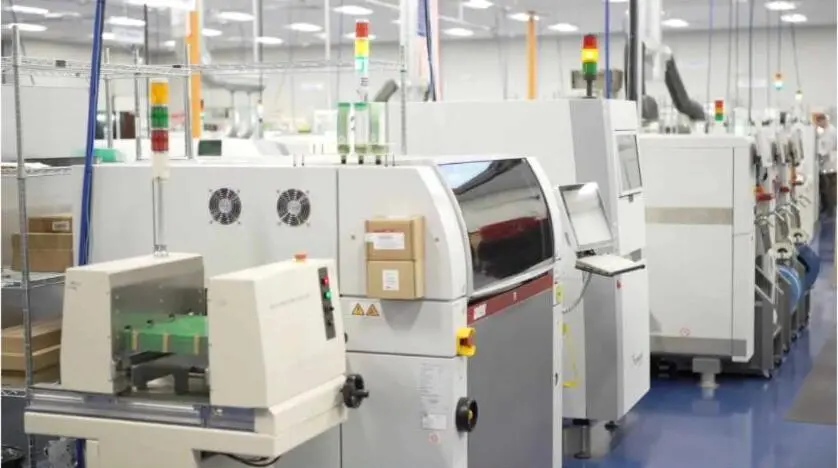
Pro-Active manufactures in Sun Prairie, Wisconsin, with ITAR-registered processes and SAE AS5553B counterfeit avoidance methodology. BOM scrubbing and lifecycle risk mitigation are integrated through SiliconExpert, which reduces exposure to obsolescence and unauthorized components. Onshore manufacturing removes the geopolitical and logistics risk that offshore sourcing carries into 2027 and beyond.
7. Total Cost of Ownership Across the Program Lifecycle
Domestic PCB assembly often wins on total cost for prototype and quick-turn runs because logistics friction, extended offshore lead times and rework risk outweigh any unit-price premium. A supplier with a lower unit cost may create higher total costs through poor quality, long lead times, high defect rates and expensive air freight to compensate for delays.
Hidden costs such as NRE fees, quick-turn surcharges, compliance documentation and the downstream cost of field returns can materially change the effective per-board cost on prototype builds. Component substitution without written buyer approval is a major hidden TCO risk because it can alter electrical behavior, thermal performance or compliance status and lead to field failures or regulatory issues.
Pro-Active’s integrated model reduces vendor count, which directly eliminates the inter-vendor communication overhead that creates undocumented decisions at each handoff. Because quality control is embedded from design through delivery within a single system, defects are caught during DFM review rather than discovered during production. This structure reduces the defect-driven costs that accumulate across fragmented program lifecycles.
Get a total program cost analysis from Pro-Active’s engineering team.
Provider Trade-offs: Complexity, Compliance and Scalability
Offshore brokers offer low unit prices but introduce IP risk, counterfeit exposure, geopolitical sourcing uncertainty and logistics cycles that conflict with rapid iteration. Section 301 tariffs compress the headline factory-gate savings on complex Chinese-origin PCBs, and the 2027 DoD prohibition makes offshore sourcing untenable for covered defense programs.
Large EMS providers prioritize high-volume throughput. Prototype and low-volume programs receive less engineering attention, longer lead times and limited DFM integration. Engineering teams at these providers often sit apart from manufacturing operations, which creates the same fragmentation that multi-vendor models produce.
Design-only firms deliver layouts and schematics but carry no production ownership. Manufacturability issues discovered after design freeze become the customer’s problem to resolve with a separate assembly partner.
Local job shops offer proximity and flexibility but often lack automated inspection, Class 3 workmanship standards, AS9100 certification and the scalability needed to support volume production transitions.
An integrated, engineering-led domestic manufacturer consolidates all of these functions under one accountable partner. Design, DFM, rapid prototyping, assembly, coating, testing and box build share a single quality management system, a single documentation chain and a single point of contact for program management.
Due-Diligence Checklist for Vendor Evaluation
Use the following checklist when evaluating a fast quick-turn PCB prototype manufacturer in the United States for a mission-critical program:
- Confirm AS9100 and ISO 9001:2015 certification with current certificate scope and expiration date.
- Verify ITAR registration with the U.S. Department of State Directorate of Defense Trade Controls.
- Confirm IPC-A-610 Class 3 workmanship capability and J-STD-001 soldering compliance.
- Ask whether prototypes are built on the same equipment and processes as production builds.
- Confirm that DFM review is integrated into the design phase, not performed after design freeze.
- Evaluate lot-level traceability and documentation control practices, including component country-of-origin records.
- Confirm counterfeit avoidance methodology, such as SAE AS5553B, and BOM lifecycle management tools.
- Ask whether the partner holds Nadcap accreditation and JCP certification for defense program eligibility.
- Confirm in-house advanced interconnect and thermal management capabilities for high-density or high-power designs.
- Evaluate prototype-to-production transition process: same facility, same processes, same documentation chain.
- Confirm NIST 800-171 alignment and CMMC readiness for programs involving Controlled Unclassified Information.
- Ask for evidence of automated optical inspection, flying probe, in-circuit testing and functional test capabilities.
Frequently Asked Questions
What makes an integrated manufacturer different from using separate design and assembly vendors?
An integrated manufacturer keeps design, DFM, prototyping, assembly, testing and box build within a single quality management system and documentation chain. When one team owns the entire workflow, decisions made during design remain visible to manufacturing engineers before production begins. Handoff gaps, undocumented stack-up decisions and accountability disputes between vendors disappear. Programs move from prototype to production using the same processes, the same traceability records and the same engineering team.
Is Pro-Active Engineering suitable for regulated industries like defense, aerospace and medical?
Pro-Active’s certification posture, detailed in the Certification and Traceability section above, meets baseline requirements for defense and aerospace sourcing programs. The quality management system is aligned with NIST 800-171 and structured for CMMC readiness, which addresses the cybersecurity requirements that increasingly govern contractor eligibility. For medical programs, the quality framework supports the documentation, traceability and supplier qualification obligations introduced by the FDA 2026 QMSR.
Can Pro-Active Engineering handle both low-volume prototypes and higher-volume production?
Pro-Active Engineering supports orders as small as a single unit through the Speed Shop rapid prototyping line and scales through low-to-mid volume production runs using the same equipment and processes. The Speed Shop and the production floor share SMT equipment, inspection systems and quality documentation, so moving from a 5-unit prototype to a 500-unit production run requires no process requalification, no new documentation packages and no manufacturing partner change. Many customers validate their design with a prototype run and remain with Pro-Active through the full product lifecycle without re-sourcing.
How does Pro-Active Engineering address supply-chain security and counterfeit component risk?
Pro-Active applies the counterfeit avoidance and BOM lifecycle practices described in the Supply-Chain Security section above. Beyond those baseline controls, components come exclusively from authorized distributors with documented risk-mitigation processes, and each lot undergoes receiving inspection before entering inventory. These layers create multiple verification points between procurement and assembly and support the traceability and country-of-origin documentation requirements emerging from the DoD 2026 PCB sourcing rulemaking.
What is the onboarding process for switching to Pro-Active Engineering from a current supplier?
Pro-Active Engineering’s onboarding process aims to minimize disruption. New programs typically begin with a pilot build that demonstrates process capability, documentation practices and communication cadence before full production transfer. Engineering teams retain full oversight throughout, with regular design reviews, real-time program updates and transparent reporting. Many customers start with a single prototype run and expand the relationship as confidence in quality and delivery grows.
Conclusion: Select a Partner That Owns the Entire Lifecycle
Vendor fragmentation, late-stage manufacturability surprises, compliance gaps and supply-chain exposure represent structural risks of multi-vendor PCB sourcing models. Faster shipping or lower unit prices do not remove those risks. A single accountable partner that integrates engineering, prototyping, assembly and production under one quality management system with full domestic traceability addresses them directly.
Pro-Active Engineering delivers that integration for defense, aerospace, medical and industrial programs that cannot tolerate late-stage redesigns or compliance failures. From initial PCB layout and DFM through rapid prototyping, volume assembly, conformal coating and box build, every step shares the same engineering team, the same documentation chain and the same certified quality framework.