
Key Takeaways for Interconnect Selection
- Silver sintering outperforms traditional soldering in thermal conductivity, electrical performance and service-temperature limits for high-power SiC and GaN applications.
- Thermal cycling reliability is significantly higher with sintered silver joints, which maintain structural integrity under extreme operating conditions.
- Soldering remains cost-effective for moderate-power applications within its reliability range, while silver sintering reduces long-term risk when junction temperatures or cycling demands exceed solder limits.
- Manufacturing complexity and total cost of ownership favor sintering when field-failure consequences or extended service life requirements outweigh higher upfront process costs.
- Pro-Active Engineering delivers an integrated U.S.-based design-to-production workflow with ISO 9001:2015, AS9100, Nadcap, ITAR and JCP certifications, and teams with program leaders to evaluate the optimal interconnect solution.
How Soldering and Silver Sintering Form the Bond
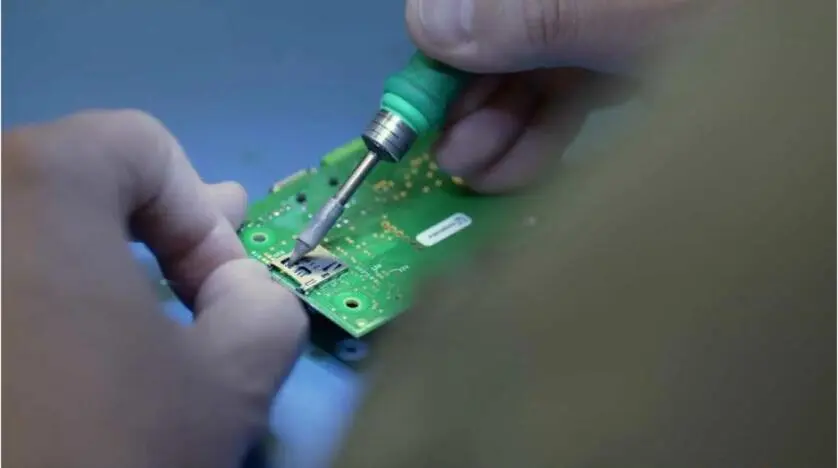
Soldering joins components by melting a metal alloy, which flows into the joint and solidifies as it cools. The resulting bond is an alloy layer between the component and substrate. This process is mature, well understood and compatible with standard assembly equipment across a broad range of applications.
Silver sintering uses solid-state diffusion rather than melting. Silver particles, often in paste form, are compressed and heated below the melting point of bulk silver. The particles bond through atomic diffusion and form a dense, nearly pure metallic structure. The resulting bond has a melting point far above that of conventional solder alloys. This characteristic is critical for SiC and GaN die-attach applications where junction temperatures can exceed what solder reliably tolerates.
This difference in bonding mechanism drives the performance gap between soldering and silver sintering.
Thermal and Electrical Conductivity in High-Power Designs
Heat dissipation is the area where silver sintering delivers the largest advantage over soldering. Sintered silver and copper materials deliver thermal conductivity several times higher than solder preforms. This conductivity enables efficient heat transfer from die to substrate in high-power modules.
In EV inverters and SiC power modules, this advantage translates to lower die temperatures under load. Replacing a soldered die-attach or base-plate interconnect with sintered silver reduces maximum die temperature. Lower die temperature extends die lifetime and overall module service life.
Electrical conductivity follows a similar pattern. Silver sinter paste achieves electrical conductivity approaching bulk silver. This performance reduces resistive losses in high-current paths and supports the demands of wide-bandgap semiconductor devices.
Pro-Active Engineering provides thermal management capabilities that address these heat dissipation challenges. Silver sintering, direct thermal path PCB technology, advanced metal-core constructions and heavy copper integration support high-power and mission-critical applications.
Service-Temperature Limits for Die-Attach Materials
The service-temperature ceiling of a die-attach material sets the reliable operating range of the device it bonds. Common lead-free solder alloys have melting points that work for many applications but create a narrowing reliability margin as junction temperatures rise toward those limits.
For SiC and GaN devices operating with continuous junction temperatures in the upper range of what lead-free solders tolerate, or with transient spikes above that range, silver sintering has become the industry standard. Sintered silver joints remain structurally stable at temperatures well above the operating ceiling of conventional solders, with a melting point near that of bulk silver, which eliminates the risk of remelting during subsequent board-level soldering or under elevated operating conditions.
For aerospace and defense environments, where electronics must perform across wide altitude-driven temperature swings and sustained high-temperature operation, this service-temperature stability functions as a program requirement.
Soldering remains appropriate when junction temperatures stay well within the reliable operating range of the chosen alloy and when the application does not impose the thermal cycling demands described below.
Reliability Under Thermal Cycling and Vibration
Thermal cycling is the primary failure driver for die-attach interconnects in mission-critical programs. Every power-on or power-off cycle, altitude change or environmental temperature swing stresses the bond between die and substrate. Over time fatigue accumulates and joints degrade.
Sintered silver modules withstand a significantly greater number of thermal cycles across wide temperature ranges with minimal delamination or voiding. A fully sintered module is expected to last longer than a fully soldered equivalent under the same conditions.
Automotive-grade reliability requirements combined with thermal cycling demands that exceed what standard solder can sustain over a vehicle service life often trigger the switch to sintered silver die attach. The same logic applies to long-service aerospace and defense programs that cannot accept field failures.
Pressureless silver-sintered interconnects can maintain die-shear strength after thermal cycling and high-temperature storage. Soldering with advanced alloy formulations designed for fatigue resistance can deliver strong performance after substantial thermal cycling within its rated temperature range, which makes it a viable choice when operating conditions remain within those bounds.
The environmental stresses described earlier, combined with intense vibration, create conditions where sintered interconnects demonstrate a clear reliability advantage.
Manufacturing Demands and Total Cost of Ownership
While performance characteristics support the technical case for sintering, manufacturing realities and program economics also shape the decision. Soldering is a mature, widely deployed process, which creates practical advantages on the factory floor. Preform placement is straightforward, equipment is broadly available and process engineers have decades of accumulated knowledge.
These factors make soldering the preferred approach for mass-market applications where cost and scale are prioritized over maximum thermal performance. Silver sintering, by contrast, requires more specialized equipment and process control. Pressure-assisted sintering applies controlled force at elevated temperature to achieve low void content in high-reliability modules. Pressureless sintering alternatives exist but require different process parameters.
Modern copper-based pastes and pressure-optimized silver sintering formulations processed at lower pressures offer cost-saving potential compared with traditional high-pressure sintering processes. Total cost of ownership, however, extends beyond unit assembly cost. When sintering extends module service life, reduces field failures and prevents thermal degradation that shortens die lifetime, long-term program economics shift.
For regulated aerospace and defense programs, the cost of a field failure or unplanned redesign far exceeds the incremental cost of sintered interconnects at assembly. Pro-Active Engineering holds ISO 9001:2015, AS9100, Nadcap, ITAR and JCP certifications. These credentials provide the documented quality management infrastructure that regulated programs require.
Full traceability, controlled processes and disciplined documentation reduce compliance risk and support lifecycle program management with a single domestic partner.
Application-Specific Guidance for Sintering vs Soldering
Interconnect selection depends on the demands of the application. The following contexts outline where each technology fits best.
- SiC and GaN power modules: Silver sintering enables reliable SiC device operation at junction temperatures above what conventional solders can sustain. It also provides better thermal fatigue resistance and extended power-cycling lifetime. For wide-bandgap devices operating at the upper end of their junction temperature range, sintering represents the established industry direction.
- EV inverters: High-voltage EV inverters using SiC dies at elevated junction temperatures benefit from sintered interconnects that reduce die temperature and extend module life. For mass-market EV applications where cost and scale dominate, soldering with advanced alloys remains viable when junction temperatures stay within solder reliability limits.
- Aerospace and defense electronics: Programs subject to wide operating temperature ranges, vibration and long service cycles require interconnect solutions that maintain structural integrity across the full mission profile. Sintering is appropriate when thermal cycling demands exceed what solder can reliably sustain over the program service life.
- High-power industrial and energy systems: Continuous high-current operation in power conversion and energy monitoring applications creates sustained thermal loads. Silver sintering thermal conductivity supports reliable heat dissipation in these environments.
- Moderate-power silicon devices: Devices with junction temperatures well below the threshold where solder reliability degrades can use soldering or silver-filled conductive epoxy die attach. These options are typically adequate and more cost-effective.
Decision Checklist for Silver Sintering Adoption
Program leaders can apply the following criteria to determine when silver sintering moves from optional to required.
- Junction temperature under worst-case operating conditions approaches or exceeds the reliable operating ceiling of available lead-free solder alloys
- The application uses SiC or GaN wide-bandgap devices at high power density
- Thermal cycling demands over the program service life exceed what solder fatigue resistance can sustain
- The mission profile includes wide temperature swings, high vibration or both, typical of aerospace and defense environments
- Automotive-grade or equivalent long-service-life reliability qualification is required
- Die temperature reduction is needed to meet thermal budget or extend die lifetime
- Subsequent assembly processes expose the die-attach joint to elevated temperatures that approach solder melting points
- Field failure consequences related to safety, mission success or regulation make maximum interconnect reliability nonnegotiable
When none of these conditions apply and junction temperatures remain within the reliable range of the chosen solder alloy, traditional soldering with appropriate alloy selection and process control remains a sound engineering choice.
Discuss silver sintering vs soldering options for specific program requirements.
How Pro-Active Engineering Lowers Interconnect Risk
Vendor fragmentation often creates program risk in regulated electronics. When design, prototyping, assembly, advanced interconnect and thermal management spread across multiple suppliers, accountability gaps appear and late-stage manufacturability issues become more likely.
Pro-Active Engineering consolidates the full workflow under one roof at its facility in Sun Prairie, Wisconsin. PCB design and engineering, including thermal-optimized PCB architecture and Design for Manufacturability, feed directly into rapid prototyping, advanced assembly and production. Silver sintering, direct thermal path technology, wire bonding, flip chip assembly and advanced metal-core constructions operate within the same integrated workflow that handles standard SMT and through-hole assembly.
For aerospace and defense customers, ITAR registration, AS9100 certification, Nadcap accreditation and JCP compliance provide the regulatory foundation that mission-critical programs require. Full traceability and documentation control are built into every stage of the workflow.
This integration allows a program moving from prototype to production to maintain the same partner, processes and documentation chains. The same engineering team that designed the board oversees its production, and the same quality system governs both.
Frequently Asked Questions
When does silver sintering become necessary instead of soldering?
Silver sintering becomes necessary when junction temperatures approach the reliability limits of available solder alloys under worst-case operating conditions. It also becomes necessary when thermal cycling demands over the program service life exceed solder fatigue resistance or when the application uses wide-bandgap semiconductors such as SiC or GaN at high power density. Aerospace and defense programs with wide operating temperature ranges, high vibration and long service cycles are strong candidates for sintering. When junction temperatures remain within solder reliability limits and thermal cycling demands are moderate, soldering with appropriate alloy selection remains a sound engineering choice.
How does silver sintering affect total cost of ownership compared with soldering?
Silver sintering carries higher upfront process costs than soldering because it uses more specialized materials and equipment. Total cost of ownership, however, extends beyond assembly cost. Sintered interconnects extend module service life, reduce die temperatures and lower the probability of thermal-fatigue-driven field failures. For regulated aerospace and defense programs, the cost of a field failure, unplanned redesign or compliance gap typically far exceeds the incremental cost of sintered die attach. Programs gain the clearest view of cost by evaluating ownership across the full service life of the product, not only at the assembly stage.
Can soldering and silver sintering operate together in the same assembly?
Many high-reliability assemblies use sintering for the most thermally and mechanically demanding interconnects, such as die attach in high-power modules, while using soldering for board-level component attachment and other interconnects that operate within solder reliability limits. The selection of each technology is driven by the thermal, mechanical and reliability requirements of each joint in the assembly. An integrated engineering and manufacturing partner can evaluate the full assembly and specify the appropriate technology for each interconnect based on the mission profile.
What certifications should a manufacturing partner hold for silver sintering in aerospace and defense programs?
Aerospace and defense programs require manufacturing partners with documented quality management systems and regulatory compliance appropriate to the application. AS9100 certification establishes the quality management baseline for aerospace. Nadcap accreditation covers special processes including advanced assembly and interconnect technologies. ITAR registration is required for programs involving controlled defense-related technology. JCP certification supports programs requiring additional supplier qualification. ISO 9001:2015 provides the foundational quality management framework. Partners also need full traceability and documentation control throughout the design-to-production workflow.
Conclusion: Match Interconnect Choice to Mission Profile
Silver sintering and soldering both function as proven interconnect technologies. The decision between them depends on operating temperature, power density, thermal cycling demands and mission profile, not on a preference for newer technology. Soldering remains the right choice for many applications. Silver sintering becomes essential when the operating environment exceeds what solder can reliably sustain over the program service life.
For aerospace, defense and high-power electronics program leaders, the larger risk often comes from managing technology selection across fragmented vendors without integrated engineering oversight. Pro-Active Engineering provides a single accountable U.S. partner that integrates PCB design, advanced interconnect, thermal management and production under one certified roof. This model reduces vendor count, prevents late-stage manufacturability surprises and delivers assemblies built for the reliability demands of mission-critical programs.