
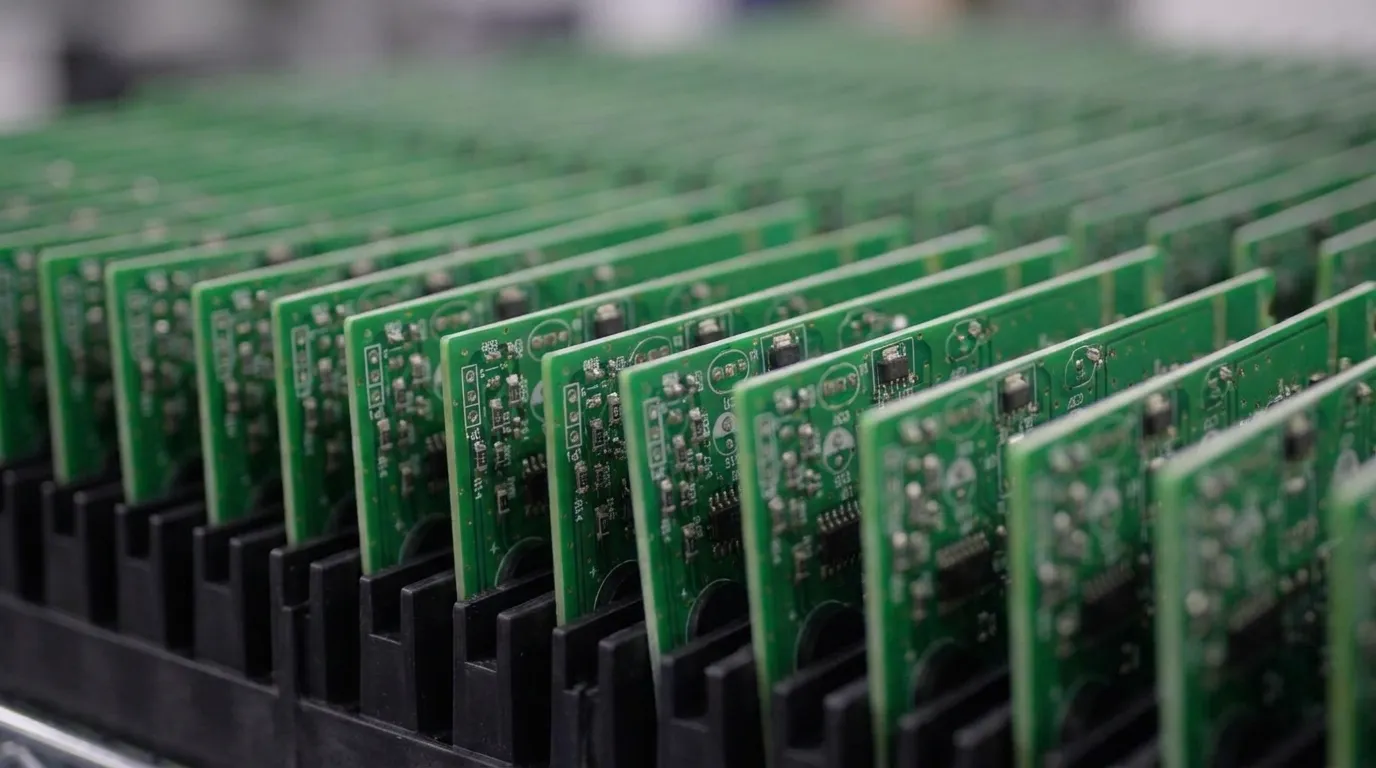
Key Takeaways for AS9100-Certified Defense Electronics Partners
-
AS9100D certification sets the qualification baseline for defense electronics programs and extends ISO 9001 with aerospace requirements such as traceability, configuration control and counterfeit-part prevention.
-
Five AS9100D requirements shape PCB assembly sourcing decisions: traceability, configuration control, risk management, counterfeit-part prevention and special-process validation with AS9102 First Article Inspection.
-
Program leaders benefit from verifying certification scope in the IAQG OASIS database and confirming ITAR registration, Nadcap accreditation and documented counterfeit-part controls.
-
Early DFM collaboration and production-intent prototyping reduce late-stage risk by closing the prototype-to-production gap that often triggers redesigns and schedule slips.
-
Connect with Pro-Active Engineering’s team to explore how AS9100-certified workflows address specific defense program requirements from design through production.
AS9100’s Role in Aerospace and Defense Manufacturing
AS9100 applies to aviation, space and defense organizations that design, fabricate, assemble or service aerospace products. ISO 9001 provides the industry-agnostic foundation, and AS9100 builds directly on that structure. Any organization certified to AS9100 automatically satisfies ISO 9001 requirements, while ISO 9001 alone does not meet AS9100 expectations.

Defense prime contractors and Tier-1 suppliers often require AS9100 certification as a core supplier qualification for mission-critical electronic assemblies. Manufacturers without AS9100 certification are typically ineligible for the IAQG OASIS database, which primes use to verify certification status, scope and expiration date. ISO 9001 alone does not enforce revision control, lot-level traceability or counterfeit-part controls, which defense programs treat as essential disciplines.
Five AS9100D Requirements That Drive Electronics Procurement
AS9100D adds aerospace-specific obligations across the full product realization process. For PCB assembly in defense programs, five requirements carry the most procurement weight and influence supplier selection.
-
Traceability. AS9100 Clause 8.5.2 requires product identification at every stage by part number, revision and serial or lot number. Material certificates, process records and test reports must link to work orders and material lots. Record-retention periods often extend for the life of the program plus additional years based on customer and regulatory flowdown.
-
Configuration control. Every drawing revision, BOM change and procedure revision must be controlled, versioned and tied to specific units. Formal engineering approval governs any part substitution. This discipline keeps assemblies delivered late in a program aligned with the original specification.
-
Risk management. AS9100 Clause 6.1 addresses planning-level risk and Clause 8.1.1 addresses operational risk. Each product or program requires documented risk identification, analysis and treatment plans that remain active throughout production.
-
Counterfeit-part prevention. A compliant program maintains documented procedures for approved supplier lists, receiving inspection, certificates of conformance, chain-of-custody records, quarantine and disposition, plus training for procurement and receiving personnel. SAE AS5553B provides the counterfeit avoidance methodology that defense programs reference.
-
Special-process validation and product safety. Soldering, conformal coating and cleaning processes require validation, and deviations trigger documented corrective actions. First Article Inspection per AS9102 occurs before releasing production quantities and after significant design or process changes.
AS9100 Certification Costs and Ongoing Investment
Certification investment depends on facility size, existing quality infrastructure and operational scope. For a small-to-mid-size manufacturer, total initial AS9100 certification cost begins with internal staff time for gap analysis and documentation. Organizations often add external consultant fees, quality management software and audit fees for the two-stage external audit.
AS9100 certification typically costs more than ISO 9001 because of the additional aerospace-specific requirements. The larger investment usually appears on the internal side through staff time, training, infrastructure and process changes rather than the audit fee itself.
AS9100D certificates require periodic surveillance and recertification audits to remain valid. Ongoing maintenance functions as an operationally demanding, recurring commitment, not a single project. Surveillance audits generally cost a portion of the initial certification audit fee.
Effort and Timeline Required to Achieve AS9100
Organizations without a formal QMS often require several months to build the system, then additional months for Stage 1 and Stage 2 audits. Organizations already holding ISO 9001 certification can often shorten that timeline because the foundational QMS structure already exists.
AS9100D audits demand more rigor than ISO 9001 audits because auditors examine aerospace clauses, FAI evidence, special-process controls, supplier management and measurable risk mitigation outcomes. Common implementation challenges include scoping the QMS too narrowly, creating documentation that does not reflect actual operations and treating corrective action as a paperwork task instead of a root-cause discipline.
Most audit findings arise from execution gaps in procedures, revision control and record-keeping rather than missing clauses in the quality manual. Certification confirms that a documented system met requirements at the time of the last audit. Organizations still need consistent process discipline between audits.
Program leaders evaluating suppliers benefit from looking beyond the certificate. Verification in the IAQG OASIS database and confirmation that the certified scope covers required processes and product types provide a stronger view of supplier capability.
Program teams can also verify how Pro-Active Engineering’s AS9100-certified processes align with specific compliance requirements for upcoming defense programs.
How AS9100, ITAR, Nadcap and Counterfeit Controls Align
AS9100 and ITAR operate as separate regulatory regimes that address different risks. ITAR registration with the U.S. Department of State’s Directorate of Defense Trade Controls is required for manufacturers handling defense-related technical data and hardware. A manufacturer can hold one without the other, although defense PCB assembly programs typically expect both.
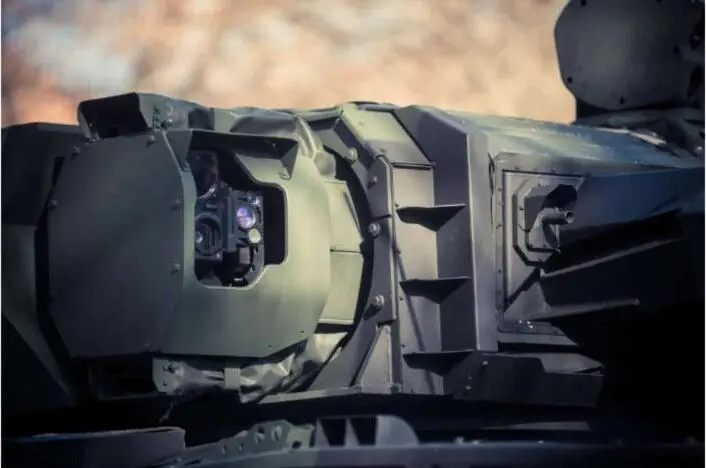
ITAR governs who can receive and handle controlled technical data, and AS9100 governs how the PCB assembly process is controlled, documented and verified. ITAR recordkeeping requirements align with AS9100’s emphasis on traceability and documented process control, which enables defense electronics manufacturers to satisfy both regimes through unified configuration-management practices.
Nadcap accreditation, managed by the Performance Review Institute, adds a third compliance layer for high-risk processes including electrical and electronic processing such as soldering and conformal coating. Nadcap remains scope-specific, and critical findings can result in immediate suspension of work. Together, AS9100, ITAR registration and Nadcap accreditation create an overlapping compliance posture that defense programs expect from a qualified electronics manufacturing partner.
Counterfeit-part controls span all three frameworks. AS9100 mandates documented procedures, ITAR restricts sourcing to authorized channels and Nadcap validates the processes used to inspect and verify incoming materials. Pro-Active Engineering integrates SAE AS5553B counterfeit avoidance methodology and uses SiliconExpert for BOM scrubbing and component lifecycle risk mitigation.
Scorecard Criteria for Defense Electronics Supplier Selection
A 2026 study in the International Journal of Productivity and Performance Management identified capability to deliver outcomes, reliability and supportability, buyer-supplier partnering, systems approach capability, obsolescence management and cost ownership as critical criteria for defense supplier selection. These academic criteria become actionable when program leaders map them to verifiable supplier capabilities that can be assessed during procurement.
-
Certification scope. Confirm AS9100 status in OASIS and verify that the scope covers PCB assembly, conformal coating and box build, not just a subset of operations.
-
ITAR registration and access controls. Confirm ITAR registration and documented access controls, data-handling procedures and personnel training records for defense program data.
-
Counterfeit-part prevention. Request evidence of an approved supplier list, receiving inspection procedures and a documented escalation path for suspect parts aligned with SAE AS5553B.
-
Traceability and configuration management. Request a sample FAI package per AS9102 and confirm serial-level traceability from component origin through finished assembly.
-
Engineering depth and DFM integration. Evaluate whether the supplier embeds design-for-manufacturability review before production to reduce late-stage redesign risk.
-
Nadcap accreditation. Confirm that accreditation covers the specific special processes required by the program, such as soldering and conformal coating.
-
Scalability and domestic manufacturing. Assess the supplier’s ability to move from prototype to production volume without adding new sub-tier suppliers or process changes that would require requalification.
Early DFM Collaboration and Production-Intent Prototyping
Late-stage manufacturability discoveries rank among the most costly risks in defense electronics programs. When design and manufacturing operate in separate workflows, defects often surface during production instead of development, which triggers redesigns, schedule delays and cost overruns.
Pro-Active Engineering integrates design-for-manufacturability review into the design phase. Engineering and manufacturing operate within a single workflow so sourcing constraints, process limitations and quality requirements are resolved before a board reaches the assembly floor. This approach directly addresses the prototype-to-production disconnect that program managers identify as a primary supply chain risk.
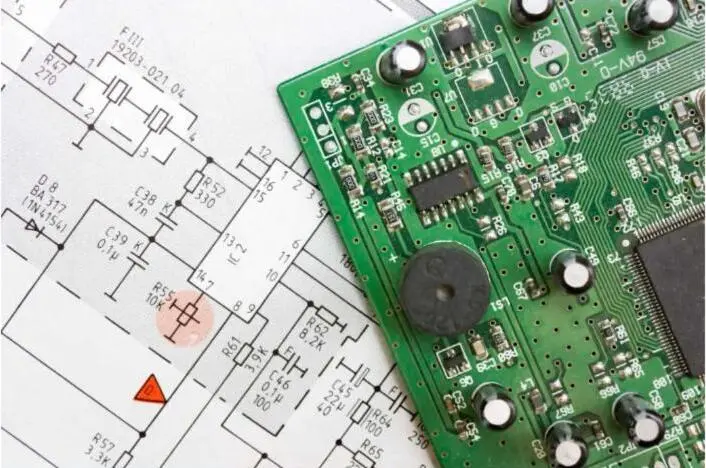
Pro-Active’s Speed Shop delivers rapid prototypes using full production processes, including the same SMT lines, inspection equipment and documentation controls used for volume builds. AS9100-certified suppliers must repeat FAI after significant process, supplier or design changes, so using production processes from the first prototype closes the requalification gap that appears when prototype and production environments differ.
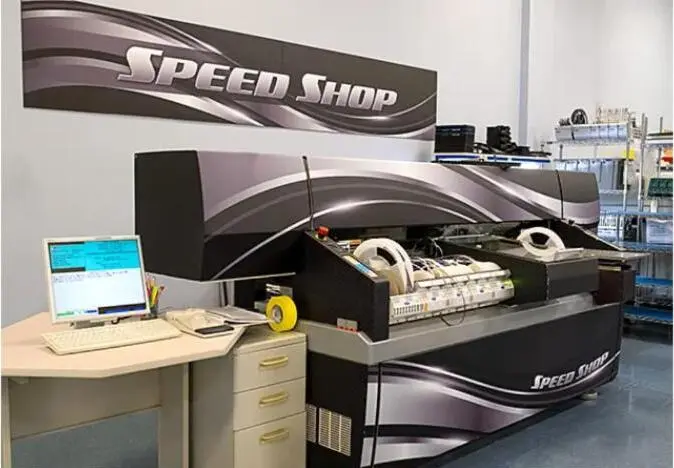
The integrated workflow extends through conformal coating, ruggedization, box build and full system integration, all under one roof in Sun Prairie, Wisconsin. Defense program managers gain a single accountable partner with full traceability across every stage, which reduces vendor fragmentation and the compliance gaps that fragmented supply chains introduce.

Program teams can discuss DFM integration strategies with Pro-Active Engineering’s team for upcoming defense programs.
Checklist for Short-Listing an AS9100-Certified Electronics Partner
-
Map internal requirements. Document the program’s AS9100 scope requirements, ITAR controls, Nadcap process needs, IPC workmanship class and record-retention obligations before issuing an RFQ.
-
Verify certification status. Confirm each candidate’s AS9100 certificate is active in the IAQG OASIS database and that the certified scope covers all required processes.
-
Conduct a technical review. Request a sample AS9102 FAI package, counterfeit-part prevention procedures, BOM traceability documentation and evidence of DFM integration in the development workflow.
-
Assess compliance posture. Confirm ITAR registration, Nadcap accreditation scope, IPC-A-610 class capability and alignment with NIST 800-171 or CMMC requirements relevant to the program.
-
Evaluate engineering depth. Determine whether the supplier offers integrated PCB design, advanced interconnect, thermal management and box build or whether additional sub-tier suppliers would be required.
-
Conduct a virtual or on-site audit. Review quality records, production floor controls, incoming inspection practices and corrective action history before awarding production work.
Conclusion: Building a Low-Risk Defense Electronics Supply Base
AS9100D certification functions as a necessary condition for defense electronics manufacturing, not a complete assurance of performance. The forthcoming IA9100 revision will raise the bar further with stronger emphasis on cybersecurity linkage, digital traceability and supply chain resilience. Program leaders who evaluate suppliers on certification alone often encounter the same fragmentation, compliance gaps and late-stage risk that integrated manufacturing aims to prevent.
A single accountable U.S. partner holding AS9100 certification, ITAR registration and Nadcap accreditation with integrated design, assembly and box-build capability offers a lower-risk path for defense electronics programs. Pro-Active Engineering combines those credentials with engineering-led DFM, production-intent prototyping and advanced interconnect and thermal management capabilities, all under one roof with full traceability at every stage.
Request a quote to start a conversation about how Pro-Active Engineering supports AS9100-compliant defense electronics programs from design through production.
Frequently Asked Questions
What is the difference between AS9100 and ISO 9001 for defense electronics manufacturing?
ISO 9001 is a general-purpose quality management standard that applies across industries. AS9100 incorporates the full text of ISO 9001 and adds the aerospace-specific requirements discussed earlier. Those additions include formal configuration management, counterfeit-part prevention, First Article Inspection per AS9102, lot-level traceability, operational risk management and special-process validation. An AS9100-certified supplier automatically meets ISO 9001 requirements, while an ISO 9001-certified supplier has not met AS9100 requirements. For defense PCB assembly, AS9100 functions as the minimum qualification required by most prime contractors and Tier-1 suppliers because it enforces revision control, traceability and counterfeit-part controls that ISO 9001 does not address.
Does AS9100 certification cover ITAR compliance?
As explained in the compliance section above, AS9100 and ITAR serve different purposes but work together in defense manufacturing. AS9100 governs how a manufacturing process is controlled, documented and verified. ITAR registration with the U.S. Department of State’s Directorate of Defense Trade Controls governs who can receive and handle defense-related technical data and hardware. A manufacturer can hold one without the other, although defense PCB assembly programs typically require both. Nadcap accreditation for special processes such as soldering and conformal coating adds a third layer of compliance that defense programs frequently require.
What should program managers verify beyond the AS9100 certificate when selecting a defense electronics supplier?
The AS9100 certificate confirms that a documented quality management system was compliant at the time of the last audit. Program managers benefit from verifying that the certificate is active in the IAQG OASIS database and that the certified scope covers all required processes, not just a subset of operations. Additional evaluation steps include reviewing the supplier’s AS9102 First Article Inspection package, counterfeit-part prevention procedures aligned with SAE AS5553B, serial-level traceability documentation, corrective action history and evidence of DFM integration in the development workflow. ITAR registration status, Nadcap accreditation scope and IPC-A-610 workmanship class capability provide further insight into suitability for defense programs. Suppliers that embed engineering and manufacturing in a single workflow reduce the compliance gaps that fragmented supply chains introduce.
How does Pro-Active Engineering support AS9100-compliant defense electronics programs?
As noted in the compliance discussion, Pro-Active Engineering maintains a full suite of defense manufacturing certifications, including AS9100 certification, ITAR registration, Nadcap accreditation, ISO 9001:2015 certification and JCP certification. The company operates an integrated workflow that spans PCB design and engineering, rapid prototyping, PCB assembly, conformal coating, ruggedization, box build and full system integration from a single facility in Sun Prairie, Wisconsin. DFM is embedded in the design phase, and prototypes are built using full production processes to remove the requalification gap that appears when prototype and production environments differ. The company uses SAE AS5553B counterfeit avoidance methodology, SiliconExpert for BOM scrubbing and component lifecycle risk management and IPC-A-610 Class 3 workmanship standards for defense and aerospace programs. Full traceability and documentation are maintained across every stage of the workflow.
What is the IA9100 transition and how does it affect defense electronics suppliers?
The IAQG is replacing AS9100 with IA9100, a revised aerospace quality management standard expected to publish in late 2026 or mid-2027. A transition period will follow, and legacy AS9100 certificates will eventually be phased out. The IA9100 revision places stronger emphasis on cybersecurity linkage to product and data integrity, digital traceability, enhanced counterfeit-part controls including obsolescence monitoring, tighter multi-tier supplier flowdown and supply chain resilience. Defense program managers evaluating suppliers now can request evidence of cybersecurity alignment, such as NIST 800-171 or CMMC readiness, alongside traditional AS9100 compliance documentation because these capabilities will become formal requirements under IA9100. Suppliers that treat AS9100 as an active management discipline rather than a periodic audit event are better positioned to transition without disruption.