
Last updated: August 11, 2026
Key Takeaways for ITAR-Regulated PCB Programs
-
ITAR-compliant PCB design services require active DDTC registration, a designated Empowered Official and documented U.S.-person data handling to avoid compliance gaps.
-
Consolidating design, prototyping and production under one verified partner reduces accountability gaps and lowers the risk of export-control violations.
-
DFM integration from the first design review prevents costly late-stage redesigns and maintains traceability throughout the program lifecycle.
-
High-density capabilities such as wire bonding, flip chip and silver sintering can operate inside a single controlled facility, without routing data to separate subcontractors.
-
Pro-Active Engineering serves as a single U.S. partner that meets five core verification criteria; start supplier verification with a partner prepared to share compliance documentation.
DDTC Registration Steps for ITAR PCB Manufacturers
22 CFR Part 122 requires any U.S. person or company that manufactures defense articles on the U.S. Munitions List to register with DDTC, even when no export occurs. Registration is administrative only and does not authorize specific transactions, so a compliant supplier also maintains a documented Trade Compliance Program alongside the registration.
The registration process runs through the Defense Export Control and Compliance System (DECCS) portal and follows these steps.
-
Create a company profile in DECCS and designate an Empowered Official, a U.S. person directly employed by the company with authority to commit the company to binding compliance actions.
-
Submit Form DS-2032 (Statement of Registration) with ownership details and applicable USML categories.
-
Pay the applicable annual fee under the tiered structure published by DDTC.
-
Await DDTC review and receive a registration acknowledgment letter containing a unique M-code identifier.
-
Renew annually by resubmitting DS-2032 no earlier than 60 days and no later than 30 days before expiration.
A practical supplier-verification packet requests the current DDTC registration acknowledgment letter, the M-code, the name and title of the Empowered Official and evidence of renewal within the past year. When a prime contractor asks whether a supplier is “ITAR certified,” the accurate response is confirmation of the M-code, the name of the Empowered Official and an offer to share Trade Compliance Program documentation under NDA. No formal ITAR certification exists from the U.S. government; the term refers to active DDTC registration combined with a documented and practiced compliance program.
Pro-Active Engineering maintains ITAR registration and a documented Trade Compliance Program. Program teams can begin supplier verification with a partner whose compliance documentation is prepared for review.

U.S.-Person Controls and Data Handling for ITAR PCB Work
22 CFR § 120.62 defines U.S. persons as U.S. citizens, lawful permanent residents and certain protected individuals. Transfer of ITAR-controlled technical data, including Gerber files, stack-up data, schematics, BOMs, firmware and test reports, to a foreign person counts as a deemed export that requires DDTC authorization, even when that foreign national is physically located inside the United States.
Practical data-handling controls for a compliant PCB design and manufacturing workflow include the following measures.
-
Store controlled files on restricted-access systems accessible only to U.S. persons, with no reliance on uncontrolled cloud storage.
-
Document citizenship and visa status for every employee or contractor with access to controlled technical data.
-
Align cybersecurity practices with NIST SP 800-171 to protect Controlled Unclassified Information (CUI).
-
Maintain CMMC readiness so the supplier can satisfy DoD contract requirements as CMMC enforcement expands.
-
Conduct role-based employee training and retain training records as part of the Trade Compliance Program.
JCP certification, administered by the Defense Logistics Agency under DoD Directive 5230.25, adds a complementary layer by confirming that a contractor is authorized to receive export-controlled defense technical data. JCP, ITAR registration and CMMC operate as distinct frameworks, and a supplier may hold one or all of them. Defense programs increasingly expect alignment across these frameworks. Pro-Active Engineering holds JCP certification (DD Form 2345) alongside ITAR registration and NIST 800-171 alignment.
DFM Integration for Lower Risk and Higher Manufacturability
Most PCB assembly defects trace back to design decisions rather than manufacturing errors. For defense and aerospace programs, a defect discovered at production release costs more than one caught during design in time, budget and program exposure.
DFM reviews work best at multiple gates: before quotation, before prototype release, before production release and whenever material, layer count, package density or assembly method changes. Sharing the full design package, including BOM, pick-and-place files, stack-up data and special requirements, early in the process allows the manufacturer to identify issues that Gerber files alone cannot reveal.
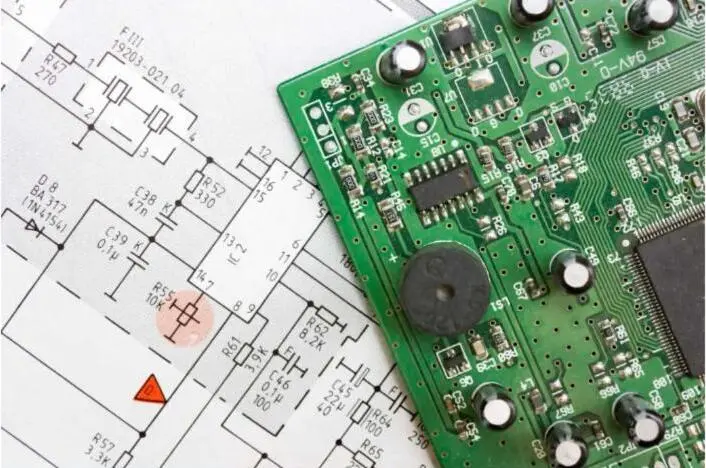
Pro-Active Engineering integrates DFM into the design phase instead of treating it as a pre-production checklist. Engineering and manufacturing teams operate within one workflow and capture issues in a lessons-learned log that supports future programs. Aerospace and defense programs require IPC Class 3 manufacturing quality, which sets the tightest tolerances and lowest defect allowances in the IPC workmanship hierarchy. Building to that standard from the first prototype, using the same processes as full production, reduces redesign cycles that often appear in multi-vendor programs.
Integrated DFM also reduces compliance risk. Late-stage redesigns force requalification, generate new controlled documents and create version-control gaps that complicate audit trails. A single partner that owns design and production naturally closes that gap.
EDA Tools and High-Density Capabilities for Regulated Designs
Defense and aerospace programs demand capabilities that extend beyond standard PCB assembly. High-speed, high-density layout requires precise signal-integrity management and thermal-path planning from the schematic stage. Pro-Active Engineering’s design team works in SolidWorks for mechanical integration and test fixture design and applies embedded control design, firmware development and industry-standard I/O protocol integration within the same workflow.
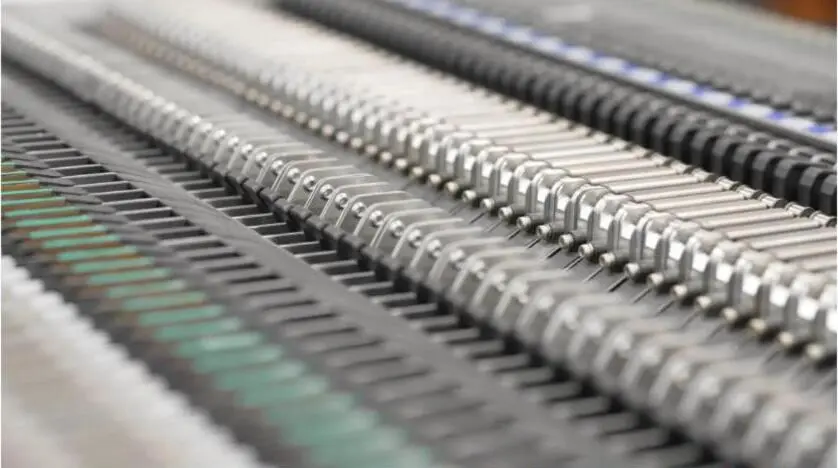
Advanced interconnect capabilities available at the Wisconsin facility include the following options.
-
Wire bonding for compact, high-reliability die-level connections
-
Flip chip assembly for high-density, low-profile packaging
-
Hybrid high-density assemblies for mission-critical performance
-
Silver sintering and direct thermal path technology for high-power applications
-
Advanced metal-core constructions and heavy copper integration for demanding thermal environments
These capabilities operate inside one controlled facility, so programs avoid routing controlled technical data to a separate advanced-packaging subcontractor, a common compliance gap in multi-vendor programs. Program teams can discuss advanced interconnect and thermal requirements directly with Pro-Active Engineering’s engineering group.
Prototype-to-Production Traceability for Low-to-Mid-Volume Programs
22 CFR § 122.5 requires ITAR-registered manufacturers to retain records of all defense-article manufacturing activities, including technical-data receipt logs, access logs, build records and disposal records, for at least five years from the date of the activity. For defense programs with long service cycles, that retention requirement extends well beyond the production run.
Pro-Active Engineering’s traceability infrastructure covers the full lifecycle.
-
Component traceability from sourcing through final test
-
Counterfeit avoidance procedures aligned with SAE AS5553B, including BOM scrubbing through SiliconExpert for obsolescence and lifecycle risk
-
Documentation control and five-year record retention
-
AS9100 configuration management with no unauthorized part substitutions
-
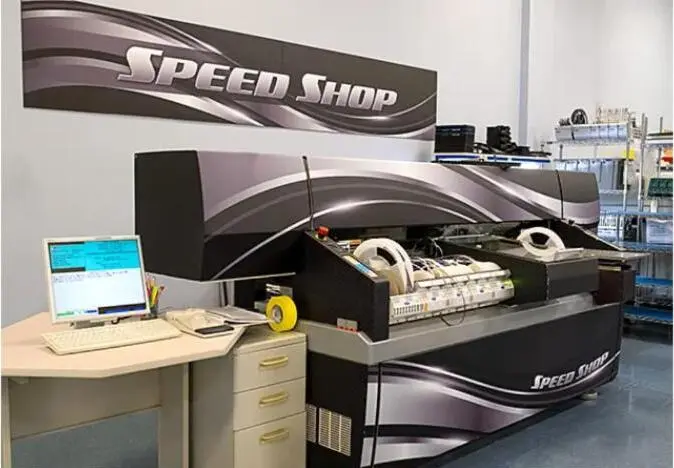
Seamless scale from Speed Shop prototype to production volume using the same processes, personnel and quality system
AS9100 certification enforces strict revision control and traceability. AS9100 does not by itself satisfy ITAR obligations, but its documented processes directly support ITAR-controlled document handling and supplier flow-down requirements. Pro-Active Engineering’s processes create a layered compliance posture that satisfies prime contractor audit expectations.
Verification Checklist Before Sending ITAR-Controlled PCB Data
Program leads should complete a structured verification checklist before transmitting any controlled technical data to a prospective PCB design or manufacturing partner. These items form a layered compliance posture, and each item addresses a distinct regulatory or quality requirement.
-
DDTC registration: Confirm the items outlined in the registration section above to establish the supplier’s legal authority to handle defense articles.
-
U.S.-person data handling: Confirm that all controlled files reside on restricted-access systems accessible only to U.S. persons, with documented access controls and employee screening records. Registration has limited value without proper access controls.
-
Subcontractor flow-down: Confirm that any subcontractor receiving controlled data is also DDTC-registered and subject to equivalent compliance requirements under a written flow-down agreement, since obligations extend through the supply chain.
-
Counterfeit avoidance: Confirm that the supplier maintains a documented counterfeit-avoidance procedure aligned with SAE AS5553B and sources components from franchised distributors.
-
Documentation control: Confirm that the supplier maintains a five-year record-retention policy covering build records, access logs and technical-data receipt documentation.
-
DFM integration: Confirm that DFM review occurs before quotation and before prototype release, not only at production transfer.
-
Certifications: Verify AS9100 status in the IAQG OASIS database and confirm JCP certification (DD Form 2345) and NIST 800-171 alignment.
A single noncompliant supplier can jeopardize an entire program’s CMMC assessment and expose the prime contractor to export-control violations, even when the violation originates at the subcontractor level. A single integrated partner means running this verification once instead of repeating it for separate design and manufacturing vendors. Pro-Active Engineering provides a complete compliance documentation package as part of onboarding.
Frequently Asked Questions
Total Cost of a Single Integrated PCB Partner
Per-unit pricing from a single integrated partner may differ from offshore or high-volume-only providers, but total cost of ownership often tells a different story. When design, prototyping and production sit with separate vendors, costs accumulate through rework from late-stage DFM failures, requalification after redesigns, vendor management overhead and compliance remediation when a subcontractor’s ITAR posture proves deficient. Pro-Active Engineering’s integrated workflow addresses manufacturability, sourcing risk and quality planning in the design phase, which reduces downstream costs that fragment multi-vendor programs. Defense and aerospace customers often find that vendor consolidation reduces lifecycle cost even when the initial quote reflects a higher per-unit price.
Engineering Control with an Outsourced PCB Design Partner
Pro-Active Engineering operates as an extension of the customer’s engineering team, not a replacement. The workflow includes regular design reviews, real-time program updates and transparent documentation at every stage. Customers retain full oversight of design decisions while gaining access to 30 years of PCB design and manufacturing experience from Pro-Active Engineering. Because engineering and manufacturing operate within one workflow, design intent carries through prototype and into production without the translation losses that occur when separate firms hand off files between phases.
Scaling Specialized Requirements at a Wisconsin Facility
Pro-Active Engineering’s Sun Prairie facility houses PCB design, rapid prototyping through the Speed Shop, scalable assembly, advanced interconnect capabilities including wire bonding and flip chip and thermal management solutions including silver sintering and direct thermal path technology. The facility serves defense, aerospace, space and regulated industrial customers nationwide. Programs that begin as single-unit prototypes can scale to low-to-mid volume production runs within the same quality system, using the same processes and personnel. The AS9100 and ITAR-registered infrastructure already supports high-complexity, high-reliability requirements.
Relationship Between ITAR Registration and AS9100 Certification
ITAR registration with DDTC is a legal requirement under 22 CFR Part 122 for any U.S. manufacturer of defense articles on the U.S. Munitions List. AS9100 Rev D is a quality management system standard published by the IAQG and required by virtually every defense prime contractor and aerospace OEM in the United States. The two frameworks are complementary but independent. ITAR registration does not satisfy AS9100 requirements, and AS9100 certification does not satisfy ITAR obligations. Defense PCB programs typically require both, along with JCP certification for access to export-controlled technical data and NIST 800-171 alignment for CUI protection. Pro-Active Engineering maintains the registrations and certifications needed to meet these expectations.
Traceability When Prototypes Move Into Production
In multi-vendor programs, the prototype-to-production handoff often becomes a point of traceability failure. Build records, DFM findings and component lot data generated during prototyping may not transfer cleanly to a separate production manufacturer, which creates documentation gaps that complicate audits and failure analysis. Pro-Active Engineering uses the same processes, quality system and documentation infrastructure for Speed Shop prototypes and production runs. Lot-level traceability, counterfeit-avoidance records and build documentation remain continuous from the first prototype through the final production unit, which supports AS9100 configuration management and ITAR’s five-year record-retention mandate.
Next Steps for Selecting an ITAR-Compliant PCB Partner
A structured supplier-selection process for ITAR-compliant PCB design services follows a clear sequence. First, map internal program requirements by identifying assemblies that fall under ITAR jurisdiction, documenting data-handling requirements and defining traceability and record-retention obligations with the program’s legal and compliance teams.
Second, shortlist suppliers using the verification checklist in this article. Confirm active DDTC registration via DECCS, verify AS9100 status in the IAQG OASIS database and request JCP certification documentation. Remove any supplier that cannot produce an M-code, name an Empowered Official or demonstrate a documented Trade Compliance Program.
Third, conduct a technical review. Share a representative design package, including BOM, stack-up data and special requirements, and evaluate the supplier’s DFM feedback. A capable integrated partner identifies manufacturability issues at this stage, before any tooling or qualification cost is committed.
Fourth, schedule a facility audit or request a compliance documentation package. Confirm that data-handling controls, subcontractor flow-down agreements, counterfeit-avoidance procedures and record-retention policies are documented and practiced, not only stated in a questionnaire response.
Pro-Active Engineering supports all four steps by providing compliance documentation, conducting DFM reviews on submitted design packages and guiding program leads through the facility’s quality and security infrastructure. The result is the integrated approach described throughout this article, with one partner carrying programs from initial layout through scalable production without the compliance gaps that fragment multi-vendor approaches. Program teams can start a technical review directly with Pro-Active Engineering’s engineering group.