

Last updated: August 7, 2026
Key Takeaways
- ITAR registration is the starting point for qualification, not the finish line. Buyers must verify active DDTC registration, U.S.-person handling, data-security controls, record retention and a Technology Control Plan.
- Domestic ITAR-compliant capacity is increasingly a program requirement in 2026, driven by defense supply-chain mandates, shorter design cycles and reduced exposure to offshore disruption risks.
- Integrated design-to-system providers eliminate handoff risk and maintain prototype-to-production continuity by running every step under one certified quality system.
- Engineering depth, DFM embedded from day one and process validation support lower-volume, higher-complexity aerospace and defense programs.
- Pro-Active Engineering is ITAR-registered with ISO 9001:2015, AS9100, Nadcap, JCP, NIST 800-171 alignment and CMMC readiness. Start your qualification review to begin the conversation.
What ITAR-Registered PCBA Manufacturing Requires in Practice
Under 22 CFR Part 122, any person engaged in the United States in manufacturing defense articles must register with the Directorate of Defense Trade Controls (DDTC), regardless of whether they export. A single manufacturing event is sufficient to trigger the requirement. Registration is submitted via Form DS-2032 through the PMDDTC electronic filing system.
DDTC registration does not confer export rights or privileges. It functions as a precondition to licensing and a signal to the U.S. government that a manufacturer operates within the ITAR framework. For buyers, registration is the starting point of qualification, not the finish line.
ITAR registration alone does not ensure robust compliance practices. Buyers must evaluate how controls are implemented across daily operations, employee training, documentation management and the production environment. The checklist below provides a structured path to that evaluation.
Manufacturers that implement these controls comprehensively can demonstrate their practices during qualification reviews. Pro-Active Engineering is ITAR-registered and maintains the certifications, access controls and documentation practices required for defense and aerospace programs. Start your qualification review to discuss compliance requirements and capabilities.
Seven-Step ITAR Compliance Verification Checklist
This checklist supports evaluation of any PCBA manufacturer for a regulated program.
- Confirm active DDTC registration. Request the manufacturer’s CAGE code and verify current registration status directly through the PMDDTC portal. Registrants must renew no earlier than 60 days and no later than 30 days before expiration, so confirm the registration is current, not lapsed.
- Verify U.S.-person handling protocols. ITAR requires restricting access to U.S. persons or other authorized recipients covered by a license, agreement or exemption. Ask how the manufacturer screens employees and visitors and how foreign-national access is managed on the production floor.
- Assess data-security controls. ITAR technical data must be clearly marked as controlled, stored with access restricted to U.S. persons and transmitted only through secured, approved channels meeting encryption standards. Confirm that the manufacturer’s data-handling procedures align with these requirements and with NIST 800-171 controls for Controlled Unclassified Information.
- Confirm record-retention practices. Registrants must maintain records concerning manufacture, acquisition and disposition of defense articles and technical data for five years from the expiration of the relevant license or approval. Incomplete recordkeeping is one of the most cited causes of ITAR violations during audits.
- Review certification scope. Verify that certifications such as ISO 9001:2015, AS9100, Nadcap and JCP are current and that their scope covers the specific processes relevant to the program. AS9100D is the baseline quality-management certification required by major aerospace primes for any manufacturer producing aerospace hardware, while Nadcap accreditation applies to specific special processes.
- Screen the supply chain. Aerospace and defense programs may require full material certifications, country-of-origin restrictions, ITAR compliance, DFARS compliance, lot traceability, shelf-life management and approved vendor restrictions from the EMS provider’s supply chain organization. Ask whether the manufacturer uses a counterfeit-avoidance methodology such as SAE AS5553B and how BOM components are screened for lifecycle risk.
- Request a Technology Control Plan review. Many ITAR contracts require a written Technology Control Plan (TCP) that outlines how the contractor will protect ITAR-controlled items and data throughout performance. A mature manufacturer maintains a TCP and can share its structure with qualified customers.
Domestic ITAR-Compliant Capacity in 2026
Defense secure-supply mandates are identified as a positive driver adding measurable impact to the North America PCB market CAGR forecast, with long-term impact concentrated on U.S. ITAR-compliant sites. Domestic capacity functions as a program requirement, not only a compliance preference.

Domestic U.S. EMS providers enable shorter design cycles through geographic proximity and deliver full ITAR, CMMC and ISO 13485 alignment while reducing exposure to supply chain disruption risks associated with transoceanic shipping. For programs with strict IP controls, offshore sourcing presents a difficult risk calculus.
The United States retains high-mix, low-volume production lines for aerospace, defense and medical devices, where intellectual-property security offsets a significant cost premium over offshore alternatives. The February 2026 FDA Quality Management System Regulation, aligning 21 CFR Part 820 with ISO 13485, is also driving medical OEMs to consolidate with certified domestic manufacturing partners for traceability and compliance.
Provider Types for ITAR-Regulated Projects
Provider type directly affects risk for ITAR-regulated projects. Matching program needs to the right structure reduces handoffs and compliance gaps.
Design-only firms provide engineering services but carry no production ownership. Any transition to a separate manufacturer introduces handoff risk, potential DFM gaps and a break in accountability. Quick-turn prototype shops prioritize speed but often use processes that differ from production-scale assembly, which creates a disconnect when programs scale. Traditional volume contract manufacturers optimize for repetition and high throughput, which can deprioritize the engineering integration and flexibility that complex, lower-volume defense and aerospace programs require.
For lower-volume, higher-complexity EMS programs in aerospace and defense, buyers must evaluate stronger procurement, engineering, traceability, CAPA, internal audit maturity and process validation capabilities than those typically required in commercial high-volume manufacturing.
Fully integrated design-to-system providers consolidate engineering, rapid prototyping, scalable assembly, testing and system integration under one quality system. This structure eliminates handoff risk, keeps DFM embedded from the first layout and ensures that the process used for prototypes matches the process used in production.
Engineering Depth and Prototyping-to-Production Continuity

Evaluation of a manufacturer’s engineering depth should cover several core practices.
- DFM analysis occurs during the design phase, not only after layout is complete.
- Prototypes run on the same SMT and through-hole lines used for production builds.
- The engineering team has visibility into sourcing constraints and component lifecycle risk during design.
- Engineering change orders are managed consistently across active production runs.
- First article inspection follows a defined process and is fully documented.
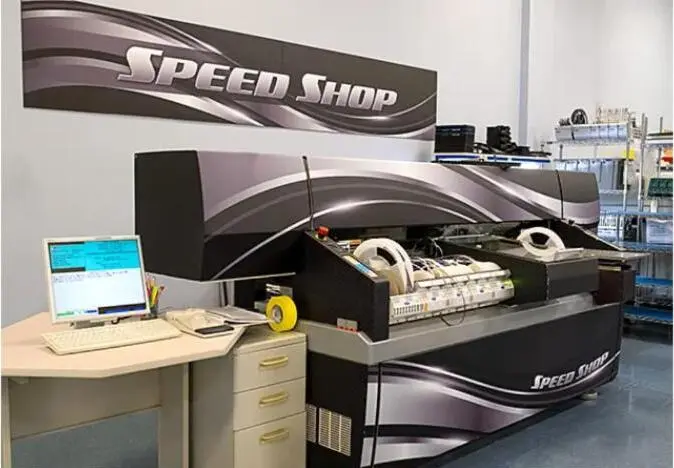
Pro-Active Engineering integrates PCB design, DFM, sourcing insight and quality control into a single workflow. Prototypes built through the Speed Shop use full production processes, so what works in development scales without process gaps. Discuss your program requirements to explore how this workflow applies to a specific program.
Quality, Traceability and Cybersecurity Posture
Beyond certification verification, buyers should assess documentation discipline. Aerospace and defense programs require EMS providers to hold AS9100 certification, ITAR registration, CMMC readiness, IPC/WHMA-A-610 and -620 capability, J-STD-001 compliance and counterfeit-material prevention programs.
On cybersecurity, NIST 800-171 provides the control framework for protecting Controlled Unclassified Information in nonfederal systems. CMMC builds on that framework with tiered maturity requirements for defense contractors. A manufacturer aligned with NIST 800-171 and pursuing CMMC readiness demonstrates that data-security controls extend beyond physical access into digital handling of technical data and drawings.
Pro-Active Engineering maintains the certifications and cybersecurity alignment outlined earlier, with full traceability and disciplined documentation embedded in every build.
Supply-Chain Resilience and Common Pitfalls
Supply-chain screening functions as a qualification criterion, not a procurement formality. Buyers should ask manufacturers how they verify component authenticity, manage approved vendor lists and handle shelf-life and country-of-origin restrictions. OEMs must ensure supply chains are free of Foreign Entities of Concern to qualify for federal tax credits under 2026 reshoring incentives when sourcing ITAR-compliant PCBA production.
Several pitfalls consistently create program risk during supplier qualification.
- Late manufacturability discoveries. When DFM is not embedded in the design phase, issues surface during NPI or early production, which triggers redesigns and schedule delays.
- Non-scalable prototype processes. The prototype-to-production disconnect described earlier becomes especially costly when material selection and process decisions are made during NPI without DFM review.
- Fragmented vendor accountability. Splitting design, prototyping and production across separate suppliers creates gaps in documentation continuity and compliance traceability.
- Assuming registration equals compliance. Failure to properly manage controlled technical data can result in regulatory violations, contractual penalties, export control investigations, program disruptions or significant reputational damage.
Decision Framework for Matching Project Needs to Providers
Program requirements map to provider type across three dimensions: volume, complexity and compliance depth.
Programs with low-to-mid volume, high complexity and full ITAR and CMMC compliance requirements gain the most benefit from an integrated domestic provider. These programs require DFM embedded from day one, prototype processes that mirror production, full traceability and a single quality system covering design through system integration. Splitting these functions across multiple vendors introduces the exact risks, including compliance gaps, prototype-to-production disconnects and fragmented accountability, that regulated programs cannot absorb.
Pro-Active Engineering operates as that integrated provider. From PCB layout and firmware development through rapid prototyping via the Speed Shop, scalable assembly, conformal coating and box build, every step runs under one roof in Sun Prairie, Wisconsin, under a single certified quality system. The CAGE code is 7R4Q2. The facility holds the certifications described above and operates under one quality system.
For defense, aerospace and medical programs that require a domestic, engineering-led partner with production-ready prototyping and scalable assembly, Pro-Active Engineering is built for that scope. Begin your qualification review for an ITAR-compliant PCBA program.
Frequently Asked Questions
How can buyers verify a manufacturer’s DDTC registration?
Active DDTC registration can be confirmed through the PMDDTC portal maintained by the U.S. Department of State. Buyers should request the manufacturer’s CAGE code and cross-reference it against the registration record. Registration must be current, not expired or lapsed, and the scope should cover the manufacturing activities relevant to the program. Pro-Active Engineering’s CAGE code is 7R4Q2 and its DUNS is 040697646.
What is the difference between ITAR-registered and ITAR-compliant?
ITAR registration is a legal requirement administered by DDTC that establishes a manufacturer’s identity and scope of defense-related activity with the U.S. government. It does not confer export rights and does not confirm that a manufacturer has implemented the operational controls required to protect controlled technical data. ITAR compliance refers to the full set of operational practices, including access controls, data-handling procedures, personnel screening, record retention, Technology Control Plans and training programs, that a manufacturer maintains to meet ITAR obligations in daily operations. Registration is the starting point, and compliance is the ongoing operational standard.
What data-security controls should buyers expect from an ITAR-registered PCBA manufacturer?
Buyers should expect physical access controls that restrict the manufacturing floor to U.S. persons and authorized personnel, visitor management procedures including logs and nationality verification, controlled document handling with ITAR markings on technical data, secure data storage with access limited to authorized users and transmission of technical data only through approved secure channels. Manufacturers aligned with NIST 800-171 extend these controls into digital environments covering Controlled Unclassified Information. CMMC readiness indicates that a manufacturer prepares to meet tiered cybersecurity maturity requirements for defense contracts. Buyers should ask for a general description of the manufacturer’s Technology Control Plan and confirm that employee training records are maintained.
How does ITAR alignment relate to CMMC requirements?
ITAR and CMMC address overlapping but distinct obligations. ITAR, administered by the U.S. Department of State, governs the manufacture, export and handling of defense articles and technical data on the U.S. Munitions List. CMMC, administered by the Department of Defense, establishes cybersecurity maturity requirements for contractors handling Controlled Unclassified Information in the defense industrial base. A manufacturer can be ITAR-registered without being CMMC-certified, but defense programs increasingly require both. NIST 800-171 serves as the foundational control set for CMMC Level 2, so manufacturers aligned with NIST 800-171 are positioned to support programs with both ITAR and CMMC requirements. Buyers should confirm alignment with both frameworks when qualifying suppliers for DoD programs.
Can a quick-turn prototype shop handle full ITAR-compliant production?
Quick-turn prototype shops are optimized for speed and flexibility at low volumes, but many do not maintain the certification scope, documentation discipline or process controls required for regulated production programs. The critical risk is process discontinuity. If the prototype process differs from the production process, manufacturability issues surface late and redesigns follow. An integrated provider that builds prototypes using the same equipment, materials and quality system as production builds eliminates that gap. Buyers should confirm that the manufacturer’s rapid prototyping capability is part of the same certified quality system used for production, not a separate fast-track line with reduced controls.
Next Steps for Shortlisting and Engaging Partners
Effective qualification starts with a clear internal view of program needs. Teams should map volume range, complexity level, certification requirements and compliance obligations including ITAR, CMMC and any applicable quality standards. They should also gather existing documentation including drawings, BOMs and any program-specific compliance requirements before initiating supplier conversations.
Shortlisting two or three providers that meet the seven-step checklist criteria above creates a focused comparison set. Technical reviews should include engineering leadership, not only sales contacts, to assess DFM capability, prototyping process alignment and documentation maturity. References from programs with similar complexity and compliance profiles provide additional validation.
For programs that require a domestic, ITAR-registered, engineering-led PCBA partner with integrated design, rapid prototyping and scalable production under one certified quality system, Pro-Active Engineering is ready to support the qualification process. Connect with the engineering team to discuss program requirements and next steps.