
Key Takeaways for Conformal Coating Decisions
- Conformal coating protects PCBAs from moisture, dust, chemicals and temperature extremes. Five primary application methods, spray, dip, brush, selective robotic and Parylene, each present specific trade-offs in coverage, masking, throughput and program fit.
- Masking requirements differ by method. Selective robotic coating reduces masking labor for high-mix programs, while dip coating demands extensive masking that suits high-volume, simple-geometry boards.
- Thickness control and inspection drive reliability. Selective robotic and dip methods provide repeatable film build, while IPC-CC-830 and IPC-A-610 Class 3 standards guide qualification and acceptance for aerospace, defense and medical programs.
- Reworkability and ownership cost favor acrylic coatings applied by spray or selective robotic methods. Parylene delivers stronger environmental performance but requires specialized removal techniques.
- Pro-Active Engineering delivers integrated conformal coating services from prototype through production under AS9100, Nadcap and ITAR compliance. Discuss your program requirements to align the application method with volume, complexity and reliability targets.
Masking Requirements by Conformal Coating Method
Masking, which protects connectors, test points and other keep-out areas from coating ingress, ranks among the most labor-intensive and defect-sensitive stages of conformal coating. The masking burden changes significantly by method.
Dip coating covers the entire board on both sides, so every keep-out zone requires masking before immersion. This approach suits high-volume programs with simple board geometry where masking labor spreads across large quantities.
Manual spray coating also requires masking of keep-out areas and remains subject to overspray. Overspray often lands on connectors and test points that must stay uncoated, which creates rework and inspection effort that grows with board complexity.
Selective robotic coating reduces manual masking of keep-out areas by programming equipment to coat only designated zones. This approach cuts masking labor compared with dip-plus-masking processes in high-mix medical and industrial projects. Very precise keep-outs may still need supplemental local masking.
Brush coating uses minimal masking because the operator applies material locally. Operator technique determines whether keep-out boundaries stay consistent from board to board.
Parylene deposition requires peelable masking applied before the vacuum chamber cycle. The masking discipline differs from liquid processes and must account for the coating’s ability to penetrate microscopic crevices.
Selective robotic coating typically delivers the lowest total masking cost for high-mix programs with numerous keep-out areas. Dip coating with well-designed masking fixtures remains competitive for stable, high-volume programs with simple geometry.
Thickness Control and Inspection for Reliable Coating
IPC-CC-830 serves as the current commercial benchmark for conformal coating material qualification and performance. MIL-I-46058C remains frequently referenced in defense tenders, even though it has been superseded for new designs. Both standards define thickness ranges by coating type, and production processes must stay within those ranges consistently.
Thickness control requirements differ by method. Selective robotic and dip coating systems offer the most repeatable film build when viscosity, speed and process parameters stay within a defined control plan. In contrast, manual spray and brush methods introduce operator-dependent variability that makes consistent thickness harder to achieve and verify.
These control requirements exist because thickness directly affects assembly reliability. Excessive coating can cause mechanical failures in high-reliability applications, while insufficient coverage leaves assemblies exposed to environmental degradation. Heavy conformal coating can also lead to cracking, added mass and higher production costs.
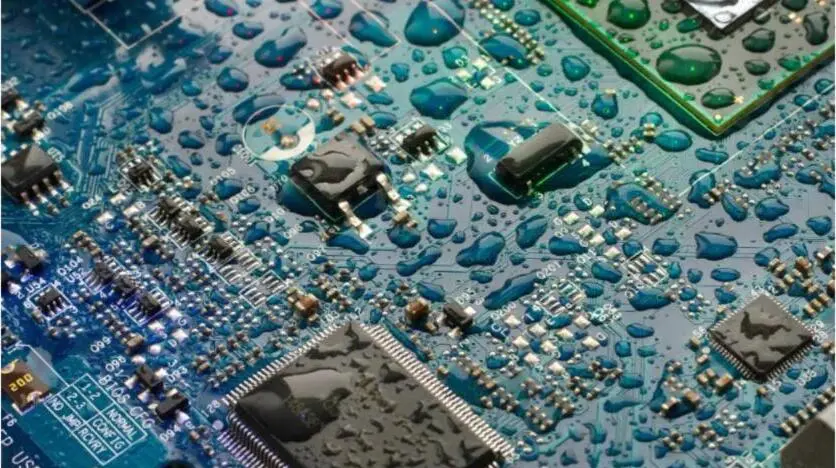
Post-application inspection for regulated programs draws from IPC-A-610 acceptance criteria for electronic assemblies. Class 3 typically applies to high-performance and high-reliability electronics used in aerospace, defense and medical devices.
Many conformal coatings contain fluorescent additives that support rapid non-destructive quality control under UV light. This inspection step reveals uneven coverage, missing areas or bubbles during production. Laser, ultrasonic and eddy current meters provide more precise thickness measurement for programs that require documented uniformity.
A coating that passes IPC-CC-830 material qualification can still fail in production when surface preparation, contamination control, curing or masking fall short. Robust process control and complementary standards remain essential for strong first-pass yield.
Rework, Repair and Long-Term Ownership Cost
Reworkability depends on coating chemistry and application method, and it directly affects total cost of ownership for programs that require field repairs or engineering changes.
Acrylic coatings applied by spray or selective robotic methods support the most efficient rework. The cured film remains solvent-reactivatable, so technicians can strip and recoat without mechanical or thermal removal. Polyurethane and epoxy coatings require more aggressive removal techniques, which increase rework labor and the risk of collateral damage to adjacent components.
Parylene presents the greatest rework challenge. Removal requires mechanical abrasion, laser ablation or plasma etching, which demand specialized equipment and skilled operators. Programs that expect field repair must weigh Parylene’s rework burden against its stronger environmental performance.
Manual conformal coating processes scale poorly because adding operators increases inconsistency and rework while reducing throughput. Automated selective coating systems reduce operator dependence and improve process repeatability. This improvement lowers rework rates and supports predictable yield across production runs.
Ownership cost is driven by full process economics rather than raw material price per liter. A lower-cost chemistry can increase overall expense when it requires extensive masking, long cure times or frequent rework due to defects. Programs that prioritize long-term reliability and low field-failure rates benefit from investing in methods with stronger process repeatability at the outset.
Qualification Paths for Aerospace, Defense and Medical Programs
Regulated programs require documented qualification of both the coating material and the application process. IPC-CC-830 serves as the globally accepted performance standard for qualification and performance of liquid conformal coatings used on electronic assemblies in aerospace, defense and medical sectors. It defines minimum requirements through laboratory tests that cover dielectric withstand voltage, moisture and insulation resistance, chemical resistance, fungal resistance, thermal shock and flexibility.
MIL-I-46058C remains a reference for legacy defense contracts and specifies stringent environmental performance requirements. Programs that cite MIL-I-46058C often require coating materials qualified to both standards.
AS9100 and Nadcap accreditation establish the quality management framework that governs coating processes for many aerospace programs. ITAR registration governs data handling, personnel access and documentation practices for defense-related assemblies. Medical programs may also reference ISO 13485 and IEC 60601 for device safety validation, with Parylene-coated implantable electronics subject to biocompatibility qualification.
Traceability remains non-negotiable across regulated segments. Each method must operate under documented control plans, material certifications, process records and inspection results that can be audited against the applicable standard. Selective robotic coating should connect to a defined control plan that includes recipes, viscosity monitoring and thickness verification. Post-application acceptance checks should align with established inspection and quality protocols.
Scaling Conformal Coating from Prototype to Production
Scaling conformal coating from prototype through production depends on volume profile and reliability target.
Low-volume production often favors spray or brush methods. Medium-to-high volume production often favors selective robotic or dip coating. Parylene suits lower-volume, higher-value boards when environmental performance requirements justify process complexity and cycle time.
Programs that begin as prototypes and scale to production benefit when the prototype method uses the same process parameters as the intended production method. Switching methods mid-program introduces requalification risk and can invalidate earlier test data.
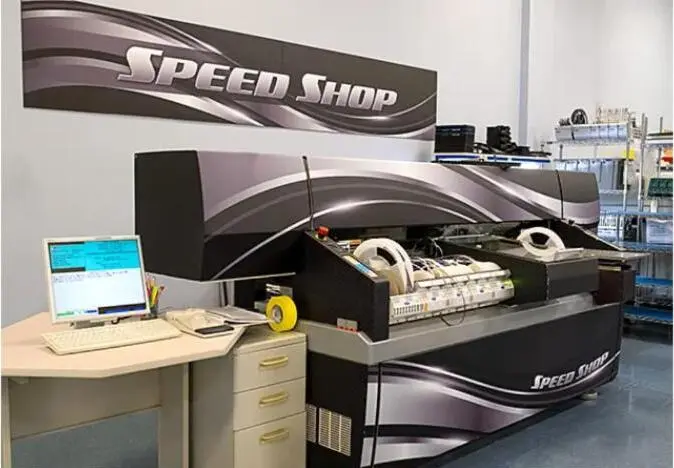
Pro-Active Engineering’s integrated workflow addresses this requirement directly. The Speed Shop rapid prototyping line uses full production processes, so assemblies built during development reflect the same coating method, masking approach and inspection criteria that will govern production. This alignment removes the prototype-to-production disconnect that creates compliance gaps and late-stage manufacturability issues.
Pro-Active’s domestic, ITAR-registered facility in Sun Prairie, Wisconsin consolidates design, prototyping, assembly, conformal coating and system integration under one roof. AS9100 certification, Nadcap accreditation and JCP certification support the documentation and traceability requirements of aerospace, defense and medical programs. A single accountable partner reduces the vendor fragmentation that compounds compliance risk across multi-supplier supply chains.
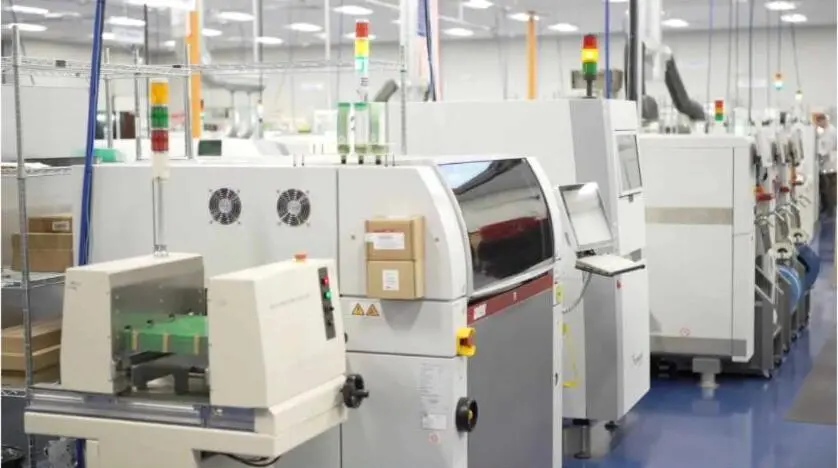
Federal programs such as the CHIPS and Science Act and the Defense Production Act encourage domestic final assembly of electronics. This policy trend reinforces the value of a U.S.-based manufacturing partner with established compliance infrastructure.
Evaluate our integrated workflow to see how Pro-Active Engineering supports the transition from prototype to production for conformal coating programs.
Implementation Checklist for Evaluating Coating Partners
Regulated programs benefit from a structured checklist when evaluating a conformal coating partner.
- Confirm the partner holds relevant certifications such as AS9100, Nadcap, ISO 9001:2015 and ITAR registration for defense and aerospace programs.
- Verify the partner can execute the specific application method required by the program’s volume profile and board geometry.
- Confirm coating materials are qualified to IPC-CC-830 and, where applicable, MIL-I-46058C.
- Assess the partner’s inspection capability, including UV fluorescence verification, thickness measurement and IPC-A-610 Class 3 acceptance criteria.
- Review the partner’s documented control plans, including viscosity monitoring, cure verification and masking validation records.
- Confirm the partner supports full traceability with material certifications, process records and inspection documentation available for audit.
- Evaluate whether the partner’s prototyping process uses the same methods as production to avoid requalification risk at scale.
- Assess the partner’s rework capability and IPC-7711/7722 compliance for programs that require field repair or engineering changes.
Conclusion: Partner Selection for Reliable Coating Execution
Conformal coating application method selection functions as a program-level decision. Spray suits prototypes and lower-volume builds. Dip scales for high-volume programs with simple geometry. Selective robotic coating reduces masking burden and improves repeatability for high-mix production. Parylene delivers stronger environmental performance for dense, high-value assemblies. Brush coating supports touch-up and repair.
The method must align with volume profile, board complexity, keep-out geometry, rework expectations and compliance requirements in the target industry. Process control, inspection rigor and documentation discipline determine whether a qualified coating material delivers reliable protection in production.
Pro-Active Engineering provides conformal coating as part of an integrated engineering-to-manufacturing workflow. The certifications and standards outlined earlier support the traceability and compliance requirements of aerospace, defense and medical programs. The Speed Shop approach mentioned earlier ensures coating methods validated at prototype stage scale without requalification risk.
Start your process validation to engage Pro-Active Engineering for conformal coating process validation and production scaling on a regulated program.
Frequently Asked Questions
What conformal coating application method fits a high-mix, low-to-mid volume aerospace or defense program?
Selective robotic coating generally fits high-mix programs with moderate volumes and complex board geometries. It removes most manual masking labor by programming equipment to coat only designated areas. This control reduces process variability and defect rates compared with manual spray or dip methods. For programs governed by AS9100 or IPC-A-610 Class 3 workmanship standards, selective robotic coating also supports documented control plans and inspection traceability. Pro-Active Engineering’s integrated workflow applies this method within a certified quality management system, so process records and material certifications remain available for program audits.
How does Pro-Active Engineering align conformal coating with IPC-A-610 Class 3 and IPC-CC-830?
Pro-Active Engineering operates under AS9100 certification and Nadcap accreditation, which define the quality management framework for coating processes. Coating materials and workmanship follow high industry standards for high-reliability electronics. Post-application inspection includes UV fluorescence verification, thickness measurement at multiple points per board and visual inspection for coverage gaps, bubbles or voids. Full traceability, including material certifications, process records and inspection results, remains available for customer and regulatory audits throughout the program lifecycle.
Can Pro-Active Engineering support conformal coating from prototype through full production without vendor changes?
Pro-Active Engineering’s Speed Shop rapid prototyping line uses the same production processes, equipment and inspection criteria as full-scale manufacturing. Conformal coating methods validated during prototype development carry directly into production without requalification risk or process translation errors. Design, assembly, coating, testing and system integration all operate under one roof at the Sun Prairie, Wisconsin facility, which reduces the vendor fragmentation that creates compliance gaps and late-stage manufacturability issues for regulated programs.
What documentation and traceability support ITAR-controlled conformal coating programs?
Pro-Active Engineering is ITAR-registered and maintains documentation practices that align with ITAR-controlled programs. For conformal coating programs, documentation includes material certifications, coating process records, masking validation records, inspection results and cure verification data. This documentation package supports program audits and aligns with the traceability requirements of defense and aerospace customers. JCP certification and NIST 800-171 alignment further support secure handling of controlled program data.
When does Parylene outperform liquid conformal coating methods for a regulated program?
Parylene suits programs that require true three-dimensional conformality, pinhole-free coverage and uniform film build across dense assemblies with sharp edges, cavities or complex geometries that liquid methods cannot reach reliably. It serves as the preferred material for implantable medical electronics because of its biocompatibility characteristics. It also performs well in harsh aerospace and defense environments where extreme conditions exceed the performance envelope of standard liquid coatings. The trade-off involves process complexity, since Parylene requires vacuum deposition equipment, specialized masking and longer cycle times. These factors make it best for lower-volume, higher-value assemblies where environmental performance requirements justify the investment. Pro-Active Engineering can discuss Parylene requirements and coordinate the appropriate process path as part of an integrated program review.