
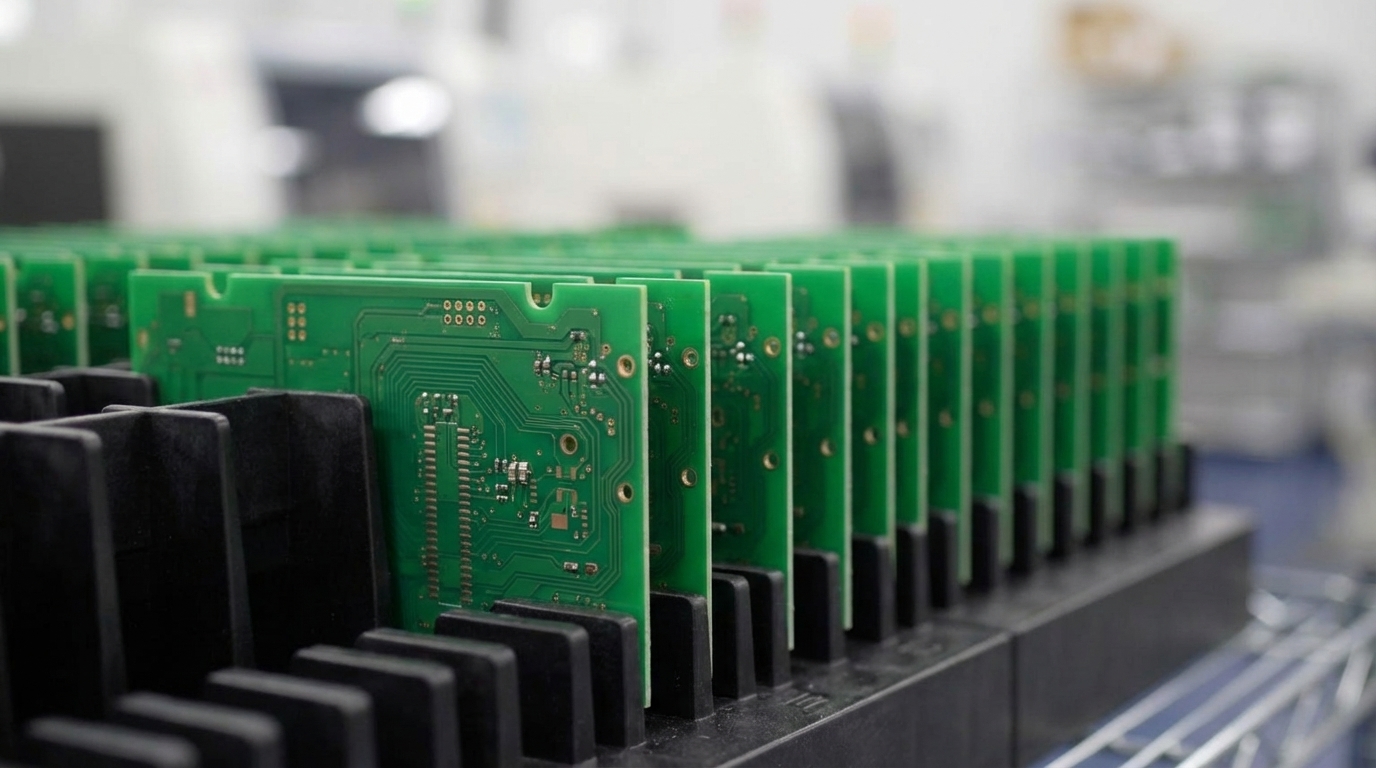
Last updated: August 6, 2026
Key Takeaways
- ITAR-compliant quick-turn PCB prototyping requires U.S.-only access to controlled data and production-equivalent processes to reduce legal and engineering risk.
- An eight-point evaluation framework helps leaders assess engineering depth, prototyping capability, manufacturing scope, quality certifications, supply-chain resilience, scalability, lifecycle support and total cost of ownership.
- Speed alone is insufficient; prototypes must run on the same SMT lines, inspection routines and documentation controls used for production builds.
- Integrated domestic partners reduce late-stage manufacturability issues, prototype-to-production disconnects and multi-vendor fragmentation by consolidating design, prototyping, assembly and testing.
- Pro-Active Engineering offers ITAR-registered, AS9100-certified quick-turn PCB prototyping and assembly services. Request a quote to begin an evaluation.
Executive Summary: Eight Criteria for ITAR Prototype Vendor Selection
Selecting a domestic ITAR PCB prototype assembly partner benefits from a structured evaluation. The following eight criteria form a practical decision framework for engineering and program leaders.
- Engineering depth: The vendor integrates DFM, sourcing insight and quality planning into the design phase, not only after receiving files.
- Prototyping capability: Prototypes run on production-equivalent processes with full inspection, not on a simplified fast-turn line that diverges from production.
- Manufacturing scope: The vendor handles SMT, through-hole, conformal coating, box build and system integration under one roof.
- Quality and compliance: The vendor holds active ITAR registration, AS9100, ISO 9001:2015, JCP certification and Nadcap accreditation.
- Supply-chain resilience: The vendor uses documented counterfeit-avoidance methods and BOM lifecycle scrubbing to reduce component risk.
- Scalability: The same partner supports low-volume prototypes and transitions into production without re-qualification.
- Lifecycle support: The vendor provides traceability, rework, firmware development and long-term documentation retention.
- Total cost of ownership: The vendor’s integrated workflow reduces redesigns, rework and vendor-management overhead across the program lifecycle.
Each criterion maps directly to a risk category that compliance and procurement teams address during vendor selection. The sections below expand on the most consequential evaluation points.
Use this framework to evaluate current vendor options, then request a quote to see how Pro-Active Engineering addresses each criterion.
ITAR Prototype Lead Times and Process Alignment
Lead times for ITAR PCB prototype assembly depend on layer count, complexity and whether a vendor uses a dedicated fast-turn line or the standard production queue. Standard rigid boards with assembly often complete quickly, while HDI stackups with sequential lamination cycles require longer lead times.
Speed alone does not define a strong partner. Focusing solely on speed misses a more critical consideration: whether the prototype is built using full production processes with the same SMT lines, solder standards, inspection routines and documentation controls that govern the production build. A smooth prototype-to-production transition requires design validation, DFM review and process compatibility established at the prototype stage, not retrofitted later.
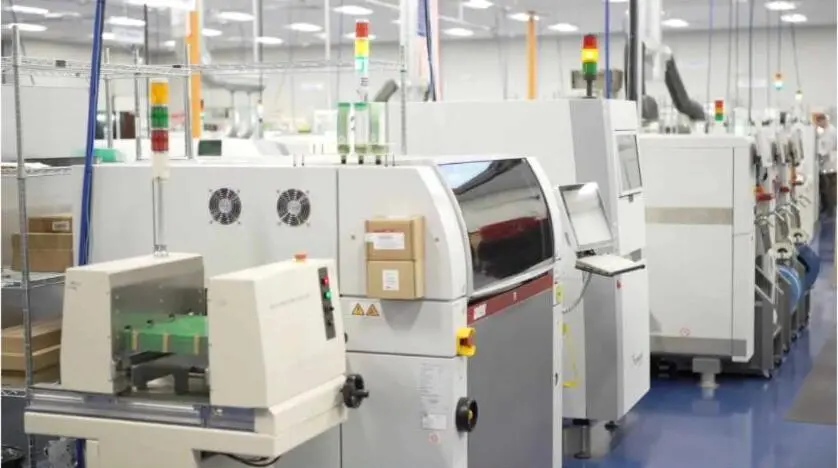
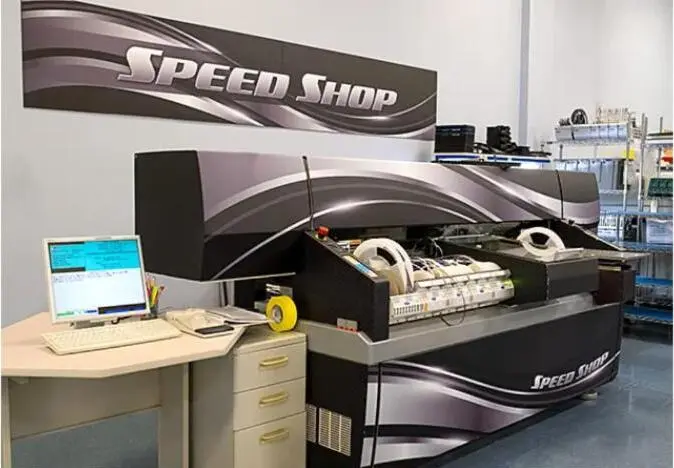
Pro-Active Engineering’s Speed Shop is a dedicated fast-turn SMT and through-hole line that delivers prototypes using full production processes, including AOI and inspection. The Speed Shop accepts orders as small as a single unit, which supports R&D and validation builds without minimum-quantity constraints. The same engineering and manufacturing workflow governs both prototype and production builds, so successful development work scales without process re-qualification.
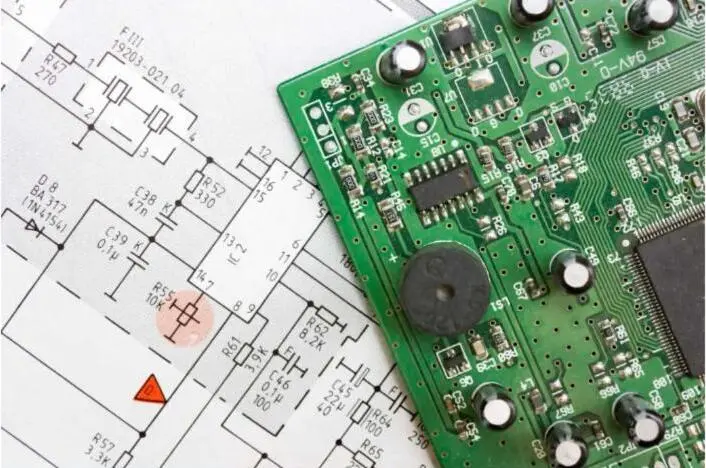
Vendor evaluation on speed should include confirmation that the fast-turn line uses the same equipment, solder standards and inspection criteria as the production floor. A prototype that passes on a simplified line and fails on the production line creates costly late-stage rework.
Required Documentation for ITAR PCB Vendors
ITAR-compliant vendors maintain a documented record set that supports regulatory audits and program traceability. A compliant ITAR record set for PCB assembly programs includes technical-data receipt logs, internal access logs, build records, disposal records and employee training records. Records must be retained for a minimum period defined under ITAR regulations.
Aerospace and defense projects commonly require component-level traceability, including complete material and component genealogy with manufacturer name, part number, lot and date code, certificate of conformity and chain-of-custody documentation to support counterfeit prevention. This traceability requirement is formalized under AS9100 Rev D, which mandates lot-level tracking to the component lot or serial number for all parts and assemblies, enabling targeted investigation in the event of a field failure.
Beyond traceability records, vendors demonstrate active ITAR registration with DDTC, a documented internal compliance program, a designated empowered official and evidence of recurring employee training. Lapsed DDTC registration does not suspend ITAR obligations and creates a violation risk, so buyers should verify that registration is current before transferring any controlled technical data.
Data handling controls carry equal weight. Vendors must restrict access to Gerber files, BOMs, assembly drawings and firmware to U.S. persons. Buyers should ask vendors to describe technical-data access controls, physical security posture and foreign-national access restrictions before sending files.
Strategic Risks in ITAR PCB Programs
Three structural risks affect many ITAR PCB programs: late-stage manufacturability issues, prototype-to-production disconnects and multi-vendor fragmentation. Each risk can be reduced through careful vendor selection.
Late-stage manufacturability issues arise when manufacturing input enters the design process after layout is complete. Ignoring DFM in complex PCBAs commonly leads to production delays from redesigns, lower yields due to assembly issues, increased scrap and rework, supply chain disruptions and higher total cost of ownership. The financial impact compounds at each stage, so catching a design issue before tooling saves significantly more than catching it after first article inspection. Vendors who integrate DFM into the design phase, not as a post-layout checklist, reduce this risk structurally.
Prototype-to-production disconnects occur when the prototype vendor and the production vendor are different entities, or when the prototype runs on a process that does not match production. Switching contract manufacturing partners between engineering validation and production ramp adds months and significant re-qualification cost. A single partner who owns both prototype and production eliminates this transition risk.
Multi-vendor fragmentation distributes accountability across design firms, prototype houses, assembly contractors and test providers. Managing gaps between scopes of work can consume substantial senior engineering time on complex projects. When integration fails in a multi-vendor structure, vendors often dispute root cause across boundaries, which extends resolution timelines. A single accountable partner closes this accountability gap.
Pro-Active Engineering consolidates PCB design, rapid prototyping, assembly, conformal coating, testing and box build into one integrated workflow. Engineering and manufacturing operate within the same facility, so DFM feedback remains continuous rather than episodic. Rising demand for secure, ITAR-compliant defense production is driving more electronics contracts to domestic EMS providers, and this integrated model is becoming the standard that defense and aerospace programs expect.
See how an integrated partner eliminates these structural risks and request a quote to review a program’s specific risk profile.
Key Questions Before Sending ITAR-Controlled Files
Engineering and program leaders benefit from a focused set of questions before transferring any controlled technical data to a prospective vendor.
- Is the vendor’s DDTC registration current, and can documentation confirm active status
- How does the vendor restrict access to Gerber files, BOMs, schematics and firmware to U.S. persons only
- What is the vendor’s secure file transfer process for controlled technical data
- Does the vendor maintain a documented internal compliance program with a designated empowered official
- How does the vendor screen employees and contractors for U.S.-person status
- What counterfeit-avoidance methodology does the vendor apply to component sourcing
- Does the vendor perform DFM review before prototype release, and is that review integrated with the manufacturing team
- Can the vendor provide lot-level traceability records, build histories and certificate-of-conformity documentation for each assembly
- What certifications does the vendor hold, and are they current
- Can the vendor support the full program lifecycle from prototype through production volume without re-qualification
Readiness Checklist for Domestic ITAR Providers
The eight-point framework maps directly to verifiable vendor attributes. The following checklist translates each criterion into a concrete evaluation point.
- Engineering depth: Vendor employs in-house PCB layout, firmware development and DFM integration within the same workflow as manufacturing.
- Prototyping capability: Vendor operates a dedicated fast-turn line using full production processes, with AOI and inspection included on every prototype build.
- Manufacturing scope: Vendor provides SMT, through-hole, conformal coating, potting, box build and system integration under one roof with a single point of accountability.
- Quality and compliance: Vendor holds active ISO 9001:2015, AS9100, ITAR registration, JCP certification (DD Form 2345) and Nadcap accreditation, and is aligned to NIST 800-171 with CMMC readiness.
- Supply-chain resilience: Vendor uses BOM lifecycle scrubbing tools and documented counterfeit-avoidance methodology aligned to SAE AS5553B.
- Scalability: Vendor supports orders from a single unit through production volume on the same process and quality infrastructure, without requiring re-qualification at each scale transition.
- Lifecycle support: Vendor provides full traceability documentation, rework capability to IPC-7711/7722 and long-term record retention consistent with ITAR requirements.
- Total cost of ownership: Vendor’s integrated model reduces redesign cycles, vendor-management overhead and late-stage defect costs across the program lifecycle.
Pro-Active Engineering meets each criterion. The facility in Sun Prairie, Wisconsin consolidates engineering, Speed Shop prototyping, scalable assembly and advanced interconnect capabilities under one roof. Advanced interconnect capabilities, including wire bonding, flip chip assembly and hybrid high-density assemblies, extend the company’s scope beyond standard EMS providers for mission-critical applications in defense, aerospace and medical programs.
PCB assembly captured nearly half of the U.S. electronics manufacturing services market in 2025, and supply chain instability is driving manufacturers to reshore production for improved resilience. Domestic ITAR-compliant providers with integrated engineering and manufacturing workflows are positioned to absorb that demand without the compliance gaps that offshore or fragmented models introduce.
Conclusion: Structured Next Steps for Vendor Selection
Selecting the right domestic ITAR PCB prototype assembly partner reduces program risk at every stage, from design through production. The eight-point framework covers engineering depth, prototyping capability, manufacturing scope, quality and compliance, supply-chain resilience, scalability, lifecycle support and total cost of ownership. Each criterion is verifiable through documentation, certifications and direct questions before files are transferred.
Recommended next steps for engineering and program leaders include mapping internal program requirements against each framework criterion, developing a shortlist of domestic providers who demonstrate compliance across all eight points and initiating a pilot project to validate vendor performance before committing full program volume.
Material lead times and supply constraints in 2026 make early vendor engagement more important than in prior years. Programs that begin vendor qualification late face compounding schedule risk as material availability tightens. Starting the evaluation process now, with a structured framework and a clear set of questions, reduces that exposure.
Pro-Active Engineering is available to discuss program requirements, review compliance documentation and provide a quote for ITAR-compliant quick-turn PCB prototyping and assembly services.
Start vendor evaluation with a structured comparison and request a quote to review how Pro-Active Engineering addresses each of the eight framework criteria for a program.
Frequently Asked Questions
What certifications should an ITAR-compliant PCB prototyping vendor hold?
A qualified domestic ITAR PCB prototyping vendor should hold active ITAR registration with the Directorate of Defense Trade Controls, ISO 9001:2015 certification for quality management and AS9100 certification for aerospace-grade quality and traceability controls. For programs involving the U.S. military, JCP certification (DD Form 2345) is required. Nadcap accreditation signals additional process discipline for high-reliability applications. Vendors serving programs that handle Controlled Unclassified Information should also demonstrate alignment to NIST 800-171 and readiness for CMMC compliance. Each certification addresses a distinct compliance requirement, and most defense and aerospace programs require several of them simultaneously. Buyers should request current certificates and verify that none have lapsed, since lapsed registration creates regulatory exposure even when the underlying processes remain intact.
What is the difference between ITAR registration and ITAR certification?
No formal government-issued ITAR certification exists. Companies register with the Directorate of Defense Trade Controls under the applicable part of the ITAR regulations and then comply with all applicable requirements to receive licenses or use exemptions for ITAR-related activities. Registration must be renewed annually and requires payment of a tiered fee. Compliance is demonstrated through a documented internal compliance program, a designated empowered official, recurring employee training, access controls for controlled technical data and audit records, not through a third-party certification body. When vendors describe themselves as ITAR-certified, they typically refer to active DDTC registration and an internal compliance program, not a certification issued by an independent certifying organization.
How does DFM integration at the prototype stage reduce total program cost?
Design for manufacturability review performed during the prototype phase identifies layout errors, component clearance issues, sourcing risks and test-coverage gaps before tooling, stencils and component commitments are locked. Resolving these issues at the design stage costs a fraction of the same corrections after first article inspection or during production ramp. When the prototype vendor and production vendor are the same entity, DFM feedback from the prototype build flows directly into the production process without re-qualification. This continuity reduces redesign cycles, eliminates the re-documentation cost of switching vendors and improves first-pass yield at production scale. Programs that skip DFM at the prototype stage often encounter late-stage defects, assembly rework and schedule delays that exceed the cost of a thorough early review.
What are the risks of using a multi-vendor model for ITAR PCB programs?
Multi-vendor models distribute accountability across design firms, prototype houses, assembly contractors and test providers. Each handoff between vendors introduces a potential gap in traceability, process continuity and compliance documentation. When a defect or integration failure occurs, vendors in a fragmented model frequently dispute root cause across boundaries, which extends resolution timelines and increases program cost. For ITAR programs, each vendor in the chain must independently maintain ITAR registration and access controls, and any gap in one vendor’s compliance creates exposure for the entire program. Managing the interfaces between vendors also consumes senior engineering time that would otherwise support development. A single accountable partner who owns design, prototyping, assembly and testing eliminates these boundary risks and simplifies the compliance audit trail.
Can a quick-turn PCB prototyping vendor also support full production volume?
Not all quick-turn vendors are equipped for production-volume builds. Some operate fast-turn lines for small quantities that use simplified processes not suitable for high-reliability production. The critical evaluation point is whether the vendor’s prototype process matches the production process, including equipment, solder standards, inspection criteria and documentation controls. When prototype and production share the same process infrastructure, the transition from prototype to volume manufacturing requires no re-qualification and no process re-validation. As noted earlier, Pro-Active Engineering’s Speed Shop uses the same production processes for prototypes and volume builds, which eliminates re-qualification when scaling.