

Last updated: July 30, 2026
Key Takeaways for U.S. Quick-Turn PCB Assembly
- Quick-turn PCB contract assembly delivers fabrication, sourcing, assembly and testing on accelerated U.S. schedules for defense, aerospace and medical programs.
- Submitting complete Gerber, BOM, placement, test and compliance files at quoting prevents schedule holds and enables immediate engineering review.
- Turnkey assembly through an ITAR-registered partner with AS5553B-aligned counterfeit avoidance strengthens traceability compared with consigned kitting.
- Early DFM integration reduces re-spins, stabilizes first-pass yield and supports a controlled move from prototype into production.
- Pro-Active Engineering offers a single-facility solution that meets every checklist item for U.S. quick-turn PCB contract assembly, and capability alignment can be confirmed before award.
Required Files for Quick-Turn PCB Contract Assembly
Incomplete file packages are among the most common causes of schedule holds on quick-turn orders. To avoid these holds, submit a complete data package at the time of quoting. This approach keeps the program moving and allows engineering review to begin immediately.
A complete submission for quick-turn PCB contract assembly includes:
- Gerber files with drill files, stackup definition, surface finish specification and controlled-impedance notes
- Bill of materials with validated manufacturer part numbers, approved alternates and revision history
- Component placement list and assembly drawings with polarity marks, fiducials and soldering notes
- Test requirements including functional test procedures, ICT node coverage targets and pass/fail limits
- Applicable compliance documentation such as IPC class designation, conformal coating mask drawings and traceability requirements
At Pro-Active Engineering, file review is integrated with DFM analysis, component sourcing confirmation and test planning before schedule commitment. That single pre-order check produces a realistic lead time and reduces the risk of last-minute engineering changes.
Submit files for immediate engineering review
Turnkey and Consigned Sourcing Models for Quick-Turn Builds
Turnkey assembly means the contract manufacturer procures all components, manages the BOM and assumes responsibility for materials quality and traceability. Consigned assembly means the customer supplies kitted parts and the assembler provides labor and process only.
For defense, aerospace and medical programs, turnkey sourcing through an ITAR-registered partner with an Approved Vendor List and counterfeit avoidance methodology aligned to SAE AS5553B strengthens traceability and reduces the risk of nonconforming components entering the build. Professional PCBA suppliers operating turnkey programs can provide manufacturer certificates of conformance, purchase invoices, incoming quality control reports and production traceability reports that demonstrate component authenticity.
Consigned kits introduce sourcing risk when prototype distributors prove inadequate for reel stock or when BOMs are issued without validated MPNs, packaging details or controlled revision history. Even when parts are sourced correctly, component attrition during kitting and placement can produce incomplete builds, compounding the traceability gaps that turnkey models avoid.
Pro-Active Engineering operates a turnkey model supported by SiliconExpert BOM scrubbing and lifecycle risk analysis, which flags obsolescence and end-of-life risk before parts are ordered. That integration keeps sourcing decisions inside the same workflow as design and assembly and prevents a separate handoff.
How DFM Reduces Risk in Quick-Turn Schedules
Design choices lock in a large share of a product lifecycle cost, so DFM applied before Gerbers are released has the greatest impact on program economics. The most visible cost impact appears in schedule performance when designs move from prototype into production.
Each DFM finding that requires a board re-spin adds meaningful time to an NPI program and converts a fast prototype schedule into a longer overall timeline. Prototypes often hide problems that stop production lines because hand assembly can nurse marginal footprints through reflow, and relaxed stencil specifications can mask bridging until production rules are applied.
DFM review for quick-turn PCB assembly should cover component clearances, thermal reliefs, panelization, fiducial placement, solder mask design, annular ring and test point access. Issues that do not affect hand-built prototypes often cause defects at scale.
Pro-Active Engineering integrates DFM into the design phase rather than treating it as a late gate. Engineering and manufacturing operate as a unified process, so manufacturability, sourcing and quality planning are resolved before the first board is built. That approach reduces re-spins, stabilizes first-pass yield and supports production scaling within the same quality system.
Certifications That Drive Defense and Aerospace Vendor Selection
Certification requirements function as direct vendor-selection filters during due diligence for regulated programs. IPC standards are voluntary but effectively required to qualify with most major OEMs and government contractors.
The certifications that carry the most weight for defense and aerospace PCB assembly programs are:
- ISO 9001:2015, the baseline quality management system requiring documented processes, internal audits and management review. The certification must apply to the specific production facility performing the work, not only a corporate headquarters.
- AS9100, the aerospace and defense quality management standard that incorporates ISO 9001:2015 and adds configuration management, counterfeit part prevention, AS9102 First Article Inspection and enhanced lifecycle traceability.
- ITAR registration, required by the U.S. Department of State for facilities that handle technical data related to defense and aerospace work.
- JCP certification (DD Form 2345), required for access to military specifications and standards and confirming eligibility to receive controlled technical data for defense programs.
- Nadcap accreditation, third-party validation of special processes including soldering, coating and cleaning that AS9100 requires to be validated.
- IPC-A-610 Class 3 and J-STD-001, workmanship and soldering standards required for high-reliability sectors where failure carries unacceptable risk, with operators and inspectors holding current certifications that renew on a defined cycle.
Pro-Active Engineering holds ISO 9001:2015, AS9100, ITAR registration, JCP certification and Nadcap accreditation, and operates to IPC-A-610 Class 2 and Class 3 workmanship standards. All certifications apply to the Sun Prairie, Wisconsin, facility where design, assembly and integration are performed.
Receive a current certificate package with scope confirmation
Decision Checklist for U.S. Quick-Turn PCB Partners
Program teams evaluating domestic quick-turn PCB contract assembly partners should confirm the following before award:
- ISO 9001:2015 certification applies to the assembly facility, not only a parent organization
- AS9100 certification is current and in scope for PCB assembly and box build
- ITAR registration is active
- JCP certification (DD Form 2345) is on file for access to military specifications
- Nadcap accreditation covers special processes used in the program
- IPC-A-610 Class 3 capability is confirmed with current operator and inspector credentials
- Lot-level traceability links each assembly to operator, material lots, inspection records and test results
- Counterfeit avoidance methodology aligns to SAE AS5553B with an active Approved Vendor List
- DFM is integrated into the design phase, not applied as a post-layout gate
- Advanced interconnect capabilities such as wire bonding, flip chip and hybrid assemblies are available in-house
- Thermal management solutions including high-power and metal-core constructions are available without subcontracting
- Prototype and production run on the same processes and under the same quality system
- Box build and full system integration are available from the same facility
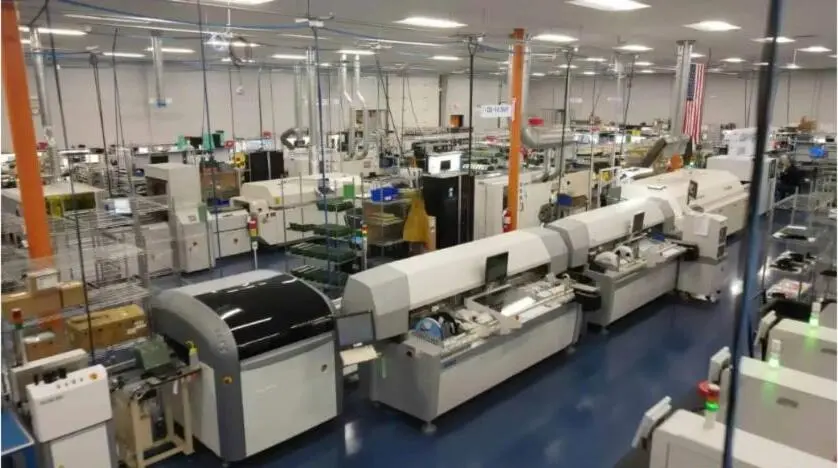
Pro-Active Engineering operates from a single facility in Wisconsin, supported by a workforce of electronics professionals with decades of experience serving defense, aerospace and medical programs.
Discuss program requirements and confirm capability alignment before award
Frequently Asked Questions
Does Pro-Active Engineering handle the full product lifecycle, from design through production?
Pro-Active Engineering manages the complete electronics lifecycle under one roof. Services span PCB layout and firmware development, rapid prototyping through the dedicated Speed Shop, low- to high-volume PCB assembly, conformal coating and ruggedization, and box build with full system integration. Prototypes are built using the same processes and quality system as production runs, which supports a smooth transition to volume manufacturing without requalifying a new supplier.
What assembly technologies does Pro-Active Engineering support?
Pro-Active Engineering supports surface-mount and through-hole assembly, advanced interconnect technologies including wire bonding and flip chip, hybrid high-density assemblies and thermal management solutions including silver sintering, direct thermal path technology, advanced metal-core constructions and heavy copper integration. These capabilities address high-density and high-power applications common in defense, aerospace and medical programs that exceed the scope of standard contract assembly.
What testing and inspection methods are available?
Pro-Active Engineering performs 100% automated optical inspection on all assemblies. Additional inspection and test methods include flying probe, in-circuit testing and functional testing. Documentation packages include certificates of conformance, first article inspection reports, material certifications with lot traceability, inspection records and test data. All inspection and test activities operate under the AS9100 and IPC-A-610 quality framework applicable to the production facility.
How does Pro-Active Engineering protect sensitive program data for defense customers?
Pro-Active Engineering is ITAR-registered. Program data is handled within a controlled domestic environment with no offshore subcontracting of assembly or engineering work.
What does onboarding look like for a new program?
New programs begin with a file review that integrates DFM analysis, component sourcing confirmation and test planning before schedule commitment. Teams often start with a prototype build through the Speed Shop to validate the design and process before committing to production volumes. Pro-Active Engineering engineering staff collaborates through design reviews and provides transparent reporting throughout the program. Many customers begin with a pilot project and then transition full production to Pro-Active Engineering after confirming quality, communication and turnaround performance.