

Last updated: August 24, 2026
Key Takeaways for Regulated PCB Programs
- Fragmented sourcing across multiple vendors creates accountability gaps and compliance risk for defense, aerospace and medical-device programs.
- Integrated US-based engineering-led manufacturers consolidate design, prototyping, assembly, testing and system integration in one workflow, which reduces program risk.
- Early DFM involvement, prototypes built with production processes and full traceability reduce late-stage redesign cost and compliance gaps.
- Providers with AS9100, ITAR, JCP and Nadcap certifications maintain documentation and process controls required by regulated industries as standard practice.
- Request a quote to evaluate how Pro-Active Engineering integrated US capabilities align with program requirements.
The Problem: Quick-Turn PCB Prototypes That Add Complexity
Quick-turn PCB prototyping delivers fabrication and assembly in days rather than weeks to support early validation and compressed schedules. The service itself works as intended. The sourcing model often creates the problem.
When design, prototyping, assembly, testing and system integration run through separate vendors, accountability gaps form at every handoff. A design firm delivers files. A prototype house builds to those files. An assembler receives boards with no context on design intent. A test house receives assemblies with no visibility into the build process. Each transition introduces risk, and failure analysis requires coordination across organizations that do not share a workflow.
The consequences compound in regulated industries. Aerospace and defense PCB programs require full component traceability from raw material to finished board, with every process step documented and tied to a serial number. Vendor fragmentation makes that documentation chain difficult to maintain and difficult to audit efficiently. Compliance gaps, inconsistent quality records and unpredictable lead times follow.
The Solution: Integrated, Engineering-Led US Manufacturers
A distinct category of US-based providers consolidates design, rapid prototyping, assembly, testing, coating and system integration under one roof. These providers operate as engineering-led manufacturers rather than transactional fabricators. When engineering and manufacturing share a workflow, DFM feedback loops stay short, accountability remains singular and documentation stays continuous.
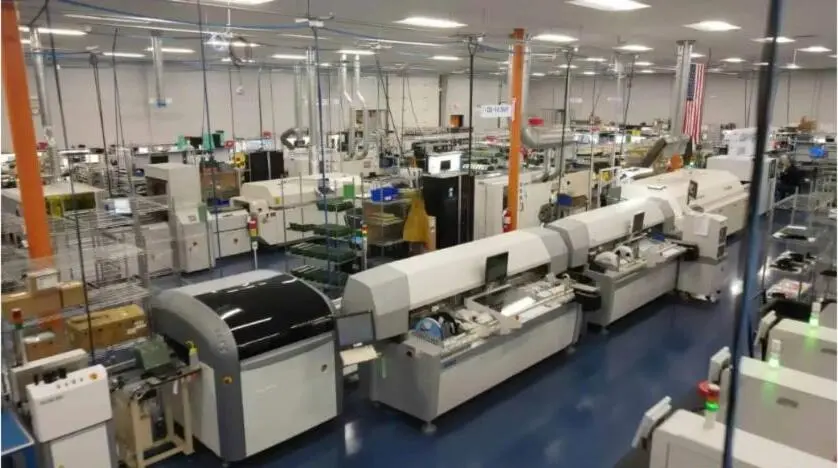
This model changes the risk profile of a program. Instead of managing multiple vendor relationships, a buyer works with one partner that owns outcomes from concept through box build. Communication moves faster. Change orders flow through one organization. Compliance documentation reflects a single, auditable process.
Discuss your program requirements to evaluate how Pro-Active Engineering integrated workflow addresses accountability and compliance challenges.
DFM Integration: Preventing Late-Stage Redesign
Late-stage manufacturability issues rank among the most expensive problems in electronics development. The cost of design changes follows a steep curve: manageable at the conceptual stage, significantly higher at prototyping and far higher at full production. When teams treat DFM as a final check instead of a design input, programs reach manufacturing with problems locked into the design.
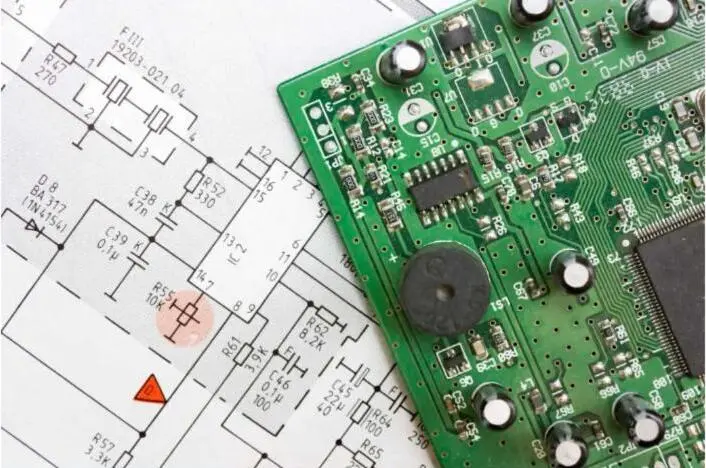
Bringing manufacturing engineering into the design process early, before tooling or supplier lock-in, keeps changes inexpensive. Integrated providers embed DFM into the layout phase and catch issues such as thermal imbalance, insufficient fiducials and component orientation mismatches before fabrication begins.
Evaluation questions for buyers: Does the provider engineering team participate in layout review before Gerber release? Is DFM a structured process or an informal check? Can the provider show examples where early DFM involvement reduced redesign cycles on complex programs?
Prototype Speed and Production Readiness Together
Fast schedules and production readiness can align, but many providers favor one and sacrifice the other. Fast-turn fabricators deliver boards quickly using processes that may not match production intent. The result is a prototype that validates function but not manufacturability, which creates a gap that appears during scale-up.
Once tooling is built, design flexibility collapses and the cost of change rises sharply. Integrated providers address this by building prototypes with the same processes, materials and quality controls used for production runs. What works in the prototype phase scales without revalidation. Pro-Active Engineering Speed Shop delivers rapid prototypes using full production processes, which supports a smooth transition to volume manufacturing.
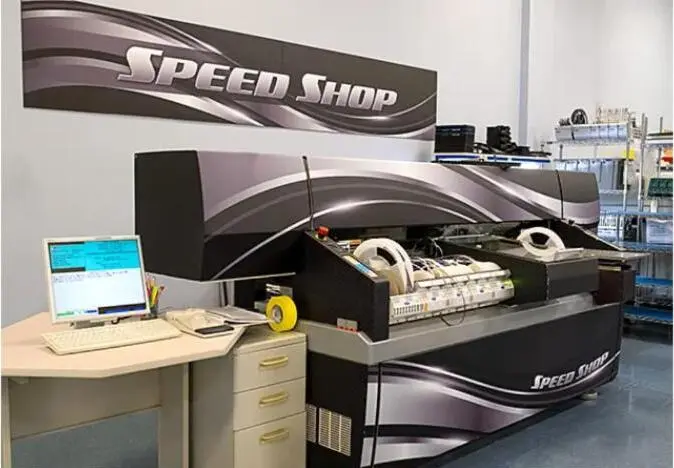
Evaluation questions for buyers: Are prototype builds produced on the same lines and with the same process controls as production? Does the provider document prototype builds with the same traceability as production? Can the provider support single-unit R&D builds and volume production without a vendor change?
Compliance and Traceability for Regulated Programs
Defense, aerospace and medical programs operate under compliance frameworks that many contract manufacturers cannot support. AS9100D adds requirements for formal risk management, configuration management, product traceability, counterfeit-part prevention and supplier flow-down obligations on top of ISO 9001. ITAR registration applies when a US-based manufacturer produces or handles defense-related PCBs or technical data covered by the US Munitions List.
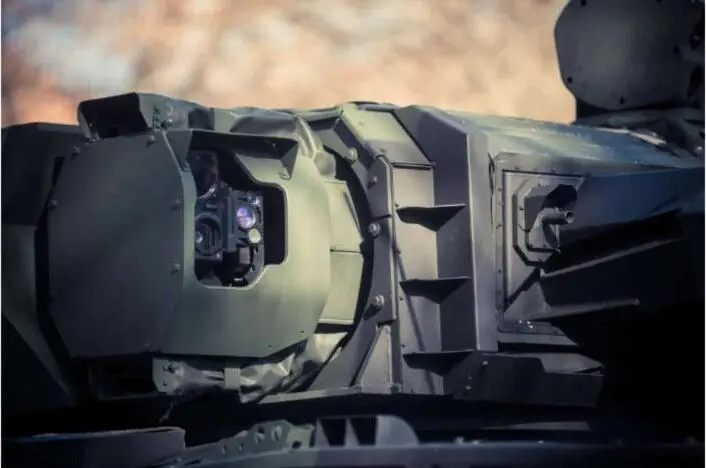
Qualified manufacturers lists reduce supply chain risk for aerospace and defense programs by confirming manufacturing capability, end-to-end material traceability, configuration control discipline and structured audit oversight. Integrated US providers with relevant certifications maintain these requirements as part of standard workflow rather than as exceptions.
Pro-Active Engineering holds ISO 9001:2015, AS9100, ITAR registration, JCP certification and Nadcap accreditation, with alignment to NIST 800-171 and CMMC readiness. These certifications reflect a quality management system built for regulated industries, not adapted to them.
Evaluation questions for buyers: Does the provider hold current AS9100 and ITAR registration? Can the provider produce a complete documentation package, including component lot traceability, certificates of conformance and inspection records, for every build? Does the provider counterfeit avoidance methodology align with SAE AS5553?
Advanced Interconnect and Thermal Capability Under One Roof
High-density designs for aerospace, defense and industrial applications frequently exceed the capabilities of standard PCB assembly providers. Technologies such as the following require specialized equipment and process expertise that most EMS providers do not maintain:
- Wire bonding
- Flip chip assembly
- Hybrid high-density assemblies
- Advanced thermal management
Most EMS providers avoid these investments because volume requirements rarely justify the capital cost. Providers that combine advanced interconnect capabilities with rapid prototyping and production assembly give engineering teams access to these technologies without adding vendors.
Pro-Active Engineering supports the following advanced capabilities integrated into the same workflow as standard SMT and through-hole assembly:
- Wire bonding
- Flip chip assembly
- Hybrid assemblies
- Silver sintering
- Direct thermal path technology
- Advanced metal-core constructions
This integration supports programs that require both speed and technical depth.
Evaluation questions for buyers: Does the provider support high-density interconnect and advanced packaging in-house? Can thermal management solutions be engineered and validated within the same workflow as PCB assembly? Does the provider have documented experience with high-reliability applications in regulated industries?
Total Cost of Ownership Beyond Unit Price
Unit price comparisons between domestic and offshore providers often understate the true cost of offshore sourcing because they capture only the fabrication quote. The variables that drive total cost, including lead-time uncertainty, inventory carrying costs, quality risk and tariffs, are difficult to quantify in a unit-price comparison but affect program economics.
A complete landed cost calculation includes factors beyond bare-board unit price alone:
- Freight
- Duties
- Brokerage
- Incoming inspection
- Other supply chain costs
When those variables are included, domestic integrated providers can deliver lower total cost of ownership, particularly for programs with compliance requirements, engineering change activity or compressed schedules.
Programs that moved PCB assembly to domestic US facilities with tighter process control have reported quality improvements and same-time-zone engineering access that accelerates change orders and first-article reviews.
Evaluation questions for buyers: Has the provider modeled total cost of ownership, including rework, schedule risk and compliance overhead, not just unit price? Does the provider integrated workflow reduce engineering coordination costs associated with managing multiple vendors? Can the provider demonstrate how early DFM involvement reduces lifecycle cost?
Comparing Common Provider Models for Regulated Work
The problems outlined above, including vendor fragmentation, compliance gaps and cost uncertainty, appear differently across provider types. Understanding how each model handles engineering integration, compliance infrastructure and prototype-to-production continuity helps buyers match structure to program risk.
Large EMS providers prioritize high-volume production. Their processes and economics are tuned for scale, which creates bottlenecks for low-to-mid volume high-complexity programs. Engineering involvement is typically limited and DFM feedback loops move slowly.
Design-only firms address a different part of the workflow but introduce a related problem. They deliver files but do not own production outcomes, so the transition from design to manufacturing requires a separate vendor relationship that reintroduces accountability gaps.
Local job shops offer geographic proximity and responsiveness but typically operate with narrow capability sets. Scalability, advanced interconnect and compliance infrastructure often remain limited.
Offshore brokers offer competitive unit pricing but introduce IP risk, counterfeit exposure, geopolitical supply chain risk and long logistics cycles. Foreign NDAs often lack enforcement under Chinese law, and ITAR-controlled technical data cannot be shared with foreign manufacturers without proper licensing.
Integrated US manufacturers offer the consolidated workflow described earlier, from engineering through system integration in one facility, with domestic compliance infrastructure. This model fits programs that require DFM from day one, compliance traceability, advanced capabilities and prototype-to-production continuity.
Due-Diligence Checklist for US Quick-Turn Partners
The characteristics that distinguish integrated providers translate into specific, verifiable evaluation criteria. The following checklist captures certifications, processes and capabilities that indicate whether a provider can support the full lifecycle of a regulated program without gaps.
- Current AS9100 and ISO 9001:2015 certification with documented audit history
- ITAR registration and documented access controls for controlled technical data
- JCP certification and Nadcap accreditation for regulated program requirements
- NIST 800-171 alignment and CMMC readiness for programs involving controlled unclassified information
- Counterfeit avoidance methodology aligned with SAE AS5553
- IPC-A-610 Class 3 workmanship standards and J-STD-001 soldering compliance
- Full component traceability from raw material through finished assembly
- In-house DFM review integrated into the design phase, not applied post-layout
- Dedicated rapid prototyping capability using production processes and quality controls
- Advanced interconnect and thermal management capabilities for high-density applications
- Flying probe, in-circuit and functional testing available in-house
- Box build and system integration capability for full-program support
- Documented prototype-to-production transition process with no vendor change required
- BOM scrubbing and lifecycle risk management tools for component obsolescence
Evaluate alignment with your program checklist by sharing requirements and comparing Pro-Active Engineering certifications and capabilities against these criteria.
Decision Framework for Selecting a PCB Partner
Vendor fragmentation, late-stage manufacturability issues, compliance gaps, supply chain risk and unpredictable lead times drive the search for quick-turn PCB alternatives. A single accountable partner that integrates engineering and manufacturing into one workflow addresses these structural problems.
A neutral evaluation framework for selecting a provider should assess four dimensions:
- Engineering integration: Does the provider engineering team participate in design or only receive files?
- Compliance infrastructure: Does the provider hold required certifications, and are those certifications current and auditable?
- Capability depth: Can the provider support full technical requirements, including advanced interconnect, thermal management and system integration, without adding vendors?
- Continuity: Does the provider support the full lifecycle from prototype through production using the same processes and quality controls?
Providers that score well across all four dimensions reduce program risk structurally, not just operationally. The goal is to select a partner whose workflow removes the conditions that create risk.
Pro-Active Engineering was founded in 1996 and operates from a centralized facility in Sun Prairie, Wisconsin, with more than 120 employees and a 45,000-square-foot integrated engineering and manufacturing environment. Pro-Active Engineering delivers the integrated model outlined above, supporting programs from initial PCB layout through box build with certifications that meet regulated-industry requirements. Start the conversation about your program to explore how this integrated model addresses structural risk.
Frequently Asked Questions for Quick-Turn PCB Programs
How do integrated US providers typically handle transitions from prototype to production?
Integrated providers build prototypes using the same processes, materials and quality controls as production runs. Validation during prototyping reflects actual production conditions instead of approximations. When a design advances to volume manufacturing, the process already has characterization and documentation. No vendor change, re-qualification of a new supplier process or traceability gap occurs. Pro-Active Engineering Speed Shop delivers rapid prototypes through a dedicated fast-turn line that uses full production SMT and through-hole processes, including automated optical inspection. Documentation generated during prototyping carries forward into production and supports a smooth transition.
What compliance considerations matter most for defense and aerospace quick-turn work?
Defense and aerospace programs require a combination of quality management certification, process-specific accreditation, regulatory registration and workmanship standards. AS9100, described earlier, forms the quality management foundation. Programs also require ITAR registration for controlled technical data, Nadcap for process-specific validation, IPC-A-610 Class 3 for workmanship and JCP for military specifications. The combination ensures that quality management and process execution meet program requirements. Pro-Active Engineering holds these certifications and maintains alignment with NIST 800-171 and CMMC readiness for programs involving controlled unclassified information.
How does early DFM involvement affect later-stage redesign risk?
Early DFM catches the issues mentioned earlier, including thermal imbalance, test access and component orientation, while they remain inexpensive layout changes. The same issues become costly redesigns after prototyping or during production ramp. Integrated providers embed DFM into the design workflow and create short feedback loops between engineering and manufacturing. Pro-Active Engineering integrates PCB design, sourcing insight and quality control into development, with engineering and manufacturing operating within one workflow.
What factors influence total cost of ownership when comparing domestic and offshore options?
Total cost of ownership for PCB prototyping and production includes more variables than unit price or fabrication quote. For offshore sourcing, relevant cost factors include international freight, import duties and tariffs on complex multilayer boards, customs brokerage, inventory carrying costs driven by longer lead times, incoming inspection requirements, rework and scrap from quality issues and the engineering coordination time required to manage quality disputes or change orders across time zones. For domestic sourcing, relevant cost factors include higher unit prices offset by shorter lead times, lower inventory requirements, faster engineering change cycles, reduced rework risk and the removal of compliance exposure associated with sharing controlled technical data with foreign manufacturers. Programs with active engineering change activity, compliance requirements or compressed schedules often find that domestic integrated providers deliver lower total cost of ownership when all variables enter the analysis. Programs with stable, mature designs at medium-to-high volume and no compliance constraints may find offshore sourcing competitive on a landed-cost basis, although tariff exposure and lead-time risk remain important considerations.