

Last updated: August 6, 2026
Key Takeaways for Defense and Aerospace Teams
- Quick turn ITAR compliant PCB assembly in the United States combines rapid fabrication with strict regulatory controls for defense and aerospace programs.
- Fragmented vendor models create accountability gaps, communication delays and costly late-stage defects that an integrated partner reduces.
- Design for manufacturability (DFM) built into the first layout review prevents expensive redesigns and production surprises.
- Prototypes built on production-grade processes and quality systems move into volume manufacturing without re-qualification risk.
- Pro-Active Engineering delivers end-to-end ITAR-compliant PCB assembly under one roof; start your next program with a quote.
Standards and Certifications That Protect Regulated Programs
Certified systems and documented standards form the foundation of compliant PCB assembly for regulated work. Engineering and program managers confirm that the following certifications and standards are active and current before awarding a program.
- ISO 9001:2015, quality management system baseline for consistent process control
- AS9100, aerospace-specific quality management requirements layered on ISO 9001
- ITAR registration, DDTC registration confirming the manufacturer is authorized to handle defense-related technical data and hardware
- JCP certification (DD Form 2345), Joint Certification Program authorization for access to militarily critical technical data
- Nadcap accreditation, independent accreditation for special processes in aerospace and defense manufacturing
- IPC-A-610 Class 2 and Class 3, workmanship acceptability standards, with Class 3 required for high-reliability and mission-critical assemblies
- J-STD-001, soldering materials and process requirements
- NIST 800-171 alignment, framework for protecting controlled unclassified information in nonfederal systems
- CMMC readiness, Cybersecurity Maturity Model Certification preparation for defense supply chain participation
Pro-Active Engineering holds all of these certifications and maintains active compliance across its integrated manufacturing workflow. Discuss how these certifications apply to a specific program.
How Vendor Fragmentation Increases PCB Assembly Risk
Vendor fragmentation spreads responsibility across separate suppliers for design, prototyping, assembly, coating, testing and system integration. Each handoff introduces a communication gap and increases the chance of misalignment. Accountability becomes diffuse, and when a defect surfaces late, tracing its origin across multiple vendors consumes time and budget that regulated programs cannot spare.
Fragmentation is common because engineering teams often select the lowest-cost or fastest option at each stage without weighing the total coordination burden. This stage-by-stage focus creates a false economy and produces a supply chain with no single owner and no unified quality record. Coordination costs and rework often exceed any savings gained from isolated sourcing decisions.
This fragmentation directly increases program risk, because no vendor owns the full picture when issues arise. Root cause analysis slows, and corrective actions require alignment across organizations with different priorities. An integrated partner eliminates this risk by consolidating every stage, from PCB layout and firmware development through assembly, conformal coating, box build and full system integration, under one accountable workflow.
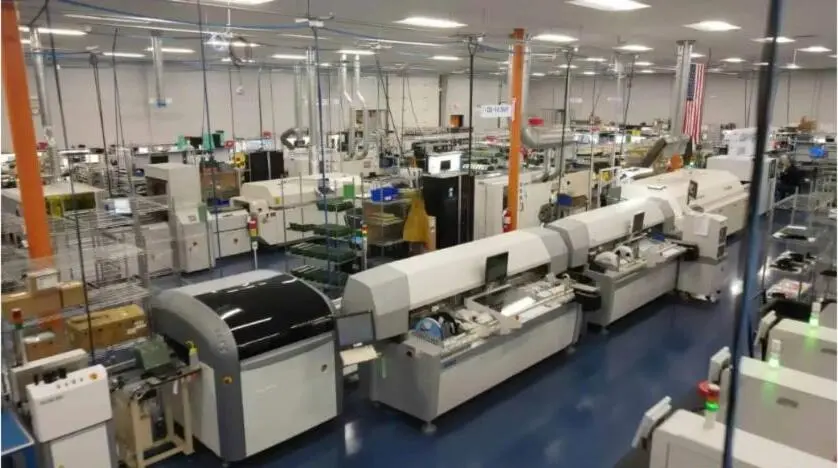
Pro-Active Engineering operates this integrated model from a single facility in Sun Prairie, Wisconsin, with a workforce of electronics professionals. The company provides one partner, unified quality controls and a single point of contact for the entire build.
Preventing Late-Stage Manufacturability Problems
Manufacturability problems discovered during or after assembly rank among the most expensive failures in a defense program. Redesigns, scrapped assemblies and schedule delays compound quickly when engineering and manufacturing sit in separate organizations.
The root cause is structural, because many teams treat design as a discrete phase that ends before manufacturing begins. Without manufacturing input during layout, boards arrive at assembly with stackup choices, component placements or pad geometries that create production risk.
Design for manufacturability, built into the first layout review, closes this gap. Pro-Active Engineering keeps engineering and manufacturing within a single workflow so that sourcing insight, quality planning and process constraints inform the design before fabrication. Programs reach assembly with fewer surprises, cleaner builds and a smoother path to production.

Aligning Quick Turn Prototypes With Production Reality
Prototypes that pass validation but fail in production create program risk instead of progress. This disconnect appears when prototypes run on a separate line with different equipment, different processes or different workmanship standards than the production floor.
Many contract manufacturers maintain a fast-turn prototype capability that remains structurally isolated from their production environment. The prototype validates the design but not the manufacturing process, so new failure modes emerge when volume production begins.
Pro-Active Engineering addresses this risk through its Speed Shop, which builds prototypes using the same SMT and through-hole processes, the same automated optical inspection and the same quality controls as full production runs. What works in the Speed Shop scales directly to volume manufacturing, so the transition becomes a change in quantity instead of a change in process.
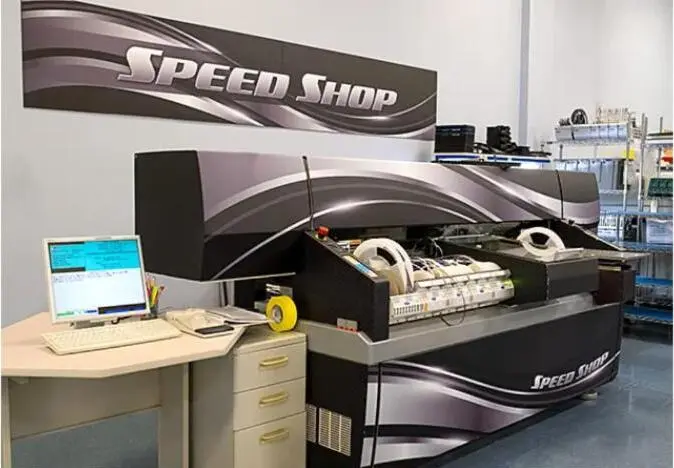
Defense and aerospace programs that need fast, production-ready prototypes can engage the Speed Shop with a minimum order quantity of one unit. Start a prototype build.
Closing Compliance and Traceability Gaps
Regulated programs depend on complete documentation, including material certifications, process records, inspection results, test data and chain-of-custody records for every assembly. Gaps in this documentation create audit exposure and can disqualify hardware from fielding.
Traceability gaps appear most often in fragmented supply chains where each vendor maintains records in a different format. Assembling a complete quality record from multiple suppliers becomes slow, error-prone and often incomplete.
A certified, controlled manufacturing environment produces unified documentation through an integrated quality management system. Pro-Active Engineering’s ISO 9001:2015 and AS9100 certified QMS, combined with Nadcap accreditation and JCP certification, generates full traceability records across every stage of production. ITAR-controlled technical data is handled under documented access controls and personnel training practices aligned with DDTC requirements.
Managing Supply-Chain and Geographic Risk
The manufacturing model selected for a program shapes risk far beyond unit cost. Offshore brokers introduce IP exposure, counterfeit component risk and logistics variability that conflict with ITAR-controlled work. Large EMS providers focus on high-volume programs and often limit engineering engagement for lower-volume, high-complexity defense builds.
Design-only firms deliver layouts without production ownership, which leaves the manufacturing transition unmanaged. Local job shops may offer geographic proximity but often lack automation, Class 3 workmanship capability and the certification infrastructure that regulated programs require.
Pro-Active Engineering occupies a distinct position as a domestic, engineering-led manufacturer with the certifications, automation and advanced interconnect capabilities needed for high-complexity, variable-volume defense and aerospace programs. Counterfeit avoidance follows SAE AS5553B methodology. BOM scrubbing and lifecycle risk management run through SiliconExpert. All production occurs on U.S. soil under an accountable, integrated quality framework.

Frequently Asked Questions
How fast can Pro-Active Engineering turn around a prototype for a defense program?
Pro-Active Engineering’s Speed Shop is a dedicated fast-turn prototyping line that delivers assemblies on compressed timelines. Prototypes run on production-grade processes and inspection standards, so speed does not reduce quality or compliance. Programs with urgent schedules can engage the Speed Shop with a minimum order of one unit.
Does ITAR registration cover the entire manufacturing workflow, including design and testing?
ITAR registration applies to the organization and its handling of defense-related technical data and hardware across all activities. At Pro-Active Engineering, ITAR compliance extends across the integrated workflow for design, prototyping, assembly, testing and system integration. Documented access controls, personnel training records and data-handling procedures align with DDTC requirements, so programs avoid segmenting work across multiple vendors for compliance reasons.
Can Pro-Active Engineering scale from prototype to production without a vendor transition?
Scaling from prototype to production at Pro-Active Engineering requires no vendor change. The Speed Shop and the production floor share common processes, equipment standards and an integrated quality system. When a prototype is validated, the same team, documentation and quality controls carry the program into volume manufacturing, which removes the re-qualification risk that accompanies a supplier transition.
What makes an integrated partner more cost-effective than a multi-vendor approach for regulated programs?
Multi-vendor models accumulate hidden costs through coordination overhead, duplicate documentation, rework from late-stage DFM discoveries and the time required to assemble a complete quality record from multiple suppliers. An integrated partner reduces these costs by maintaining a single workflow, unified quality controls and one point of accountability. Over the life of a program, reduced rework, fewer delays and lower compliance risk often offset any per-unit price difference.
Does Pro-Active Engineering serve defense and aerospace customers outside the Upper Midwest?
Pro-Active Engineering serves defense and aerospace customers nationwide. The Sun Prairie, Wisconsin facility supports programs across the country, and logistics processes handle complex, multi-location distribution requirements. Geographic distance from the facility does not limit access to the integrated engineering and manufacturing workflow.
Decision Checklist for Selecting an ITAR-Compliant PCB Partner
Engineering and program managers evaluating a quick turn ITAR compliant PCB assembly partner confirm the following points before committing to a supplier.
- ITAR registration is current and documented with DDTC
- AS9100 and ISO 9001:2015 certifications are active
- JCP certification (DD Form 2345) is in place for militarily critical technical data
- Nadcap accreditation covers applicable special processes
- IPC-A-610 Class 3 workmanship capability is confirmed
- J-STD-001 soldering standards are enforced on the production floor
- NIST 800-171 alignment and CMMC readiness are documented
- DFM is integrated into the design phase, not applied after layout is complete
- Prototypes are built using processes that match production standards
- Full traceability documentation is generated within a consolidated documentation workflow
- Counterfeit avoidance methodology follows SAE AS5553B
- All manufacturing occurs on U.S. soil under an accountable, integrated workflow
- Advanced interconnect and thermal management capabilities are available in-house
Pro-Active Engineering meets every criterion on this list. With experience, an integrated facility and a workforce of electronics professionals, the company delivers engineering-led, ITAR-compliant PCB assembly from prototype through production under one roof. Connect with the Pro-Active Engineering team.