
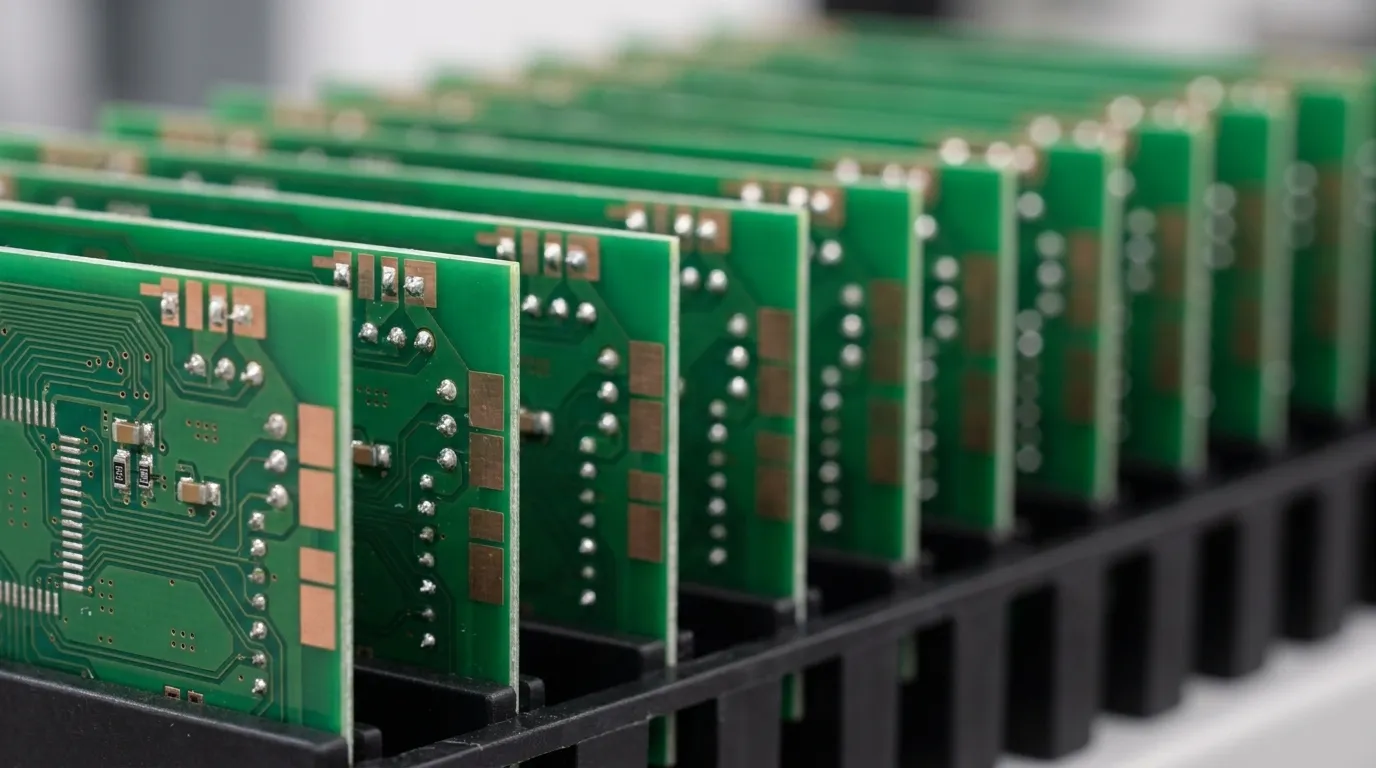
Key Takeaways on Forming Gas for Silver Sintering
-
Forming gas, a blend of nitrogen and hydrogen, supports reliable silver sintering on copper by preventing oxidation and reducing surface oxides.
-
The hydrogen fraction reduces metal oxides to their metallic state, and the nitrogen fraction displaces oxygen and maintains positive chamber pressure.
-
Compared with pure nitrogen, formic acid or vacuum, forming gas delivers a practical balance of reducing strength, safety and cost for copper-based power electronics.
-
Consistent sintering quality depends on coordinated control of temperature, dwell time, gas flow and purge sequencing, supported by oxygen monitoring and safety interlocks.
-
Pro-Active Engineering applies more than 30 years of silver sintering and thermal management experience for defense and aerospace assemblies.
Why Forming Gas Matters for Silver Sintering on Copper
Silver sintering is a preferred die-attach method for high-power, high-reliability applications such as SiC and GaN devices. It delivers strong joints with high thermal and electrical conductivity and stable performance at elevated operating temperatures. Porosity can reduce conductivity, so process control remains central to performance.
The core challenge in silver sintering is surface cleanliness. Silver particles must contact clean, oxide-free surfaces to form strong, low-void joints. The sintering atmosphere is the main tool for creating that condition. Most metal powders carry a thin oxide film that blocks bonding, and a hydrogen-bearing atmosphere removes that film chemically. Atmosphere selection carries similar weight to paste chemistry and pressure profile.
Pro-Active Engineering supports process development and production for silver sintering on copper substrates and other advanced thermal structures.
The Science Behind Forming Gas in Silver Sintering
Forming gas delivers two functions at once. Nitrogen acts as an inert carrier gas, displacing oxygen from the chamber and maintaining positive pressure to block air ingress. Hydrogen acts as a reducing agent that reacts with metal oxides and restores them to their metallic state.
The reduction reaction is simple. Hydrogen reacts with oxygen to form water vapor. It also reduces metal oxides, including copper oxide and silver oxide, back to base metals. Forming gas also removes surface hydrocarbon contamination and reduces Ag₂O to metallic silver, which improves surface quality and bondability.
This reducing action is especially important on copper substrates. Copper oxidizes readily at sintering temperatures. Hydrogen reacts with metal oxides to form water vapor and supports low residual oxygen levels that nitrogen-only atmospheres rarely reach without additional gettering chemistry.
Nitrogen supplies the inert cover that limits new oxidation, and hydrogen supplies the reducing action that removes existing oxides. That combination makes forming gas effective for copper where nitrogen alone has limited impact. Forming gas supports both pressureless and pressure-assisted sintering, depending on equipment and design targets.
Comparing Forming Gas With Other Sintering Atmospheres
Atmosphere selection depends on substrate metallization, paste chemistry, process temperature and available equipment. Each atmosphere presents tradeoffs in reducing strength, residue behavior, safety profile and cost.
Pure Nitrogen serves as an inert cover gas that prevents oxidation by displacing oxygen. Nitrogen is cost-effective when inert protection is sufficient, but it lacks the chemical reducing power of hydrogen-bearing atmospheres. That profile suits noble metal surfaces such as gold or silver metallization and does not suit bare copper, where existing oxides must be reduced before bonding.
Formic Acid acts as a mild reducing agent at lower temperatures and leaves minimal residues. Published work focuses mainly on metallic nanoparticles rather than broad industrial silver-sintering use. It requires specialized handling and equipment, and its role in standard copper-substrate sintering remains narrower than forming gas.
Vacuum removes oxygen from the chamber but does not actively reduce existing oxides. Vacuum furnaces can reach lower oxygen levels than hydrogen furnaces but at higher capital and operating cost. Vacuum suits processes that demand ultra-clean conditions and support the higher investment, while hydrogen-based atmospheres still provide the chemical reduction.
Forming Gas offers a practical balance for copper-based substrates. Standard forming gas concentrations sit at the lower flammability limit in air, which improves safety compared with pure hydrogen while delivering adequate reducing power for most power electronics die-attach processes.
A simple guideline helps selection. Noble metal substrates with compatible paste chemistries often run successfully in nitrogen. Copper substrates or processes that require active oxide removal benefit from forming gas.
Key Process Parameters for Forming Gas Sintering
Forming gas sintering performance depends on coordinated control of temperature, dwell time, gas flow and purge sequencing. These parameters interact, so changes in one setting affect the others.
Temperature drives densification and oxide reduction. Temperature strongly influences porosity and joint quality, and higher temperatures within the process window produce denser, stronger bonds. Silver sintering typically runs in a moderate temperature range set by paste formulation and substrate limits.
Dwell Time must support organic burnout and full densification. Pressureless sintering often uses extended holds at peak temperature, while pressure-assisted sintering can reach similar density with shorter dwell times and higher applied pressure.
Gas Flow Rate must maintain positive chamber pressure and continuously purge oxygen and volatile organics. Safety guidance calls for verification of inert purge completion before hydrogen introduction.
Purge Sequencing protects both safety and quality. The chamber is purged with nitrogen before heating to remove oxygen, then transitioned to forming gas once oxygen levels meet specification. Practical process optimization includes:
-
Monitoring oxygen levels continuously throughout the cycle
-
Running a nitrogen pre-purge before switching to forming gas
-
Designing for uniform gas distribution across the chamber
-
Using a two-stage heating profile with a pre-cure step for solvent burnout followed by the sintering soak
-
Holding dew point low enough to prevent re-oxidation during cooling
Pro-Active Engineering integrates these controls into thermal management solutions that support reliable, high-performance assemblies for defense and aerospace programs.
Safety Practices for Forming Gas in Production
Forming gas contains hydrogen, which is flammable and forms explosive mixtures with air. Robust safety practices are essential in any production environment that uses hydrogen-bearing atmospheres.
Hydrogen has a lower explosion limit of 4 percent by volume in air and an upper limit of 74 percent. Standard forming gas mixtures sit at the lower flammability limit, so air ingress in a poorly ventilated area can create a flammable mixture. Effective safety programs apply multiple layers of protection:
-
Ventilation: Adequate ventilation prevents hydrogen buildup and limits combustible mixtures. Hydrogen rises and accumulates near ceilings, so ventilation design must address that behavior.
-
Leak Detection: Hydrogen sensors at ceiling level and near furnace enclosures provide early warning. Industry guidance calls for alarms at 10 percent LEL and automatic shutoff at 25 percent LEL.
-
Purge Interlocks: Hardwired interlocks verify inert purge completion before hydrogen flow and provide a dedicated layer of protection.
-
Excess Flow Valves and Flame Arrestors: These devices on hydrogen supply lines limit leak rates and block flame propagation.
-
Emergency Shutdown: Events such as power loss, thermocouple failure or leak alarms trigger hydrogen valve closure and inert gas purge.
Cylinder storage standards call for secured upright cylinders in well-ventilated areas away from heat, oxidizers and ignition sources. Pro-Active Engineering operates under ISO 9001:2015, AS9100, ITAR, JCP and Nadcap certifications, with NIST 800-171 alignment and CMMC readiness, so safety and quality are built into every process.
Engineering teams can engage Pro-Active Engineering to review forming gas handling, furnace configuration and facility safeguards as part of a broader sintering strategy.
Solving Common Silver Sintering Defects
Atmosphere conditions often drive the most common silver sintering defects. Effective troubleshooting starts with confirming atmosphere performance before changing other parameters.
Voiding appears as internal pores or voids in the sintered joint. Contributing factors include low pressure in pressure-assisted processes, trapped gas from incomplete organic burnout and inconsistent paste application. Corrective actions include refining the pressure profile, extending pre-cure time for solvent evaporation and confirming that forming gas flow supports removal of volatiles during burnout.
Oxidation and Discoloration signal that the atmosphere did not maintain a reducing environment. Potential causes include low forming gas flow, chamber leaks, short purge cycles and moisture contamination. Corrective steps include checking flow rates and purge completeness, verifying chamber seals, monitoring oxygen levels and controlling dew point during cooling.
Poor Adhesion often results from incomplete oxide reduction or surface contamination. Contributing causes include inadequate substrate cleaning, low hydrogen concentration and weak surface preparation. Corrective actions include verifying substrate cleanliness, confirming that the atmosphere actively reduces oxides and setting hydrogen content high enough to remove existing oxides. A purely inert nitrogen atmosphere cannot address adhesion failures driven by surface oxides.
Why Pro-Active Engineering Leads in Sintering and Thermal Management
Pro-Active Engineering brings more than three decades of experience in advanced thermal management and high-reliability PCB assembly. The Sun Prairie, Wisconsin facility serves defense, aerospace and industrial programs from design through production.
Core capabilities include silver sintering, direct thermal path technology, advanced metal-core constructions, heavy copper integration and integrated dielectric structures. These technologies reduce thermal resistance and extend product life in high-power applications. An integrated design-to-production workflow builds DFM into early design reviews, supports rapid prototyping through the dedicated Speed Shop and scales into production without process handoffs.
Certifications include ISO 9001:2015, AS9100, ITAR registration, JCP certification and Nadcap accreditation, with NIST 800-171 alignment and CMMC readiness. Engineering teams working on power electronics packaging, die-attach or sintering programs gain a partner with proven production experience.
Discuss upcoming sintering or thermal management projects with the Pro-Active Engineering team to align atmosphere strategy, materials and manufacturing under one roof.
Frequently Asked Questions
What Is the Purpose of Sintering in Power Electronics?
Sintering creates a solid bond between materials, such as a semiconductor die and a substrate, through heat and sometimes pressure without melting the materials. In power electronics, silver sintering forms a conductive, thermally stable joint that outperforms traditional solder in many high-temperature SiC and GaN applications. Sintered silver joints support higher operating temperatures, conduct heat efficiently and maintain mechanical integrity over long service cycles, which suits mission-critical power modules, while sintered copper can provide higher reliability in some designs.
What Are the Disadvantages of Silver Sintering?
Silver sintering demands tight process control, including atmosphere management, to prevent oxidation and achieve low-void bonds. It typically runs at temperatures around 200–300°C, similar to or below conventional soldering, and pressure-assisted variants may require specialized equipment. Silver brazing paste, often 45–56 percent silver, costs more than standard SAC305 solder paste, and its flux must remove oxides from contaminated or oxidized surfaces to support wetting and joint formation. These factors place process engineering and atmosphere control at the center of consistent, high-yield production.
Can Silver Sintering Be Done Without Forming Gas?
Silver sintering can run without forming gas in specific cases. Pure nitrogen prevents new oxidation but does not reduce existing oxides, so it suits noble metal surfaces such as gold or silver metallization. Formic acid supplies reducing power at lower temperatures but is documented mainly for nanoparticle applications and can leave residues that require specialized handling. Vacuum removes oxygen but does not actively reduce oxides and involves higher equipment cost. For copper-based substrates common in power electronics, forming gas usually provides the most practical combination of reduction strength, safety and cost.
What Is the Difference Between Forming Gas and Nitrogen for Sintering?
Nitrogen is an inert gas that prevents oxidation by displacing oxygen but cannot remove existing oxides from substrate or paste surfaces. Forming gas adds hydrogen to the nitrogen carrier, and that hydrogen actively reduces metal oxides back to their metallic state. This distinction matters for copper substrates, which oxidize readily at sintering temperatures. Nitrogen often suffices for noble metal surfaces, while forming gas supports applications that require active oxide reduction and low void content.
Is Forming Gas Safe To Use in a Manufacturing Environment?
Forming gas can be used safely when facilities follow established hydrogen safety practices. Standard hydrogen concentration sits at the lower flammability limit in air, which supports its role as an industry standard. This concentration provides adequate reducing power while limiting explosion risk compared with higher hydrogen levels. Key safeguards include adequate ventilation, ceiling-mounted hydrogen leak detection, hardwired inert purge interlocks, excess flow valves and emergency shutdown systems. Facilities should comply with NFPA 86 and OSHA standards for hydrogen atmosphere furnaces. With layered engineering controls and disciplined procedures, forming gas supports safe, repeatable production.