
Key Takeaways for Silver Sintering in Medical Devices
- Silver sintering creates dense, lead-free conductive joints at temperatures far below conventional solder reflow, which protects heat-sensitive substrates such as PET and polyimide.
- The process delivers strong thermal cycling reliability and mechanical strength compared with solder, which reduces fatigue failure risk in long-service implantable and wearable devices.
- Biocompatibility and silver-ion release require characterization under ISO 10993, with risk-based evaluation for Class II and III devices that contact the body.
- Regulatory compliance for medical electronics depends on integrated traceability, DFM from the first design phase, and documentation that spans prototype through production.
- Pro-Active Engineering serves as a single domestic partner for DFM, rapid prototyping and scalable production of silver-sintered medical assemblies. Request a quote to start a program.
Silver Sintering in Electrodes and Implantable Electronics
Medical electrodes require interconnects that maintain stable electrical performance through repeated flexing and biological exposure. Recent work on printed bioelectronics identifies silver nanoparticle inks as the dominant choice for conductive traces and reference electrodes in wearable and implantable sensing platforms. These inks provide high conductivity and support low-temperature curing on flexible substrates.
Implantable electronics operate in a more demanding environment. Joints must survive long service cycles inside the body, resist corrosion and remain mechanically stable under physiological loading. Silver sintering produces a predominantly metallic joint structure that resists the fatigue mechanisms that degrade conventional solder over time.
Biosensors introduce an additional constraint related to thermal sensitivity. Flexible substrates such as PET and polyimide often exhibit glass-transition temperatures that limit processing temperatures. Enzymes or antibodies integrated into biosensor architectures can also denature at elevated temperatures. Low-temperature silver sintering formulations address both substrate and biological constraints at the same time.
Temperature and Process Constraints for Heat-Sensitive Substrates
These thermal constraints drive selection of specific silver sintering processes. Silver sintering spans a wide processing range based on paste formulation, particle geometry and the presence or absence of applied pressure. Silver nanoparticle inks for printed bioelectronics can sinter at temperatures well below those required for conventional solder reflow. Some reactive metal-organic decomposition formulations form metallic silver films at or near room temperature on substrates such as PET and polyimide.
Pressureless sintering processes, which remove the need for applied mechanical force during bonding, suit fragile medical substrates. Pressureless silver sintering in convection ovens under air or nitrogen atmospheres has been demonstrated for miniaturized optoelectronic components. Cycle times and atmospheres are selected to match substrate and component tolerances.
Process selection for medical applications requires alignment of paste chemistry, peak temperature, atmosphere and cycle time with the specific substrate, metallization and device class. This decision belongs in the design phase, not as a late production adjustment. Early DFM integration keeps medical programs on a compliant and manufacturable path.
Biocompatibility and Silver-Ion Release in Medical Devices
Silver’s antimicrobial properties support infection control, and those same properties require careful evaluation in implantable or skin-contact devices. Silver ions released from a sintered joint or silver-based coating interact with biological tissue. The rate and duration of that release must be characterized and controlled.
A 2026 study on silver and hydroxyapatite nanocoatings applied to titanium dental implants found that sustained silver-ion release supported antimicrobial activity without compromising biocompatibility with human gingival fibroblasts. The study reported normal cell morphology, intact membranes and healthy metabolic activity throughout testing. Coating stability was tested in ultrapure water, Modified Krebs solution and artificial saliva, with electrolytes remaining within physiological ranges.
This body of evidence supports a consistent principle for device engineers. Silver-ion release requires characterization in the context of joint architecture, exposed surface area and biological contact duration. ISO 10993 governs biological evaluation of devices that contact the human body and requires risk-based assessment of material composition, manufacturing processes and contact duration. The standard covers cytotoxicity, sensitization, irritation and chemical extractables and leachables testing. Sintered silver interconnects in Class II or III devices require this evaluation as part of the regulatory submission package.
Performance Advantages of Silver Sintering Versus Solder
Conventional solder alloys present two structural limitations in medical electronics. Solder joints are susceptible to fatigue cracking under repeated thermal cycling, which creates concern for implantable devices that must perform over many years. Lead-containing solders also conflict with RoHS and FDA material expectations for modern medical devices, and lead-free solder alternatives introduce separate processing and reliability tradeoffs.
Silver sintering addresses both limitations. Beyond the low-temperature processing advantage discussed earlier, silver-sintered joints offer substantially higher thermal conductivity than conventional die-attach solder alloys and demonstrate strong thermal cycling reliability. These joints resist fatigue and cracking mechanisms that degrade solder under repeated temperature excursions. Pressureless-sintered silver joints from submicron flake paste achieve high shear strength and low porosity at moderate processing temperatures. The resulting dense metallic structure maintains mechanical integrity over long service cycles.

For medical devices where joint failure carries unacceptable risk, the structural characteristics of sintered silver provide a meaningful reliability advantage over solder.
Regulatory and Traceability Requirements for FDA Device Classes
Adoption of silver sintering as an interconnect process in a Class II or III medical device functions as a manufacturing process change with regulatory implications from the earliest design stage.
Class II devices require 510(k) premarket notification, including device description, biocompatibility data under ISO 10993, risk analysis under ISO 14971 and performance testing data. Material selection and interconnect process choices must align with these documentation elements. The FDA’s Quality Management System Regulation, effective February 2, 2026, aligns with ISO 13485:2016 and requires design controls, production and process controls, document and record control and CAPA systems for finished device manufacturers except those exempt from CGMP requirements.
ISO 13485 requires organizations to define and document the extent of traceability for medical devices, including PCBAs, in accordance with applicable regulatory requirements and risk assessment. For implantable devices, clause 7.5.9.2 expands this baseline requirement to include additional component and material records. These records must be retained for durations that typically exceed the device’s service life and must remain available for regulatory audits.
Class III devices often require the most stringent traceability standard, with traceability at the device level rather than the batch level. Correct operation is critical to sustaining a patient’s life, so manufacturers commonly link every component to a specific device serial number. A manufacturing partner that operates with integrated documentation systems, controlled process records and serial-level traceability from prototype through production closes a major compliance gap for Class III programs.
Medical Use Cases and Process Priorities for Silver Sintering
Silver sintering supports a broad set of medical device categories, each with distinct requirements. Common applications include wearable ECG and EEG electrodes, implantable biosensors, stimulation electrodes, wearable sensors, implantable power and signal electronics and epidermal monitoring devices.
These applications benefit from low-impedance conductive traces, lead-free biocompatible interconnects and joints with strong electrical and thermal conductivity. Many designs also require stretchable conductive traces that tolerate repeated flexing without loss of performance.
Process priorities depend on the specific device. Key considerations include substrate thermal budget, curing atmosphere, flexible substrate adhesion and ISO 10993 biocompatibility evaluation. Programs also address silver-ion release characterization, hermetic packaging compatibility and metallization compatibility.
Additional factors include pressureless process selection for fragile substrates, ink or paste formulation selection, substrate glass-transition temperature and curing method. Engineers also evaluate die metallization requirements, process temperature compatibility with adjacent components, paste formulation for stretchability, substrate and adhesive compatibility and wash durability when relevant.
Selecting a U.S. Manufacturing Partner for Silver-Sintered Assemblies
Medical device programs benefit from a manufacturing partner that treats compliance as a workflow property rather than a periodic audit exercise. Several criteria distinguish capable partners from general-purpose contract manufacturers when silver sintering forms part of the interconnect strategy.
DFM integration from the first design phase supports reliable outcomes. Process decisions about paste chemistry, substrate metallization, curing atmosphere and cycle parameters must occur during design, not after first articles fail. A partner whose engineering and manufacturing teams operate within a single workflow can identify and resolve these issues before they become production problems.
Prototype-to-production continuity also matters for regulatory programs. When processes, materials and documentation systems used in prototyping carry forward into production, validation data generated during development remains applicable. Partners that run prototypes on separate lines or with different processes create a compliance gap that requires additional validation work before production transfer.
Domestic manufacturing with full traceability reduces supply chain risk and simplifies regulatory documentation. ISO 13485 requires a risk-based approach to supplier selection, evaluation and control under clause 7.4, plus risk management throughout the QMS. The standard does not mandate integration with ISO 14971, require PFMEA or restrict procurement to original manufacturers and authorized distributors. A domestic partner with controlled sourcing practices and integrated documentation systems supports these requirements while reducing the number of vendor relationships that the OEM must manage.
Pro-Active Engineering operates as that single accountable domestic partner. From initial PCB design and DFM through rapid prototyping, advanced interconnect assembly and scalable production, all work occurs under one roof in Sun Prairie, Wisconsin. Certifications including ISO 9001:2015, AS9100, ITAR registration and Nadcap accreditation reflect the quality management infrastructure that medical programs require. Pro-Active’s Speed Shop delivers production-ready prototypes using the same processes as full-scale builds, so validation data transfers cleanly to production.
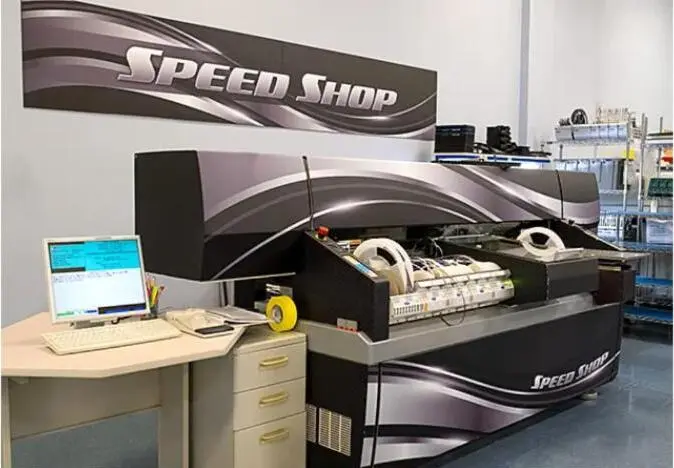
Connect with Pro-Active’s engineering team to discuss silver sintering process selection, substrate compatibility and traceability requirements for a current or upcoming medical program.
Frequently Asked Questions
Is silver sintering appropriate for Class III implantable devices?
Silver sintering applies across device classes, including Class III implantables, when the process is validated and documented. Class III devices carry more stringent requirements, including device-level traceability, comprehensive biocompatibility evaluation under ISO 10993 and full design and process controls under the FDA’s Quality Management System Regulation. The interconnect process itself does not determine device class eligibility. What matters is a characterized and validated process supported by complete documentation from design through production. A manufacturing partner with integrated engineering, controlled processes and serial-level traceability from prototype through production supports Class III programs effectively.
How does silver-ion release from sintered joints affect biocompatibility evaluation?
Silver-ion release functions as a material property that requires characterization as part of the ISO 10993 biological evaluation for any device that contacts the human body. The evaluation covers cytotoxicity, sensitization, irritation and chemical extractables and leachables, with scope determined by contact type and duration. For sintered silver interconnects, relevant factors include joint surface area exposed to biological tissue or fluids, paste chemistry and resulting joint microstructure and intended service life. This evaluation belongs in the design phase. Early engagement with a manufacturing partner that provides DFM support allows process parameters to align with biocompatibility documentation requirements.
Can silver sintering support flexible or polymer substrates used in wearable biosensors?
Silver sintering supports flexible and polymer substrates common in wearable biosensors. Low-temperature silver sintering formulations, including nanoparticle inks and reactive metal-organic decomposition chemistries, are developed for substrates that cannot tolerate conventional solder reflow temperatures. These formulations are compatible with PET and polyimide and have been demonstrated in wearable ECG electrodes, impedance-based hydration sensors and printed interdigitated electrode architectures. Process selection requires alignment of paste chemistry, curing temperature and atmosphere with the substrate’s thermal budget and the device’s mechanical requirements. DFM review at the design stage provides the right point for these decisions.
What traceability documentation should a manufacturing partner provide for medical PCBA programs?
ISO 13485 requires production records that link component lot numbers, date codes and supplier information to individual PCBA serial numbers. This linkage enables forward and backward traceability throughout the supply chain. For Class III devices, traceability typically occurs at the device level rather than the batch level. Production records must be retained for durations that usually exceed the device’s service life and must remain available for regulatory audits. A capable manufacturing partner maintains integrated documentation systems that capture this information as a natural output of the production workflow, including process records for thermal profiles, incoming quality control and material sourcing. These records support 510(k) submissions, design history files and post-market surveillance requirements.
Does Pro-Active Engineering handle both prototyping and full production for medical programs?
Pro-Active Engineering manages the complete program lifecycle from initial PCB design and DFM through rapid prototyping and scalable production. The Speed Shop delivers production-ready prototypes using the same processes, materials and documentation systems as full-scale builds. This continuity is particularly important for medical programs because validation data generated during prototyping remains applicable when production begins. Programs that start with a single prototype can scale to volume production without changes to partners, processes or documentation systems.
How does Pro-Active Engineering support lead-free compliance for medical interconnects?
Pro-Active Engineering operates segregated RoHS-compliant production lines and applies IPC-A-610 Class 3 workmanship standards to high-reliability assemblies. Silver sintering is inherently lead-free and removes material compliance concerns associated with legacy tin-lead solder. For medical programs, lead-free compliance functions as a baseline requirement. The manufacturing partner’s quality management system must document material sourcing, process controls and inspection results in a way that supports regulatory submissions. Pro-Active’s integrated quality infrastructure, including ISO 9001:2015 certification and Nadcap accreditation, provides the documented process control framework that medical OEMs use to demonstrate compliance throughout the device lifecycle.
Conclusion: Advancing Medical Assemblies from Prototype to Production
Silver sintering enables reliable, lead-free interconnects for medical electrodes, implants and biosensors where conventional solder falls short on reliability, biocompatibility and regulatory alignment. The process requires deliberate design decisions about paste chemistry, substrate compatibility and documentation strategy. These decisions belong in the design phase rather than the production phase.
Pro-Active Engineering integrates engineering, advanced interconnect capabilities and compliant manufacturing under one domestic roof. Medical programs gain DFM support in the design phase, production-ready prototypes from the Speed Shop and a single accountable partner that carries validated assemblies into scalable production with full traceability.
Request a design review to connect with Pro-Active Engineering’s engineering team and begin evaluating silver sintering process options for a current or upcoming medical device program.