

Last updated: August 14, 2026
Key Takeaways for Flex and Rigid-Flex Prototypes
- Quick-turn flexible PCB prototyping uses production-grade processes, materials and quality controls to deliver functional prototypes in days, not weeks.
- Domestic U.S. manufacturing partners reduce supply-chain risk, geopolitical exposure and compliance gaps for defense, aerospace and medical programs.
- Engineering integration, including early DFM review, IPC-2223 familiarity and stackup co-development, prevents late manufacturability issues and costly rework.
- Prototypes built on dedicated fast-turn lines with the same SMT, AOI and assembly processes as production transfer cleanly to volume manufacturing.
- Pro-Active Engineering combines ITAR registration, AS9100 and ISO 13485 certifications and integrated engineering services to deliver compliant, production-ready flex and rigid-flex prototypes. Request a quote to start a program.
Quick-Turn Flexible PCB Prototyping Defined
Quick-turn flexible PCB prototyping is accelerated fabrication and assembly of flexible or rigid-flex printed circuit boards using production-grade processes, materials and quality controls. The objective is to deliver functional, production-representative prototypes in days rather than weeks.
Lead times vary by construction complexity because each added layer or transition introduces more process steps. Simple single- or double-sided flex designs with clean design files and commonly stocked polyimide substrates achieve the shortest turnarounds at capable domestic manufacturers. Multilayer flex designs add lamination cycles and impedance control requirements, which extend fabrication windows beyond simple constructions. Rigid-flex constructions combine flexible and rigid sections in a single assembly, require the most process steps and carry the longest lead times among standard prototype categories. Design file errors, material staging and queue time extend real-world lead times beyond theoretical minimums.
Pro-Active Engineering’s Speed Shop delivers production-ready flex and rigid-flex prototypes with short turnarounds for qualifying designs. The team uses the same processes, equipment and quality controls applied to full production runs.
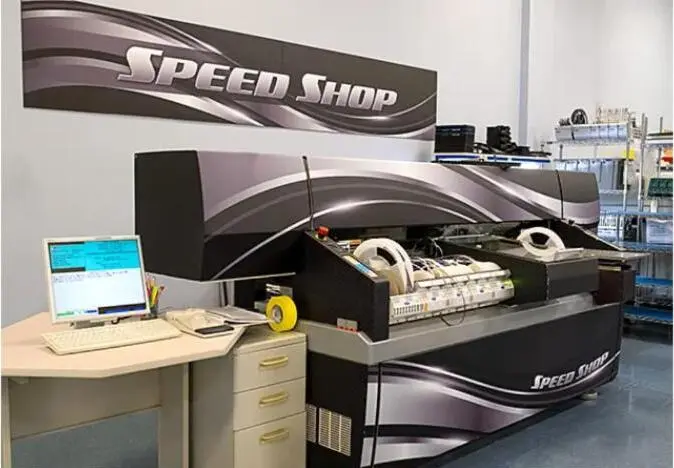
Request a design review or quote to assess Speed Shop eligibility for a specific flex or rigid-flex design.
Industry Shift to Integrated U.S. EMS Providers
Defense, aerospace and medical programs face mounting pressure to consolidate supply chains and reduce offshore exposure. Geopolitical disruptions have extended raw material lead times and driven PCB price increases across global markets in 2026. Port congestion and customs holds are adding weeks to material shipments for flex PCBs sourced offshore.

Section 301 tariffs on Chinese-origin PCBs impose a significant total tariff burden on complex boards including flex and rigid-flex, compressing apparent factory-gate savings for offshore sourcing. For prototype and quick-turn work, domestic facilities often provide a better fit once logistics friction, rework risk and inventory carrying costs enter the total cost model.
ITAR-controlled programs add another layer of complexity. Offshore sourcing introduces export-control risk that domestic, ITAR-registered manufacturers eliminate by design. Regulated programs increasingly require a single accountable onshore partner rather than a fragmented network of domestic and international vendors. Identifying that partner requires evaluation of capabilities across multiple dimensions, starting with engineering depth.
Engineering Depth as a Flex Partner Differentiator
Engineering integration separates capable flex PCB partners from commodity fabricators. Prospective partners should meet the following criteria.

- DFM review conducted before fabrication begins, not after design files are submitted
- Familiarity with IPC-2223 design standards for flexible and rigid-flex printed boards
- Ability to co-develop stackups, impedance targets, bend requirements and reliability test criteria with the design team
- Advanced interconnect capabilities including wire bonding, flip chip assembly and high-density hybrid assemblies
- Thermal management solutions for high-power and high-current applications
- Embedded control design, firmware development and test fixture design under one roof
Early fabricator engagement to co-develop stackups and bend requirements is a best practice for high-reliability flex and rigid-flex designs. Partners who engage at the design phase catch manufacturability issues before they become schedule risks.
Prototyping Capabilities that Prove Production Readiness
A quick-turn claim has value only when the prototype validates production readiness, not just form and function. Prototypes built on separate low-volume lines with different materials or assembly methods fail to confirm production performance.
Effective partners operate a dedicated fast-turn line with a minimum order quantity of one piece, apply automated optical inspection to every prototype build and use the same SMT and through-hole processes as volume production. Design file quality directly controls prototype lead time, and missing bend radius callouts, vias in flex bend zones and undefined layer stackups are common causes of DRC rejections and revision cycles. A partner with integrated engineering review catches these issues before fabrication begins.
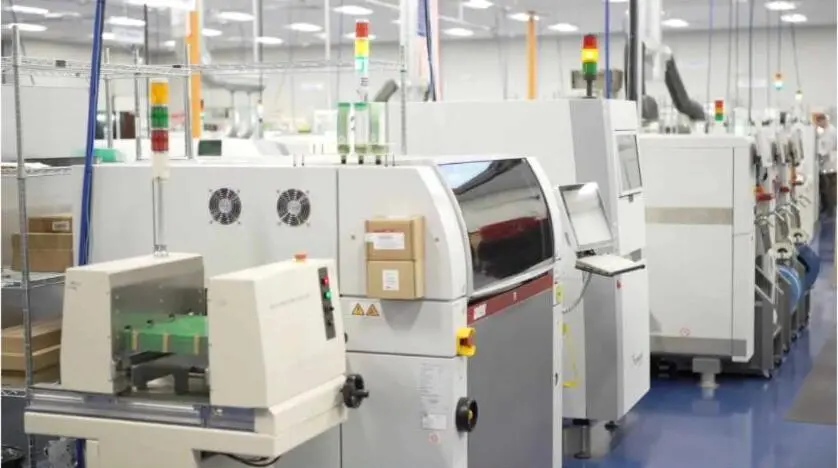
Pro-Active’s Speed Shop operates as a dedicated fast-turn line with one-piece MOQ capability, full AOI and production-equivalent processes. Prototypes built through the Speed Shop transfer to volume production without process requalification.
Manufacturing Scope and Compliance for Regulated Flex Programs
Flex and rigid-flex programs in regulated industries require broad manufacturing scope and a strong quality and compliance posture. Evaluation should cover both dimensions.
Manufacturing scope should include surface mount and through-hole assembly, flying probe and functional testing, conformal coating and potting and box build and system integration. A partner who covers this scope removes handoffs between vendors and the quality gaps those handoffs create.
Certification requirements for defense, aerospace and medical programs are well established. Aerospace and defense rigid-flex PCB prototypes must align with IPC-6013 qualification and performance specifications, typically at Class 3, and require AS9100 quality management system certification and ITAR/EAR export control compliance. Medical flex PCB manufacturing requires ISO 13485 quality management, full lot traceability from raw materials through operator records and qualification per IPC-6013.
Pro-Active Engineering holds ISO 9001:2015, AS9100, ITAR registration, JCP certification and Nadcap accreditation. The quality system follows IPC-A-610 Class 2 and Class 3 workmanship standards, J-STD-001 soldering standards and NIST 800-171 alignment with CMMC readiness.
Supply-Chain Resilience and Scaling from Prototype to Production
Supply chain risk must be addressed from day one, and multi-vendor component selection, prequalified alternate laminate systems and continuous BOM risk review form the foundation. Polyimide film production is dominated by China, with 60 to 70 percent of global capacity, and major suppliers also operate in South Korea and Japan. Supply is tightening as EV and aerospace demand grows.
Strong partners use BOM scrubbing tools to identify lifecycle and obsolescence risk, maintain prequalified alternate material sources and operate under SAE AS5553B counterfeit avoidance methodology. Domestic sourcing reduces exposure to port congestion and customs delays that extend offshore material pipelines.
Scalability from prototype to volume production carries equal weight. A partner who builds prototypes on production-equivalent processes and equipment eliminates requalification when programs transition to higher volumes.
Strategic Trade-offs in Flex PCB Sourcing
The domestic versus offshore decision for flex PCB prototyping involves trade-offs across cost, speed, compliance and risk. Domestic U.S. production is favored when boards are needed quickly, when engineering collaboration is essential or when IP and export-control risk makes overseas sourcing unsuitable. For prototype and quick-turn runs, domestic facilities often provide the better fit because logistics friction, rework risk and inventory carrying costs outweigh unit-price premiums.
Single-partner and multi-vendor strategies present a similar trade-off. Vendor fragmentation appears to distribute risk across multiple relationships, but this distribution creates accountability gaps at every handoff that increase total program cost through rework, documentation breaks and schedule delays. A single integrated partner eliminates these handoff risks by carrying full accountability from design through production, which simplifies program management and reduces lifecycle cost.
Engineering integration has a direct cost impact. Late DFM discoveries trigger redesigns, scrap and schedule delays that dwarf the cost of early engineering engagement. Partners who integrate DFM from the design phase reduce total program cost even when their per-unit price exceeds that of a commodity fabricator.
Current Best Practices for Flex and Rigid-Flex Programs
Best practices for high-reliability flex and rigid-flex design include defining bend regions early, separating rigid and flex stackup regions, documenting bend angle and direction and engaging the fabricator early to co-develop stackups and reliability test criteria.
Additional practices build on these principles and reduce prototype cycle time and production risk.
- Submit complete design files with bend radius callouts, layer stackup definitions and coverlay apertures defined before file submission
- Select surface finishes appropriate to the application, such as ENIG for fine-pitch components and ENEPIG for wire bonding, while recognizing that specialty finishes extend lead times
- Apply NPI documentation control from the first prototype build to maintain traceability through production
- Define test strategy, including flying probe, in-circuit and functional testing, before prototype fabrication begins
- Use rolled annealed copper for dynamic flexing applications and electro-deposited copper for static applications per IPC-2223 guidance
- Keep flex sections to the fewest layers necessary and balance copper symmetrically around the neutral mechanical axis
Readiness Checklist for Flex PCB Prototyping
This readiness checklist helps teams confirm that designs, requirements and supply-chain plans support a smooth engagement with a flex PCB prototyping partner. Programs that address these items before vendor engagement reduce DFM revision cycles and accelerate prototype delivery.
- Design files include complete stackup definition, bend radius callouts and coverlay aperture data
- Bend zones are identified and free of vias, pads and components
- Static versus dynamic flex classification is documented
- Surface finish is selected and appropriate to assembly requirements
- Test strategy is defined, including flying probe, functional, impedance or cross-section testing
- IPC class requirement, Class 2 or Class 3, is specified
- ITAR classification of the design has been assessed
- Compliance requirements, including AS9100, ISO 13485 and Nadcap, are identified and communicated to the partner
- BOM has been reviewed for lifecycle risk and alternate sources are identified
- Prototype-to-production transition plan is defined, including volume targets and timeline
Pro-Active Engineering’s integrated workflow maps directly to every item on this checklist. DFM review, BOM scrubbing via SiliconExpert, ITAR-compliant data handling and full traceability documentation are built into every program from the first prototype build.
Request a design review or quote to walk through this checklist with Pro-Active’s engineering team.
Common Pitfalls in Flex PCB Prototyping
Several recurring failure modes affect flex PCB prototyping programs, and awareness of these pitfalls and their mitigations reduces program risk.
Late DFM discovery. Manufacturability, sourcing and quality planning that are not integrated early result in defect detection, redesigns and delays late in the program. Mitigation: engage a partner who performs DFM review before fabrication begins, not after.
Prototype-to-production disconnect. Prototypes built on separate low-volume lines with different materials or processes do not validate production readiness. Mitigation: require that prototype builds use production-equivalent processes and equipment.
Offshore supply-chain risk. Port congestion, customs holds, geopolitical disruptions and regional factory shutdowns are key causes of quick-turn delivery delays for offshore-sourced flex PCBs. Mitigation: use a domestic ITAR-registered partner for prototype and IP-sensitive work.
Compliance gaps at transition. Certifications and traceability requirements that are not established at the prototype stage create qualification delays when programs move to production. Mitigation: select a partner whose quality system covers the full program lifecycle from the first build.
Frequently Asked Questions
What makes a flex PCB prototype “production-ready”?
A production-ready prototype is built using the same materials, processes, equipment and quality controls that support volume production. This alignment includes the same SMT line, the same solder paste and reflow profile, the same AOI inspection and the same documentation and traceability system. When a prototype is built this way, the design and process are validated together, and requalification is not required when the program scales. Pro-Active Engineering’s Speed Shop builds every prototype to this standard, which allows designs to move from prototype to production without process gaps.
How does ITAR registration affect the choice of a flex PCB prototyping partner?
ITAR registration means a manufacturer is registered with the U.S. Department of State’s Directorate of Defense Trade Controls and operates under the International Traffic in Arms Regulations. For programs involving controlled technical data or hardware, working with an ITAR-registered domestic manufacturer removes the export-control risk that arises when design files or hardware cross international borders. Pro-Active Engineering is ITAR-registered and applies access controls, data-handling procedures, documentation practices and personnel training consistent with ITAR requirements. This structure makes Pro-Active a compliant single partner for defense and aerospace programs that cannot use offshore vendors.
What certifications should a flex PCB partner hold for aerospace and defense programs?
Aerospace and defense programs typically require AS9100 quality management system certification, ITAR registration, IPC-A-610 Class 3 workmanship compliance, J-STD-001 Class 3 soldering standards and IPC-6013 qualification for flex and rigid-flex boards. Nadcap accreditation is required for certain special processes. JCP certification is relevant for programs requiring access to military specifications and standards. Pro-Active Engineering holds all of these certifications and accreditations, and the quality system supports full material and process traceability from raw materials through final assembly.
How does vendor fragmentation increase program risk for flex PCB programs?
When separate vendors handle design, fabrication, assembly, coating, testing and system integration, accountability is distributed across multiple relationships. Each handoff becomes a potential point of failure for quality, schedule and documentation continuity. DFM issues discovered at the fabricator may not reach the design team in time to avoid rework. Traceability chains break when documentation formats differ between vendors. A single integrated partner who owns the full workflow from design through production removes these handoff risks and provides a single point of accountability for program outcomes.
What is the realistic impact of current supply-chain conditions on flex PCB lead times?
Global supply-chain conditions in 2026 have extended material lead times across the PCB industry. Polyimide film demand continues to grow across multiple end markets, and advanced laminate lead times have stretched significantly from pre-disruption baselines. Domestic manufacturers with prequalified alternate material sources and active BOM risk management are better positioned to absorb these disruptions than offshore vendors dependent on long international logistics pipelines. Pro-Active Engineering uses SiliconExpert for continuous BOM scrubbing and lifecycle risk monitoring, and the engineering team integrates alternate sourcing strategies from the design phase to reduce material-driven schedule risk.
Conclusion: Choosing a Flex Prototype Partner with Full Lifecycle Strength
Quick-turn flexible PCB prototyping succeeds when engineering integration, lead-time reliability, compliance and scalability are evaluated together. No single criterion is sufficient. A partner with fast turnaround but no DFM capability delivers prototypes that fail at production transfer. A partner with strong certifications but limited engineering integration discovers manufacturability issues too late to avoid rework.
The evaluation framework in this guide maps directly to the capabilities that matter for defense, aerospace and medical programs, including engineering depth, production-representative prototyping, full compliance posture and domestic supply-chain resilience. Pro-Active Engineering delivers these capabilities through a single onshore ITAR workflow, from initial PCB layout through high-volume production.
Next steps for engineering and program teams include mapping internal requirements against the readiness checklist above, shortlisting partners who hold the required certifications and demonstrate integrated engineering capability and scheduling a technical review before committing to a prototype build. Early engagement with the right partner offers the strongest single action available to reduce program risk.
Request a design review or quote from Pro-Active Engineering to begin the technical review process for a flex or rigid-flex program.