

Last updated: August 25, 2026
Key Takeaways for Regulated PCB Programs
- Fragmented vendor workflows create compliance and accountability gaps that delay regulated programs.
- Integrated prototype-to-production ownership removes handoff risk and preserves undocumented process decisions.
- DFM reviews at the start of a program prevent costly late-stage redesigns and improve first-pass yield.
- AS9100, ITAR, Nadcap and IPC Class 3 certifications support defense, aerospace and medical-device builds.
- Pro-Active Engineering delivers end-to-end capability under one roof, and teams can request a quote to align the next program with a single accountable partner.
Avoiding Prototype-to-Production Disconnect
The prototype-to-production disconnect is a common and costly failure mode in regulated electronics programs. A prototype that passes functional validation at one vendor often fails first-article inspection at a second because process parameters, stack-up decisions and panelization choices never transfer in full.
When fabrication and assembly sit with separate vendors, each supplier interprets documentation independently. That independence introduces variability in outcomes that compounds across revisions. Root-cause analysis slows because accountability shifts between vendors instead of residing with one owner.
An integrated model removes that seam. When the same engineering team that builds the prototype also owns the production process, undocumented decisions such as laminate selection, copper balancing and controlled-impedance stack-up carry forward in a consistent way. Transferring PCB production from a prototype supplier to a separate production vendor risks performance changes when those decisions are not captured in the release package.
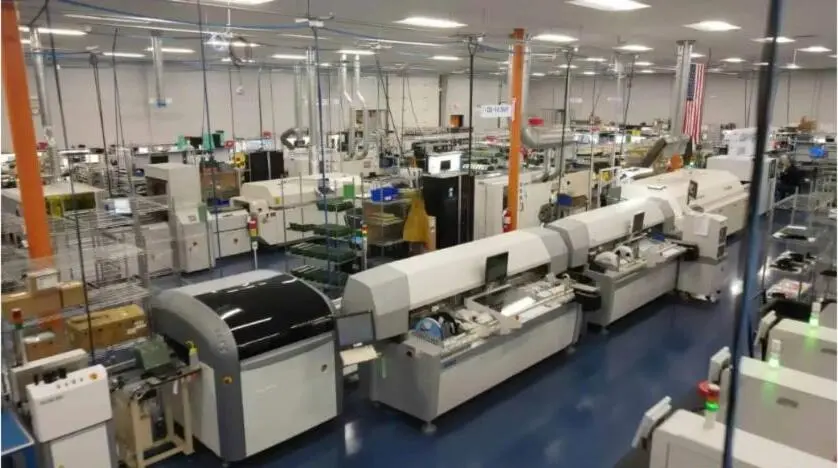
Pro-Active Engineering’s integrated workflow connects rapid prototyping through its dedicated Speed Shop directly to scalable PCB assembly under one roof in Sun Prairie, Wisconsin. The same processes, standards and engineering team govern both phases.
Evaluation questions for any provider:
- Does the same facility that builds prototypes also run production?
- How are undocumented stack-up and process decisions captured and transferred?
- Who holds accountability when a production build deviates from prototype performance?
Request a quote to review current handoff risk and assess whether a program’s transfer process carries avoidable exposure.
DFM Reviews Embedded in Early Design
Late-stage manufacturability issues increase cost and schedule risk. Solder joint defects, component placement conflicts, insufficient clearances and panelization errors discovered after prototype builds force rework or full design revisions at the most time-sensitive point in a program.
A pre-NPI DFM review examines PCB layout, component selection and assembly constraints before formal NPI begins. This review identifies manufacturability issues while changes remain limited in scope and cost. A thorough DFM review before PCBs enter the SMT line prevents many common assembly defects and increases first-pass yield by checking component spacing, pad sizes, fiducial marks and package variety.
A short design discussion with an EMS engineering team often prevents a multi-week redesign. That discussion resolves manufacturability issues such as thermal imbalance, insufficient fiducials or test pad spacing before Gerber files reach release.
In fragmented workflows, DFM feedback often arrives from a fabrication vendor with no visibility into assembly constraints or from an assembly vendor with no authority over the design. Neither group owns the full outcome.
Pro-Active Engineering treats DFM as a standard design-phase step. Engineering and manufacturing operate within one workflow. Early DFM reviews reduce redesign loops and help a prototype move cleanly into production by catching issues such as clearance violations, unsuitable drill sizes, weak thermal choices and data confusion before fabrication or assembly.

Evaluation questions for any provider:
- Is DFM review performed against the actual fabrication and assembly processes that will be used?
- Does the DFM team have authority to flag issues before Gerber files reach final approval?
- Is the DFM assessment documented for traceability in regulated programs?
Request a quote for an early DFM review to identify manufacturability risks before they reach the build phase.
Certified, Controlled Manufacturing for High-Reliability Builds
Regulated programs require more than fast builds. Defense, aerospace and medical-device programs carry documentation, traceability and certification requirements that many quick-turn providers do not support.
In aerospace and defense supply chains, traceability is a legal requirement. Aerospace PCBs require critical material and process traceability under AS9100 for safety-critical systems. A single PCB assembly may contain hundreds of components from dozens of suppliers, which makes component-level traceability essential for root-cause analysis during field failures.
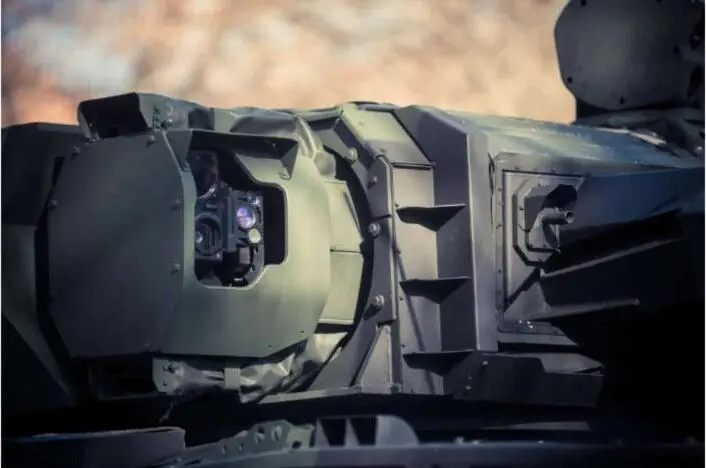
ITAR PCB manufacturing requires procedures that limit access to authorized U.S. persons and prevent unauthorized release of controlled technical data such as Gerber files, stack-up details, BOMs, assembly drawings and test procedures. Offshore or multi-vendor workflows create exposure when controlled data passes through unverified subcontracting networks.
Pro-Active Engineering holds ISO 9001:2015, AS9100, ITAR registration, JCP certification and Nadcap accreditation. The facility operates under IPC-A-610 Class 2 and Class 3 workmanship standards, J-STD-001 soldering standards and NIST 800-171 alignment with CMMC readiness. Every assembly includes 100% Automated Optical Inspection and full documentation control.

Evaluation questions for any provider:
- Can the provider supply current certification documentation for AS9100, ITAR and Nadcap?
- Does the quality system support component-level traceability from material receipt through final test?
- Are workmanship standards applied consistently across prototype and production builds?
Proof Points for Engineering-Led PCB Partners
Several proof points signal that an engineering-led PCB partner can support the full lifecycle of regulated programs:
- ISO 9001:2015 certification for a documented quality management system
- AS9100 certification for aerospace-grade process control and traceability
- ITAR registration for controlled data handling and access procedures
- Nadcap accreditation for independent third-party process validation
- JCP certification (DD Form 2345) for military program qualification
- 100% Automated Optical Inspection on every assembly
- Documented DFM reviews performed against actual production processes
- Full material and process traceability from receipt through shipment
- IPC-A-610 Class 3 workmanship capability for high-reliability builds
- SAE AS5553B counterfeit avoidance methodology
- SiliconExpert BOM scrubbing for component lifecycle and obsolescence risk
Request a quote to review certification alignment and confirm how Pro-Active Engineering supports specific compliance requirements.
Comparing PCB Provider Models for Regulated Work
Provider structure shapes risk and performance for regulated programs. Clear understanding of those structural differences helps engineering teams select the right partner before a program reaches a critical point.
Offshore brokers offer low unit prices, but that advantage carries hidden costs. Extended lead times from Asia require safety stock buffers that add substantial annual inventory carrying costs. Long supply chains also make quality issues difficult to correct quickly once boards cross an ocean. Offshore manufacturing introduces a separate category of risk through potential export-control violations if controlled technical data is accessed by a foreign person or foreign entity without proper authorization. For ITAR-controlled programs, that risk disqualifies the model.
Large EMS providers prioritize high-volume production. Engineering involvement at the prototype stage often remains limited. Programs with low-to-mid volume or high complexity may receive less attention than their risk profile warrants. Aerospace, defense, medical and industrial OEMs gain particular value from a single accountable partner because these sectors face complex BOMs, strict quality and regulatory requirements and tight launch windows.
Design-only firms provide layout and schematic services but carry no production ownership. When a design moves to a separate manufacturer, the DFM feedback loop breaks and accountability gaps emerge at handoff.
Local job shops offer geographic proximity and responsiveness but often lack the automation, certification infrastructure and scalability that regulated programs require. IPC Class 3 workmanship, AS9100 documentation and Nadcap accreditation rarely appear as standard capabilities at this tier.
Pro-Active Engineering operates as an engineering-led integrated manufacturer, combining design, rapid prototyping, full-scale assembly, advanced interconnect, thermal management, conformal coating and box build under one roof with full certification coverage. Domestic or near-shore manufacturing often delivers lower total cost of ownership through shorter logistics chains, better communication, faster response times and reduced risk exposure compared with offshore production.
Risks, Limits and Due Diligence for Integrated Models
An integrated engineering-led model fits many regulated programs but not every scenario. Clear boundaries around that fit support accurate sourcing decisions.
Programs with stable, mature designs at very high volumes and no compliance requirements may find offshore or large-EMS models more cost-competitive on unit price. China PCB fabrication often provides scale advantages for medium-to-high volumes where supplier density and panel utilization improve economics.
Programs that have already completed DFM and locked production processes may not need the full integrated model for repeat production runs. Traceability and compliance requirements still apply for those builds.
Provider evaluation checklist for due diligence:
- Request current certification documentation for ISO 9001:2015, AS9100, ITAR and Nadcap, and verify expiration dates
- Ask whether DFM review is performed against the specific processes that will be used for the build
- Confirm that the same facility handles both prototype and production builds
- Verify component-level traceability capability from material receipt through final test
- Confirm IPC-A-610 Class 3 workmanship capability for high-reliability assemblies
- Ask how controlled technical data is handled, stored and access-restricted
- Request evidence of counterfeit avoidance methodology such as SAE AS5553B
- Confirm domestic manufacturing location and U.S. person access controls for ITAR programs
Request a quote to review program fit and determine whether a program’s complexity, compliance posture and volume profile align with Pro-Active Engineering’s capabilities.
Frequently Asked Questions
What distinguishes an engineering-led PCB partner from a standard contract manufacturer?
A standard contract manufacturer receives a design package and builds to it. An engineering-led partner reviews the design before fabrication begins, identifies manufacturability issues and provides documented feedback that reduces rework, redesign and schedule slips. The distinction matters most in regulated programs where late-stage changes carry compliance and cost consequences. Pro-Active Engineering integrates design, DFM review, prototyping and production within one workflow rather than treating them as sequential handoffs between separate teams.
How does prototype-to-production transfer work with a single integrated partner?
An integrated approach removes the documentation gap that causes many prototype-to-production failures. Pro-Active Engineering’s Speed Shop uses the same production processes as the full-scale assembly line, so validation work completed during prototyping translates directly to production without re-interpretation or process translation. Engineering change orders generated during prototype validation enter the process before production release instead of surfacing after shipment.
What certifications should a PCB partner hold for defense and aerospace programs?
Defense and aerospace programs typically require AS9100 for quality management, ITAR registration for controlled technical data and Nadcap accreditation for independent process validation. JCP certification supports military program qualification. IPC-A-610 Class 3 workmanship standards apply to high-reliability assemblies. Full material and process traceability documentation is required under AS9100 and supports root-cause analysis during field failures. Pro-Active Engineering holds these certifications and applies them consistently across prototype and production builds.
Is switching from a current supplier disruptive to an active program?
Switching suppliers mid-program carries risk, but structured transition planning manages that risk. Pro-Active Engineering supports pilot projects that allow teams to validate performance before shifting full production. The onboarding process captures existing documentation, stack-up decisions and process parameters to maintain continuity. Many programs that transition to an integrated model see improvements in communication, traceability and schedule predictability. Starting with a new prototype revision or a parallel build provides a low-risk way to evaluate fit before a full transfer.
Can Pro-Active Engineering support programs outside the Upper Midwest?
Pro-Active Engineering serves defense, aerospace and medical-device customers nationally from its facility in Sun Prairie, Wisconsin. Geographic proximity does not limit the value of the integrated model. Engineering collaboration occurs through documented design reviews and direct communication with the program team. Domestic manufacturing keeps controlled technical data under U.S. legal protections and removes logistics variability associated with international supply chains, regardless of customer location.
Decision Framework for Integrated PCB Manufacturing
An integrated, engineering-led PCB manufacturing model fits programs with one or more of the following characteristics:
- Regulated-industry compliance requirements such as ITAR, AS9100, ISO 9001:2015, Nadcap or JCP
- Complex or high-density designs that require DFM review against actual production processes
- Low-to-mid volume builds where large EMS providers deprioritize engineering involvement
- Programs where prototype-to-production handoff has historically introduced variability or rework
- Controlled technical data that requires domestic manufacturing and access controls
- Advanced interconnect, thermal management or ruggedization requirements beyond standard assembly
- Programs where vendor fragmentation has increased coordination overhead and reduced accountability
Supply chain disruptions can cost companies substantial revenue, and programs that moved PCB assembly to U.S. facilities with tighter process control saw meaningful reductions in defect rates. For regulated programs, consolidating under a single domestic, engineering-led partner functions as a risk management decision as much as a sourcing decision.
Pro-Active Engineering has operated as a Wisconsin-based integrated PCB design and manufacturing partner since 1996. The company serves defense, aerospace and medical-device programs with full certification coverage, a dedicated rapid prototyping line and end-to-end capability from design through box build under one roof.
Request a quote to evaluate program alignment and determine whether Pro-Active Engineering is the right fit for a current or upcoming program.